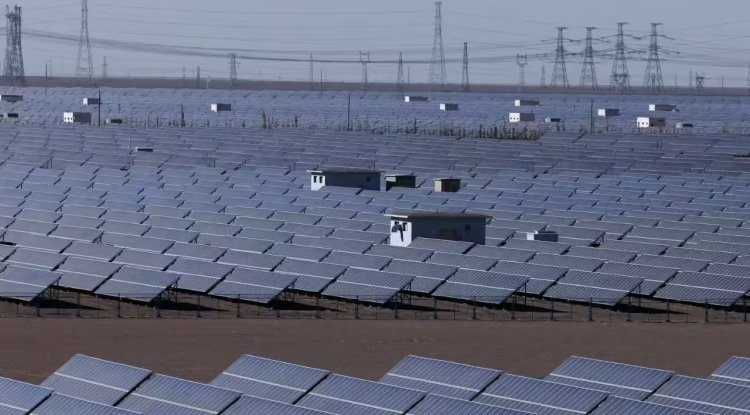
India’s energy storage sector is expanding rapidly with a growing pipeline of battery and pumped storage projects and increasing policy support.
India’s energy storage sector is witnessing rapid growth, with the cumulative stationary energy storage market increasing from 122 GWh to 224 GWh within a year, nearly a 1.8-fold rise. The project pipeline has also expanded significantly, with about 60 GWh under execution, 80 GWh in different tendering stages, and 35 GWh already awarded. The overall pipeline of Battery Energy Storage System (BESS) projects is estimated at around 92 GWh. Pumped storage projects have also grown, rising from 50 GWh to about 132 GWh over the same period.
According to industry estimates, nearly 5 GWh of new capacity additions are expected to be commissioned in 2026, which could mark a significant rise in capacity additions compared to previous years.
In the last year, approximately 69 new BESS tender notices with a combined capacity addition of 102 GWh were floated, marking a 35 percent rise compared to 2024. Key developments include the entry of Adani Group with a large single-location BESS project and long-duration storage demonstrations by NTPC Limited. It has been observed that upcoming solar-plus-storage tenders in Rajasthan could mark another significant development in the sector.
In this context, the India Energy Storage Alliance (IESA) is set to launch a white paper on the stationary energy storage segment. The conference will be held under the aegis of Stationary Energy Storage India 2026 (SESI 2026). The conference will be held on March 20, 2026, at the Yashobhoomi Convention Centre as part of the Bharat Electricity Summit. The conference will witness over 300 delegates from over ten countries.
The white paper, in collaboration with Customised Energy Solutions (CES), examines the current state of India’s stationary energy storage market, including the growth in project development. It also examines the part that storage plays in helping India reach its goal of 500 GW of non-fossil fuel power by 2030, as well as more than 236 GWh of battery storage by 2032.
Debmalya Sen stated that the energy storage sector in India is growing at a fast pace and hence requires planning to accelerate its growth.
Vinayak Walimbe stated that the report seeks to offer insights to the stakeholders from the industry and government sectors with respect to the future of the power sector in India.
The conference will include keynote speeches by Shripad Yesso Naik, along with other senior officials from government agencies such as the Ministry of Power, MNRE, SECI, CEA, GRID India, and representatives from international agencies such as the World Bank.
The report includes the recent policy and regulatory changes affecting the sector, such as the implementation of Energy Storage Obligations (ESO), Viability Gap Funding (VGF) schemes, and the provisions for energy storage under the Electricity Amendment Rules 2025. The report further includes possible future segments such as merchant BESS schemes, storage-based green hydrogen schemes, and commercial/industrial sector schemes.
Industry discussions at the conference would cover various topics such as policy, funding, and technology developments in the area of energy storage, as well as ongoing and upcoming projects in the area. According to the organisers, the conference would provide an opportunity for various stakeholders in the area of energy storage to discuss the future direction of India’s energy storage market.
What's Your Reaction?