New York Launches $150M University Clean Energy Grants
New York launches $150 million clean energy grants for public universities, aiming to decarbonise campuses and promote hands-on learning through sustainable infrastructure upgrades.
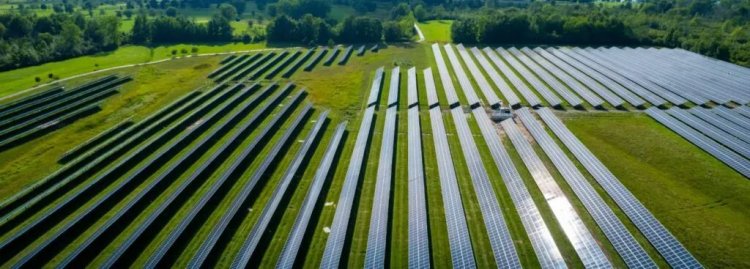
New York Governor Kathy Hochul has introduced a $150 million clean energy grant program that will serve public colleges throughout the state. The program, one of the nation's largest large-scale efforts to decarbonize higher education, will lower emissions, save energy costs, and enhance campus buildings through clean technologies.
The funds are included in the $4.2 billion Clean Water, Clean Air and Green Jobs Environmental Bond Act adopted by voters in 2022. $100 million will fund work at State University of New York (SUNY) campuses and $50 million to City University of New York (CUNY) campuses from the $150 million.
This green energy investment will allow for numerous upgrades in university systems. Upcoming installations are heat energy networks, rooftop solar panels, electric vehicle charging stations, battery storage systems, heat pumps, and geothermal heating and cooling. The ultimate goal is substantially reducing greenhouse gas emissions, enhancing energy efficiency, and enhancing environmental sustainability across New York's higher education system.
Binghamton University, SUNY will include thermal energy networks and heat pumps which are anticipated to conserve energy by 45% and around $300,000 every year in operating costs. The University at Buffalo will build its first fossil-fuel-free energy center for maximizing the system. Its current solar array covers 24.5 acres of land and conserves electricity consumption equivalent to about 1,354 homes each year.
SUNY Oswego will deploy a geothermal system and Stony Brook University will deploy solar systems to help decarbonize Long Island's electric grid. Both projects reflect a site-based approach that addresses each campus' needs and geography.
For the CUNY system, the $50 million will be used to upgrade clean energy on a number of campuses. Solar canopies, battery storage, electric vehicle charging points, and heat pumps will be installed at City College of New York to lead campus electrification. Solar rooftops, electric vehicle charging points, and geothermal systems will be installed at Brooklyn College. Outdated steam heating systems will be replaced by efficient water-based heating and cooling systems at Hunter College.
Authorities contend that the program has the ability to impact scholarly programming as well as civic engagement. Including these clean energy systems in curricula could provide students, particularly those taking environmental science, engineering, and technology-related programmes, with hands-on learning opportunities. In the process, the program not only promotes sustainable practices but also allows for the production of an educated green workforce.
In addition, community outreach professionals recommend that universities interact with local communities in such a manner that the advantages of such initiatives reach outside the campus wall. Some examples include collaborative knowledge platforms, co-designed sustainability workshops, and local training projects in collaboration with New York's broader climate objectives.
Environmental campaigners have suggested tracking performances and publishing public reports in an effort to enhance transparency and accountability. Those measures would be able to provide information on the effectiveness of various energy technologies and offer information on which ones to extend successful use to other public and private buildings.
New York's executive budget features more than $1 billion for climate change initiatives, with $108 million earmarked for coastal resilience and environmental grants. More than $1.25 billion of the $4.2 billion Environmental Bond Act has been expended by the state since mid-2025. The numbers represent a sustained effort at furthering environmental initiatives through realistic investment in infrastructure.
SUNY Chancellor John B. King Jr. declared SUNY campuses at the forefront of climate change through innovation and sustainability. Likewise, CUNY Chancellor Félix V. Matos Rodríguez stated that investments made would make CUNY a significant contributor to a greener, more resourceful New York.
The clean energy retrofits also will provide union jobs, keeping the local green economy going while fixing the decaying infrastructure that is found on so many university campuses. By skipping through traditional old system replacement with similar models and taking a direct approach to clean energy technologies, campuses are set to make a giant leap technologically.
For students, the effects extend far beyond the classroom. Improved campus settings, cleaner air, and smarter energy systems all reduce unhealthy living and learning conditions. Meanwhile, cost savings for operations like the $300,000 saved by Binghamton can make money available for academic services or to keep tuition affordable.
These projects provide New York with the chance to pilot large-scale green infrastructure in working environments, and potentially as models for nationwide application. Since institutions of higher education are deeply implicated in the state sustainability plan, their participation is deemed crucial in the achievement of long-term emissions reduction.
The NY university clean energy grant program is establishing a new standard for how public investment can decarbonize big institutional systems. As the projects start coming on line on campus, data from the initiatives will guide future investments and policymaking aimed at continuing to shrink the state's carbon footprint.
Source:
First published by Elena Kryvoshei for World Climate News, 14 July 2025.
What's Your Reaction?