Only 55% of Indian homes are EV-ready, highlighting the need for safer home charging infrastructure.
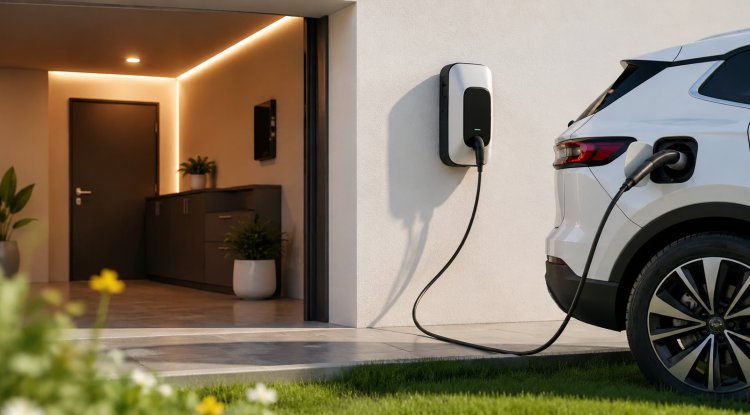
With EV penetration in India steadily rising, a new study has pointed to the fact that many households are not ready to support safe home charging. Research by EV charging & energy management company, Kazam, in partnership with Alliance for an Energy Efficient Economy (AEEE) reveals that only 55% of Indian households are ready for EV charging without any electrical upgrade or intervention. The results have led to the rollout of the campaign ‘EV-Ready Ghar' aimed at enhancing awareness of the residential readiness for charging. Home charging and EV charging are key themes to the conversation as home charging becomes a critical component to EV ownership.
It was observed that more than 40% of the Indian households need upgradation to safely accommodate EV charging based on the learning from over 80,000 residential EV charger installations in India. Nearly 80% of EV charging occurs at home, emphasizing the need for electrical systems in homes to support extended charging. The results indicate that although EV adoption is growing, consumer knowledge on safe charging and preparedness of their home electrical systems is still low. The EV charging, home EV charging, electric vehicles, residential charging, and EV infrastructure are likely to be key enablers for India's growing electric mobility ecosystem.
This study highlights the home charging challenges.This study identifies home charging challenges.
The study carried out by Kazam and AEEE highlights an area of the EV transition in India, which is not as much discussed as the actual adoption of the vehicles. As consumers make more and more decisions to make the switch to EVs, the supporting infrastructure within their homes has not always kept up.
The study found that close to 50% of the residential properties evaluated needed either upgrades or corrective measures prior to being able to safely install EV charging equipment. This underscores the importance of assessing current electrical installations at home before installation of charging stations.
The results also confirm the increasing significance of Level 2 and Level 3 home charging as the favored modes of energy supply for EVs. With a large proportion of charging taking place in the home, it is likely that making electrical networks safe and reliable in homes will become a growing priority as more EVs are adopted nationally.
It focuses the campaigns on consumer awareness.It concentrates the campaigns on consumer awareness.
Based on the study results, Kazam has started its ‘EV-Ready Ghar' initiative to educate the consumers about the requirements of an EV-ready home. The program will streamline technical details and package it in a manner more accessible to both current and potential EV owners.
An important component of the campaign is the EV Home Readiness Quiz, an online assessment tool to determine if a home is ready to safely charge an EV. The quiz will help consumers understand if there may be any concerns about their home electrical systems before installing charging equipment.
The campaign also provides an opportunity for households that need more assessment to arrange a home charging assessment by trained assessment technicians called Kazam Rangers.
Music and symbols used in cultural dissemination of the message.
As part of the awareness campaign, Kazam has taken a creative communication approach by including a number of actual EV users in the official music video for the campaign. The campaign also does not solely focus on electric vehicles, but rather on the home environment, highlighting the importance of safe charging practices.
The campaign also calls on using standard household electrical outlets for extended overnight charging, when it is necessary, and urges to use dedicated charging infrastructure.
To spread the message further, Kazam has reimagined the Nimbu Mirchi symbol to depict a home which is EV ready. The campaign employs this well-known cultural icon as a reminder of the need to put in place a vehicle's electrical system before purchasing an EV.
Industry Perspective
Speaking about the initiative, Vani Vivek, AVP-Marketing, Kazam, said:
“Home charging is where the EV experience truly begins, yet it’s often the least understood part of owning an electric vehicle. Through ‘EV-Ready Ghar’, we wanted to make conversations around safe home charging simple, relatable and easy to act on. The campaign combines music with practical tools like the EV Home Readiness Quiz to help consumers understand whether their homes are truly EV-ready and what steps they can take to charge safely. As India moves towards a future of 50 million EVs, building confidence in home charging will be critical to accelerating adoption. Because before India becomes EV-ready, India’s homes must become EV-ready.”
Supporting India’s EV Transition
Through the ‘EV-Ready Ghar’ campaign, Kazam aims to improve public understanding of residential charging readiness by providing consumers with practical tools and information to assess their homes. The initiative reflects growing recognition that expanding EV adoption requires not only vehicle availability and public charging infrastructure but also safe and reliable home charging solutions.
As India continues its transition towards electric mobility, ensuring that residential electrical infrastructure is equipped to support EV charging is expected to become an increasingly important factor in enabling wider consumer adoption and improving confidence among prospective EV buyers.
What's Your Reaction?