Policy Coordination Key to Closing Sustainable Finance Gap in Asia-Pacific
UN ESCAP’s latest report calls for stronger policy coordination across ministries to bridge the sustainable finance gap in Asia and the Pacific. Highlighting Thailand’s model, the report outlines how inter-ministerial efforts can drive sustainable development and climate resilience.

United Nations Economic and Social Commission for Asia and the Pacific (ESCAP) recognized the need for greater government departmental policy coordination to close the sustainable finance gap in the region. ESCAP offers ten action principles in its recent report "Sustainable Finance: Bridging the Gap in Asia and the Pacific," one of which is most vital, namely inter-ministerial coherence.
Efficient financing of Asia Pacific SDGs is a daunting challenge, and the gaps still dominate despite countries' aspirations. In response, ESCAP advises building institutional capacity in the ministries of governments, especially finance, energy, transport, and the environment. This will enable the reducing of the cost of financing and increasing the efficacy of public investments.
Ministries of finance are regarded to be playing a strategic leadership role in implementing such change. Having the mandate for public spending, revenues, taxation, and debt, they are in the best position to lead the initiatives towards sustainable development in sectors. This involves crafting and implementing fiscal policy for financing environmentally and socially sustainable investments. Ministries also have the influence to influence other line ministries through the allocation of budgets, tax relief, and investment incentives in line with overall sustainability objectives.
One example of this tactic is the Coalition of Finance Ministers for Climate Action, an international movement mobilizing finance ministries to take the initiative in addressing climate challenges. This type of platform speaks to the need for joined-up policy action to drive economic transformation in a sustainable direction.
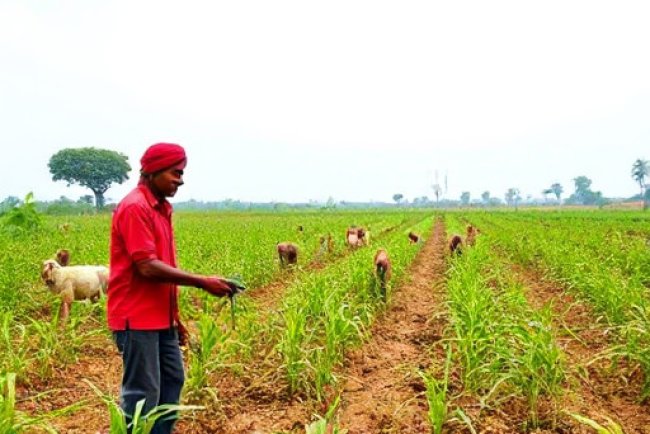
From Thailand's experience something can be learned that will be beneficial to the region. The nation has provided useful cross-ministerial collaboration between its Ministry of Finance and Ministry of Agriculture and Cooperatives to aid farmers and enhance the resilience of climate change. The center of this exercise is the Bank for Agriculture and Agricultural Co-operatives (BAAC), which is reported to the Ministry of Finance and serves the majority farmer-based customers.
There are a number of important initiatives that show Thailand's determined effort. A massive loan scheme has been introduced to finance village and city funds, cooperatives, and community business under a credit facility of 50,000 million baht. As per the latest available data, more than 6,700 customers have been sanctioned loans amounting to nearly 29,500 million baht.
In order to alleviate debt stress, the government introduced a 12-month loan moratorium for farmers of up to 300,000 baht, which covered more than 238,000 million baht worth of loans for approximately 1.7 million farmers. The program was accompanied by skills development training courses for 300,000 farmers to enhance productivity and income, in collaboration with BAAC and other state organizations.
After its climate resilience campaign, the Ministry of Finance in partnership with BAAC has implemented crop insurance schemes. The 2022 corn insurance scheme insured 71,642 farmers at an indemnity value of 188.24 million baht, while rice insurance schemes covered 1.94 million farmers with disbursements amounting to 2,890.26 million baht.
Thailand is also embracing sustainability in finance. In its five-year scheme for specialised financial institutions (2022–2026), the Ministry of Finance has pledged to promote values of sustainable finance and innovation. BAAC's digital inclusion and financial literacy project has already made more than 576,000 digital transactions possible and trained almost 119,000 customers in everyday financial management.
These experiences illustrate the potential of balancing agricultural and financial policy to enhance rural livelihoods and create environmental resilience. These experiences support ESCAP's call for a coordinated policy effort that brings together financial instruments, institutional cooperation, and knowledge exchange.
The report cites that although Thailand shows what focused effort can do, focused efforts are in their infancy in other parts of the region. More Asian-Pacific economies are deficient in consolidating cooperation between government agencies and learning institutional systems.
ESCAP encourages long-term investment in public capacity, learning, and inter-agency coordination to further increase the long-term policy coherence. These actions are regarded as critical not only to achieve sustainable investment but also to provide national and global development results.
In the future, the organization will collaborate with regional countries in greater coordination, policy creativity for promoting inclusive and green economic development, and knowledge sharing. In conclusion, the report is of the opinion that good governance architectures facilitate bridging Asia and the Pacific's sustainable finance gap.
United Nations Economic and Social Commission for Asia and the Pacific (ESCAP), "Sustainable Finance: Bridging the gap in Asia and the Pacific," Financing for Development Series (Fifth Edition), Published 20 June 2025.
What's Your Reaction?