Port of Södertälje Develops Open-Access CO₂ Infrastructure to Support Regional Carbon Capture
An open-access CO₂ infrastructure at the Port of Södertälje is being developed by ITS to help regional companies capture, store, and reuse carbon emissions. The facility, expected to be operational by 2030, supports Sweden's clean energy goals and provides shared logistics for industrial decarbonisation.
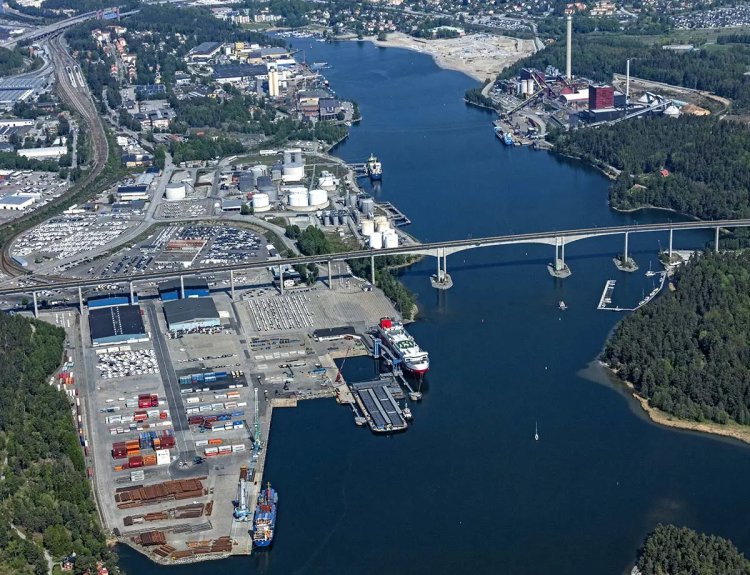
An open-access carbon dioxide (CO₂) infrastructure project is being developed at the Port of Södertälje intended to equip regional Swedish industry within the Mälardalen region with the technology to capture, store, and possibly recycle CO₂ emissions. The project, initiated by Inter Terminals Sweden (ITS) in collaboration with the Port of Södertälje, will be up and running by 2030 and is part of Sweden's larger green energy transformation and emissions reduction initiative.
The facilities to be built are specifically designed to act as a hub for CO₂ logistics, providing local companies with an efficient and coordinated solution to minimizing their carbon footprint. Through the provision of common CO₂ storage and transport facilities, the project overcomes logistical and economical challenges to small and medium-sized enterprises applying carbon capture and storage (CCS) or carbon capture and utilisation (CCU) technology separately.
The first stage of the project is to carry out a Front-End Engineering Design (FEED) study. The project will establish the economic and technical viability of the project and obtain the appropriate permits prior to the construction phase commencing. Once the plant is up and running, it will remove CO₂ from industrial processes around the region, and these will be temporarily stored. After being gathered and stored, please ship the CO₂ by transport in ships to storage sites where it will be permanently stored underground or factories where the CO₂ may be recycled and reused in industrial processes.
The model allows for more flexibility and regionalization of carbon management. Instead of spending on capture and storage technology specific to every place, industries in the Mälardalen region will benefit from having a centralized system in charge of carrying and storing CO₂ in the long term. Costs and complexity are minimized with shared infrastructure, making carbon capture an easier solution to implement for more emitters.
The position of the Port of Södertälje in the project is to offer the physical and logistics groundwork required for the facility to operate. With existing freight capacity and its strategic location in the Stockholm area, the port can potentially facilitate transport of CO₂ and integrate with domestic and global storage and reuse networks.
CCS and CCU technologies increasingly play a part in the global effort towards climate targets, especially for industries where emission removal is challenging. By the mechanism of separating CO₂ prior to its release into the atmosphere, these technologies minimize net greenhouse emissions and have the potential for recycling of CO₂ to value-added applications — e.g., manufacturing or agriculture.
Sweden's climate goals, such as becoming net-zero by 2045, are highly dependent on such pioneering projects. By developing access infrastructure for several companies and industries, ITS and Port of Södertälje are creating a basis for scalable climate solutions. In doing so, they also help create a CO₂-logistics market in the region — a new industry where sustainable aims meet industrial and economic planning.
The initiative does not just help out big industries; it presents an opportunity for small emitters to get involved in climate action as well through provision of access to facilities they otherwise could not individually fund. This levelled-up access to carbon storage and reuse technologies is expected to drive regional activity to decarbonize industrial processes.
By the time of its 2030 commission, it should also be capable of assisting companies in the Mälardalen area achieve Sweden's own ambitious greenhouse gas emissions reduction targets. It also reflects a tangible step towards embracing sustainable ways of operating among the country's industrial and logistics sectors.
The Södertälje Port CO₂ infrastructure project is an example of this trend towards regional, cooperative responses to climate change. With nations all over the world wanting to cap industrial emissions, this model of carbon co-management can be used as a guide for other regions that wish to balance environmental aspirations with economic and industrial concerns.
Source:
Inter Terminals Sweden (ITS)
What's Your Reaction?

















