The red glow seen in Hanle was caused by a rare and intense solar storm, reminding us that rising solar activity can seriously threaten satellites, power grids, and modern technology.
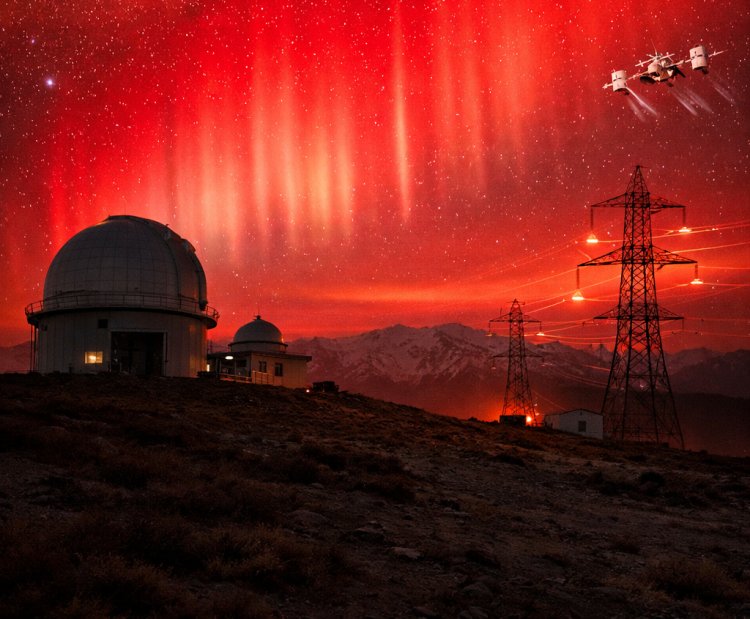
The red sky seen in Hanle, Ladakh, on the night of 19-20 January, revealed the presence of a massive solar storm. On 18 January, the Sun released a massive energy wave, known as a Coronal Mass Ejection (CME). This wave reached the Earth in only 25 hours and resulted in a G4 geomagnetic storm. These storms are dangerous as they can affect the power grid, satellites, GPS, and communication networks.
On the night of 19-20 January, the sky in Hanle, Ladakh, turned a deep red. Normally, the sky in this area is clear and dark blue at night, but on this night, it appeared as if the entire sky had been painted with a red curtain. While it was a sight to behold, it was also a warning sign.
What happened that night?
On 18 January, there was a very strong explosion on the Sun, called an X-class solar flare. After the explosion, a large amount of gas and magnetic field material was ejected from the Sun. This is called a Coronal Mass Ejection (CME). The material moved towards the Earth at a speed of 1,700 kilometres per second and reached our atmosphere in only 25 hours.
When these solar particles hit Earth’s magnetic field, a G4-class geomagnetic storm was triggered. This is the strongest of its kind since 2003. Due to the geomagnetic storm, the red glow was seen in the sky above Hanle.
Why did the sky appear red?
This is because the sky was red due to the interaction of particles from the Sun and oxygen atoms above 300 kilometres in the Earth’s atmosphere. In some areas around the North Pole, such light is normally green. In other areas, such as India, only the top part of this light is visible, which is red.
Why is this red light dangerous?
According to scientists, this is not only a beautiful phenomenon, but it is also an indication that the Sun is becoming highly active and unstable. Such occurrences can pose severe technical hazards on Earth and in space. As per data from the Aditya-L1 mission by India, highly active solar storms can compress the Earth’s magnetic field so much that, for a brief period, geostationary satellites are directly hit by highly active solar winds. This can damage satellites or hamper their normal operations.
High solar storms can also impact power grids by increasing the electric current flowing through the transmission lines. This can cause immense strain on transformers, which can get overheated or damaged, resulting in massive power outages. Moreover, such solar storms can also hamper communication systems, GPS, and banking systems. When signals get disrupted or lost, most critical services can temporarily cease to function.
The threat is not just technical. During this solar storm, astronauts living in the International Space Station (ISS) had to relocate to safer zones as radiation levels increased.
What is India doing to reduce the risk?
India is also doing several things to identify solar storms at an early stage and minimize the potential damage. The Aditya-L1 mission is constantly observing solar activity and can also give an alert 24 to 48 hours in advance. The existing sensors are also being placed in power grids so that preventive measures can be taken in time.
Regions such as the Hanle Dark Sky Reserve are also being protected from light pollution because of their clear night sky, which helps in identifying the early stages of solar storms.
Why are Hanle’s dark nights so important?
Hanle is the first Dark Sky Reserve in India, where the night sky is remarkably clear. This is why it is an important location for scientists to study solar storms, changes in space, and disturbances in the upper atmosphere in its early stages. If light pollution rises in this location, we might miss early warnings about potentially dangerous events.
The red sky is not just beautiful but it’s a warning
The red glow that can be witnessed in Ladakh may appear to be magical, but it is an indication that the Sun is turning hotter and more active, whereas our technology is not yet ready to cope with its effects. It is necessary that India's satellites, power, and digital technology are made more robust because solar storms are likely to occur more frequently in the future.
What's Your Reaction?