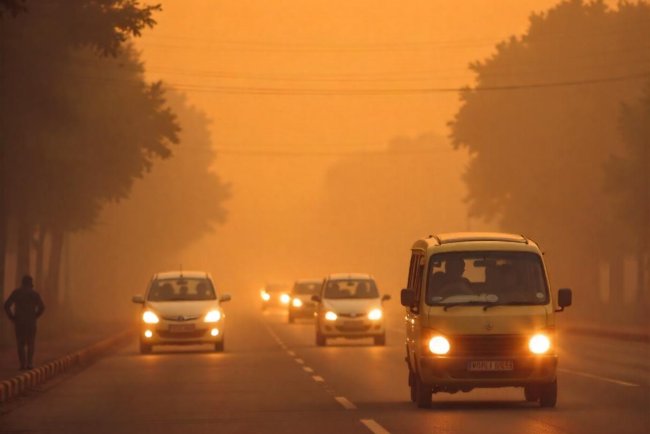
This is one of the cases that has been highlighted after almost eight years. This case matters because the effects of climate change are already visible on the ground

A girl, Ridhima Pandey, from Uttarakhand, filed a petition in 2017. She was only nine years old then. The case stayed pending for years, but it has now begun to move in the Supreme Court of India. She first went to the National Green Tribunal. Later, the matter reached the Supreme Court.
In her petition, she asked a simple question. What is the government really doing to deal with climate risk and climate change? The case says weak climate action puts children’s health and future at risk.
The Supreme Court reopened the case on February 21, 2025. The judges stated that the environment ministry is not the only entity affected by climate change.. They pointed out that many ministries work separately on bits of climate work, and this weakens the overall effort. The court used a phrase that ministries seem to be “working in silos” and asked them to act together.
The bench asked eight central ministries to be part of the case. These include ministries like environment, power, coal, petroleum, road transport, agriculture, and finance. The aim is to get a unified plan on how India will handle climate change.
The judges also said India’s main environmental laws may not be enough for today’s climate crisis. The Environment Protection Act of 1986 was made long before climate change was a major issue, the court noted. It said the laws should be examined again to see if they should include clear climate duties.
The case in the Supreme Court is still ongoing. Ridhima’s lawyers and the government have already filed written papers. The judges want to understand how laws and policies on carbon emissions and climate action can work together better.
The court’s remarks are being watched closely by climate lawyers and activists. They see this as a rare moment when India’s highest court is looking directly at whether the state must act more strongly on climate change.
This is one of the cases that has been highlighted after almost eight years. This case matters because the effects of climate change are already visible on the ground. In the Sundarbans, climate change has become a reason for migration and is now a way of life for the people living there. Almost every household has at least one family member who has left in search of work. Climate stress has altered cropping patterns, reduced yields, and weakened livelihoods. As agriculture suffers, people move.
What's Your Reaction?