Rize secures $31 million to expand low-emission rice farming, traceability, and climate-smart cultivation.
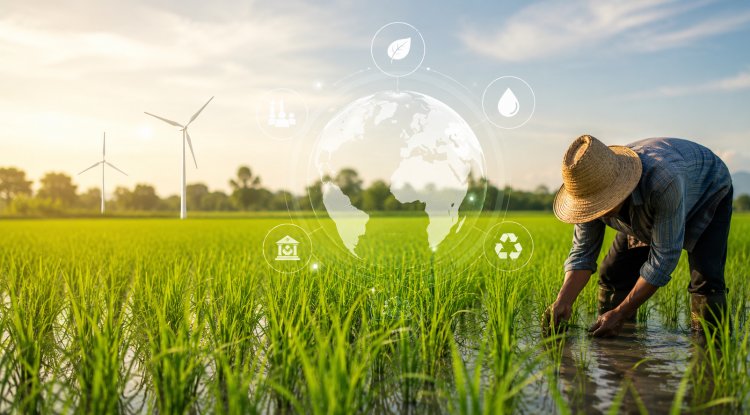
Rice-related agri-tech startup Rize of Singapore has raised as much as $31 million in Series B funding to expand its platform, which aims to cut greenhouse gas emissions from rice cultivation. The investment will help the company to continue scaling sustainable cultivation methods, enhance traceability throughout the rice value chain, and promote the uptake of technologies to reduce methane emissions. Investors and policymakers increasingly show interest in sustainable agriculture, rice farming emissions, methane reduction, climate-smart agriculture, and carbon farming to find solutions in order to reduce emissions from one of the world's most important food crops.
Rice is the preferred food for more than a billion people worldwide and a $300 billion+ market. But rice farming is also a major source of methane emissions, which are responsible for about 12% of global climate change. Rice cultivation is a significant contributor to agricultural greenhouse gas emissions, particularly for methane. This latest funding is indicative of a growing focus on sustainable agriculture, emissions of rice farming, reduction of methane, climate smart agriculture and carbon farming as key elements of macro-scale climate action.
Company Focuses on Reducing Methane Emissions
Rize was founded in 2023 as a joint venture between Temasek, Wavemaker Impact, Breakthrough Energy Ventures, and GenZero. Its Singapore-based headquarters creates solutions based on data that enable rice farmers to shift cultivation practices to lower methane emissions and enhance rice productivity.
The company's platform brings together agronomic data and digital measurement, reporting and verification (MRV) technologies. The tools allow farmers to adopt farming practices that lower emissions of greenhouse gases and allow for clear monitoring of environmental outcomes. Rize's greater scientific data integration with operations on the ground hopes to accelerate the uptake of low-emission rice farming throughout Southeast Asia.
Growth in Southeast Asia.
The company began in Indonesia and Vietnam, where it was established as a joint venture with local companies to produce rice from rice paddies.Initially, Rize was set up in the two biggest rice-producing countries in the region: Indonesia and Vietnam. As part of its long term growth plans, the company intends to penetrate into the Indian market and take its platform to one of the world's largest rice cultivation markets.
The company says that its business is more than 10 times larger than it was upon completion of its Series A funding round two years ago. In this time, Rize has built what it terms as Southeast Asia's most significant sustainable rice platform in collaboration with farmers and other stakeholders in the rice value chain, to enhance environmental performance while maintaining agricultural productivity.
Basic resources are obtained to track and manage farming practices.Simple resources are allocated for tracking and managing farming practices.
The brand new capital will be applied to growing a number of essential initiatives. These involve enhancing the traceability systems between the field and the buyer, promoting the uptake of Alternate Wetting and Drying (AWD), supporting the compliance of Maximum Residue Limit (MRL) standards, and carbon certification.
Alternate Wetting and Drying (AWD) is a rice water management method which involves periodic dewatering of rice fields rather than continuous flooding. This method has been proven to reduce methane emissions by a considerable amount, and use water more effectively.
Additionally, Rize will open up its platform to a wider ecosystem of partners to allow farmers, buyers, financial institutions, and sustainability groups to collaborate. The company will work towards covering 300,000 hectares of cultivated land, and supporting around 150,000 farmers by 2030 through these programs.
CEO Highlights Long-Term Vision
According to Rize's Co-Founder and Chief Executive Officer Dhruv Sawhney, the investment marks the company's growth and is to help achieve its long-term goal of creating a more interconnected and sustainable food system for smallholder farmers.
The funds will help the company grow its platform and keep enhancing sustainability in the rice value chain and improve collaboration inside the chain, he said.
Investors Invest in Climate-driven Agriculture.
It comprised $20-million in equity investment with BNP Paribas Asset Management as the major investor. Others who participated included The Rockefeller Foundation and current investors Temasek and Breakthrough Energy.
Another $11 million was raised via borrowing arrangements from the UOB, Bank for Investment and Development of Vietnam (BIDV) and Temasek Foundation. Rize has raised a total of $47 million since its inception after this latest round.
Rize is in the heart of the sustainable agriculture, carbon finance and consumer demand for traceability of food market," said Alexandre Martin-Min, Head of Natural Capital and Impact Investments at BNP Paribas Asset Management Alts. The company's strategy supports investments in natural ecosystem protection and restoration and has an investment philosophy that falls within that camp, he said.
A growing focus on low-emission agriculture.Increasing interest in low-emission farming.
The investment coincides with the growing attention of governments, financial institutions and food companies on Agriculture-related emissions reduction. Given the importance of rice in the global food security and its contribution to global methane emissions, rice cultivation is becoming a priority.
Incorporating digital monitoring, emissions tracking, and sustainable farming practices are anticipated to become more crucial as technologies as an effective tool for farmers to navigate climate change and meet growing environmental expectations. Rize will continue to grow and help facilitate the shift to less polluting rice cultivation in Southeast Asia and ultimately India, thanks to the new funding.
What's Your Reaction?