Nearly 3,000 households in Odisha's Ganjam district achieved zero electricity bills in May as rooftop solar adoption continues to drive clean energy and sustainable development.
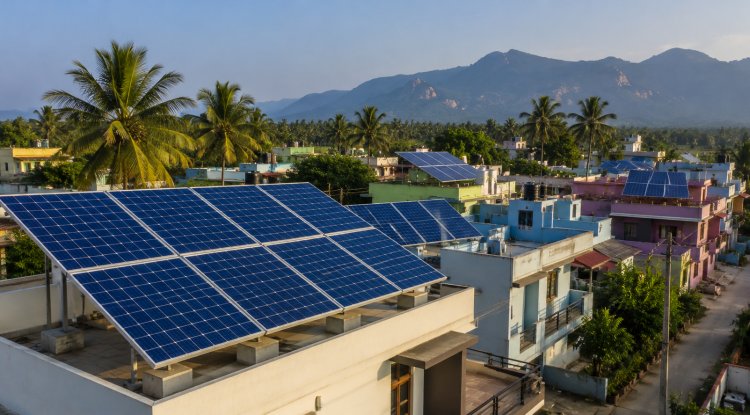
The growing adoption of rooftop solar systems is transforming household energy consumption in Odisha's Ganjam district, with nearly 3,000 families receiving zero electricity bills in May. The development highlights how renewable energy solutions are helping consumers reduce costs while contributing to a cleaner and more sustainable energy future.
According to officials, 2,943 electricity consumers in the district recorded nil power bills during the month. The achievement is being seen as a major milestone in the promotion of decentralized solar power generation and consumer-led clean energy adoption.
Ganjam Emerges as a Solar Success Story
Rooftop solar has been widely adopted in Ganjam District in Odisha. So far, 11,187 rooftop solar units have been installed under the PM Surya Ghar Muft Bijli Yojana and Utility-Led Aggregation (ULA) Model.
This initiative enables households to produce energy through solar rooftops, which would fulfill their energy requirements and cut down on the requirement for grid electricity.
Officials said, several households have been producing electricity enough to offset their consumption for the month, making their electricity bills either nil or very less.
Utility-Led Model Accelerates Adoption
An additional 4,102 rooftop solar power systems has been installed through the Utility-Led Aggregation Model of TPSODL. The utility-led aggregation model helps to adopt solar energy by helping consumers to install, approve, finance and provide technical support. Through this, the procedure has become easy and rooftop solar energy has seen an increase in adoption.
Environmental Benefits Beyond Cost Savings
Growing use of roof-top solar energy systems is not just helping people cut down on their expenses but also contributing to sustainability objectives. Solar energy is an environmentally friendly energy resource which cuts down dependence on fossil fuels.
Moreover, solar energy generation is relieving pressure from the energy grid, particularly during times of peak energy demand.
Supporting India's Renewable Energy Transition
The success seen in Ganjam reflects the growing impact of national initiatives aimed at expanding rooftop solar capacity across the country. Programmes such as the PM Surya Ghar Muft Bijli Yojana are designed to encourage households to participate directly in India's clean energy transition while making renewable energy more affordable and accessible.
As rooftop solar installations continue to increase, districts like Ganjam are demonstrating how local communities can play a key role in advancing sustainable development, energy security and climate goals.
A Model for Sustainable Communities
In the case of Ganjam, it is evident that the use of roof-top solar can be quite beneficial economically and environmentally. Given the thousands of families that have already gained from cheaper electricity bills, it is now possible to see how this district will become an example of sustainability through renewable energy.
What's Your Reaction?