Tier-2 and Tier-3 cities are driving India's rooftop solar growth as more households adopt solar systems to cut electricity bills and support the country's clean energy transition.
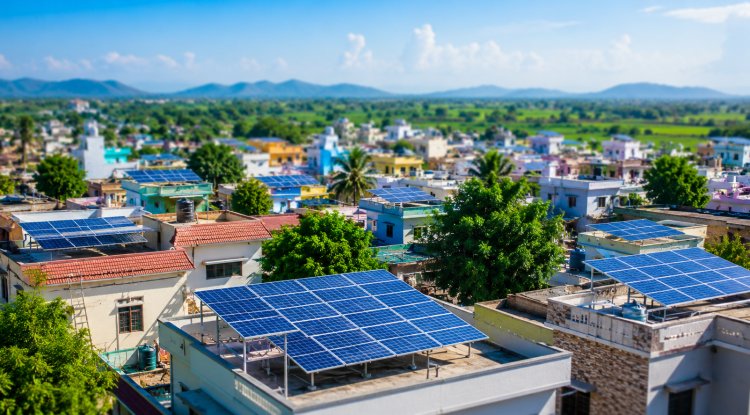
India's rooftop solar movement is no longer being driven primarily by metropolitan cities. Smaller urban centres are emerging as the country's new clean energy leaders, with districts such as Lucknow, Nagpur, Surat, Varanasi, and Ernakulam witnessing strong growth in residential rooftop solar installations. The trend reflects a growing shift among households towards generating their own electricity, reducing power bills and contributing to India's clean energy transition.
The use of rooftop solar energy in such cities is growing due to increasing demand for electricity, increasing customer awareness, government intervention and the presence of net metering policy. Through the net metering policy, consumers make use of solar energy during the daytime and export excess electricity to the grid. In case there is no solar energy, consumers have the liberty to consume electricity from the grid to minimise their electricity expenses.
While several major cities suffer from the problem of inadequate rooftop area and tall residential buildings, which delay the process of setting up rooftop solar plants, small cities usually possess individual houses with enough rooftop area that makes installation more convenient and cost-effective. All the mentioned reasons made Tier-2 and Tier-3 cities play an important role in India’s renewable energy sector.
An increase in rooftop solar will also help India achieve its energy security goals as it helps in decreasing reliance on traditional power sources and relieves strain on the power grid at times of high consumption. Solar power generation on a distributed basis ensures that electricity production takes place near the point of use.
The government initiatives, such as the PM Surya Ghar: Muft Bijli Yojana, have been responsible for making the use of rooftop solar grow even faster by providing financial aid and making it easier for residential users to install rooftop solar units. The program seeks to make the use of rooftop solar spread to millions of homes while enabling people to cut their power costs.
According to energy analysts, the robust reaction of the small cities shows that the shift to clean energy in India has gone beyond the large cities. With the increasing number of homes adopting rooftop solar installations, it is clear that decentralized renewable energy will become even more significant in fulfilling the growing demands for electricity while lowering greenhouse gases.
What's Your Reaction?