Solar Alone Can’t Solve India’s Energy Needs — Waste-to-energy Is Key: SAEL Industries' Laxit Awla
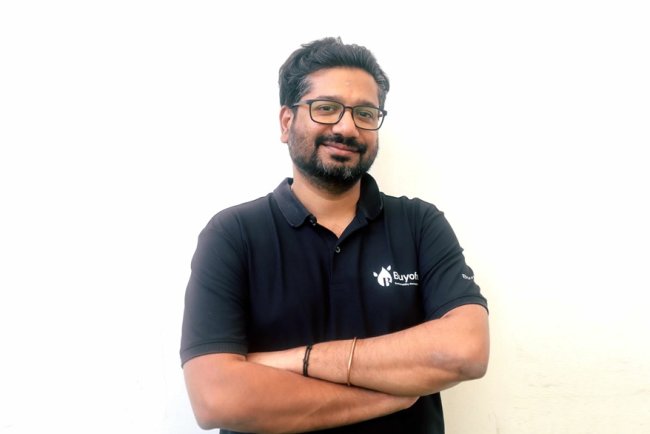
Laxit Awla, Director of SAEL Industries, speaks on major ESG metrics affecting waste management in biodiversity and ecosystem protection, and more

In agriculturally rich regions like Punjab, Rajasthan, and Haryana, where the shadow of agricultural waste threatens everything, SAEL is creating a meaningful difference. Bringing transformation in these areas, the company started buying agricultural waste from local farmers, providing them with a steady income and also supporting the already fragile ecosystems around the villages.
In order to provide standardised ecological frameworks that support the preservation of both native and migratory species, the company collaborates with top ecologists and biodiversity specialists. These partnerships ensure that our initiatives have a positive impact on biodiversity and the ecosystems in which we operate by promoting a culture of environmental care and more sustainable industry practices.
Laxit Awla, Director of SAEL Industries, conversed with ResponsibleUs on major ESG metrics affecting waste management in biodiversity and ecosystem protection, and more.
The government is all set to approve the second module list. The first list was for solar modules. Now they have planned to include solar cells. What’s your view?
Majority of the grid-connected solar projects are built for the long-term, spanning more than 20 years, and it’s important to ensure high quality standards for all the equipment used in the project, especially the solar modules.
There are different components that make up a solar module. There are about six major components: solar cells, front and back glass (two layers), EVA or POE (encapsulants) sheets, an aluminum frame, and a junction box. These make up around 95% of the material used to manufacture a module.
Now, what the government did in the first phase was to bring the assembly industry to India. The second step is to bring the solar cell manufacturing industry to India, since solar cells alone accounts for more than 50% of a solar module’s cost. So, first came the assembly line capabilities, and now the focus is on producing solar cells.
A lot of Indian glass manufacturers have also doubled or tripled their capacities to meet demand. The other components are relatively minor with respect to the manufacturing scale, but now some players have started producing aluminum frames and EVA/POE sheets locally.
Gradually, the government’s intent is to bring the entire solar value chain to India and make the country self-sustainable and self-reliant. That’s the broader vision of the Government of India.
We will begin with the mission — since the solar cell mission focuses on scaling sustainable decarbonisation solutions for India’s baseload power needs - how do you translate this mission into concrete decisions—project choices, location, etc.
We are in three different industries. Two are directly related - solar IPP and solar manufacturing. The third one is waste-to-energy, which is a high-impact business.
Let me talk about solar first. As an organisation, we are well placed in large IPP (Independent Power Producer) projects. We have a committed capacity of 7.7 GW, and in future it would certainly be accounting for significant emissions reduction.
On the manufacturing side, beyond sustainability, we are also aligned with the Government’s vision of self-reliance - Atma Nirbhar Bharat - and we are progressively building a portfolio that will contribute towards energy independence for India in future. Our 8.5 GW of solar manufacturing base comprises of a 3.2 GW operational facility in Kishangarh, Rajasthan and 300 MW operational facility in Ferozepur, Punjab. It also includes an upcoming 5 GW capacity in Greater Noida, Uttar Pradesh.
Globally, we are all seeing what’s happening - just recently, the US Government imposed 25% tariffs, and that’s having a major impact on the market. So, I think in the solar industry, Atma Nirbhar Bharat is now a more relevant reference point than just the emissions alone.
Now, talking about emissions, we’re doing much more than classic renewable energy players. Our waste-to-energy portfolio stands at 165 megawatts, also the largest in the country. It has huge impacts: reducing pollution, powering the rural economy by generating direct and indirect employment at a large scale - something solar doesn’t offer. It also solves 24-hour power supply issues, grid stability problems, and even addresses soil degradation caused by burning paddy stubble. People have become small entrepreneurs in the areas where we are operating our Agri waste-to-energy plants.
Especially in a state like Punjab, there is a lack of post-harvest occupations for the farmers. But now they can earn extra income by aggregating fuel (biomass) and collaborating with our on-ground teams to procure the agricultural residue. It’s helping to support the local socio-economic fabric in a significant way.
Overall, we procure about 20 lakh metric tonnes of biomass, the highest in the country by a single player, to generate clean energy. Our biomass procurement alone potentially prevents approximately 3 million TCO₂e per annum. Talking about the consolidated numbers, through our solar and waste-to-energy projects, we directly avoided another 7,50,000 tonnes of CO2 emissions in 2024.
How do you calculate these emissions? Everyone is aware of Scope 1, 2, and 3 emissions. But now there's talk of Scope 4 as well. While it's not yet formalised under frameworks like GRI or BRSR, it will be soon.
We have a clear process in place to evaluate the impact of our footprint under Scope 1, 2, and 3 emissions, and we are gradually expanding upon it. In order to ensure that we take biodiversity, ecosystem services, and climate risks into account comprehensively, our disclosure approach complies with international standards including the Global Reporting Initiative (GRI) and IFC Performance Standard 6 (PS6). To further future-proof our procedures, we are also keeping a careful eye on how ESG and climate reporting frameworks are developing. Additionally, we used a spend-based methodology to assess emissions from purchased goods and services.
To give you a perspective, in FY 2023-24, our Waste-to-Energy projects alone supplied ~5,16,326 MWh of clean power to the grid, directly avoiding ~ 3,90,859 tonnes of CO₂ - calculated as net exports (MWh) × CEA grid emission factor (0.716 tCO₂/MWh). When
paddy stubble is burned in the open, it emits various harmful gases such as CO, CO₂, NO₂, sulphur dioxide, and many more greenhouse gases - because it’s an uncontrolled open burning.
If combustion is controlled in boilers for consumption, the gaseous emissions that emanate from the process are then passed through specialised pollution control equipment that reduces pollutant concentrations to allowable limits. Therefore, the final emissions are well within the permissible limits as prescribed under Indian laws.
Looking ahead, we are actively working on piloting and engineering ways to quantify and report Scope 4 emissions, which are basically essentially other emissions avoided by our products and services that help customers reduce their own carbon footprint. Such a forward stance keeps us abreast with changing policies and clearly demonstrates our commitment towards enabling a net-zero future.
What are your expansion targets through 2026 and beyond?
We are committed to further expand our business portfolio and add greater value in the RE ecosystem in India. On the solar IPP side, projects are coming up regularly, and we’re actively pursuing them. We aim to add more than 2 gigawatts of IPP capacity every year.
On the biomass side, lately, in the past one or two years - Government agencies are realizing the strategic benefits of the waste-to-energy projects. By 2030, we should be looking to add many more plants megawatts approximately.
How much water are you using and saving at your sites?
Water plays a key role in our operations at the sites. We understand the
importance of responsible water management and have implemented robust processes to identify, manage, and minimize any potential water-related risks. We prioritize water conversation across all our operations.
Around 70% of our waste-to-energy capacity uses air-cooled condensing technology, which cools steam using air instead of water, significantly reducing consumption. In Rajasthan, where water is scarce, about 90 megawatts of our projects use air-cooled condensers. We've also deployed them in Haryana to reduce water usage. For our Solar Project’s, we consistently explore and adopt innovative technologies, such as robotic cleaning, to reduce water-related environmental impacts throughout the project lifecycle.
The government has recently mandated cybersecurity rules for solar power. How are you addressing these?
The new rules focus on securing SCADA systems to prevent cyber threats and ensure data integrity. DSM (Deviation Settlement Mechanism) charges are levied, and robust IT protection is required across all systems. These measures also help the Government access accurate data to support its reporting. We are aware of these norms and all our projects are well equipped in this regard. We have also obtained ISO 27001 certification recently in this regard.
Under your sustainability ethos, there’s a biodiversity commitment. How do your solar and biomass projects impact local biodiversity and land use?
Local biodiversity is very important for waste-to-energy projects. We conserve soil and reduce pollution. In fact, we have data showing that during October and November months, crop burning is significantly lower in areas where our plants are located compared to that in other regions. This directly helps protect local flora and fauna.
In Rajasthan, we are actively trying to enhance the local biodiversity. Development work done continues to bring better agriculture and irrigation practices being deployed by the farmers through our awareness drives. In the case of Punjab, around 20 years ago, some parts had sand dunes, but today, through drip irrigation, those areas grow rice and wheat. So, in many ways - be it through better irrigation or improved farming - such projects are contributing positively to biodiversity. On the other hand, our operations help in reducing pollution that affects everything - from air quality and soil health to bird migration. It’s also linked to rising health issues, including cancer, especially in places like Bathinda.
We also promote tree plantation. We adhere to the Government’s compliance norms, and at least 30% of our project areas are dedicated to tree cover. This helps prevent soil erosion and mitigates the impact of strong winds, especially in regions like Rajasthan. We adhere strictly to our Environmental and Social Impact Assessments (ESIAs), minimizing land disturbance and safeguarding wildlife from any disturbances caused by project vehicles and machinery. As part of Biodiversity Management of avifaunal species, we have installed artificial nests, nurtured aquatic habitats and maintained Carcass registers at project facilities and its components. We also establish acoustic barriers like maintaining vegetation cover to reduce noise pollution. In addition, as per applicability, our teams at SAEL developed Biodiversity Action plan to outline specific, measurable goals and actions for biodiversity management.
How are you addressing emissions and resource optimisation in such an environment?
We voluntarily conduct comprehensive Environmental and Social Impact Assessments (ESIAs) for all our projects, adhering to the rigorous standards of IFC Performance Standards. This in-depth study is carried out during the planning phase and includes ongoing annual monitoring of air quality, noise levels, and water quality throughout both the construction and operational stages. We’re driven by a deep commitment to environmental protection and the well-being of the communities we work with. By proactively undertaking ESIAs, we can identify and address any potential environmental or social impacts our projects might have. This allows us to implement mitigation strategies and integrate sustainable practices into every aspect of our project design and execution, ensuring we minimize our footprint and contribute positively to the local environment and society.
We are also required to implement Zero Liquid Discharge (ZLD) in the solar cell facilities. We have installed STPs (Sewage Treatment Plants) to ensure there are no emissions released into the atmosphere. Without these measures, no one can receive environmental clearance (EC) from the central Government. Our projects run under strict guidelines from the Ministry of Environment.
All our facilities also include rainwater harvesting, as mentioned earlier. Additionally, the site in Noida (Uttar Pradesh) is near the upcoming airport, so are extra careful during any kind of expansion. Solar cells do not emit pollutants unlike thermal or other power plants do.
What are some of the recent milestones that SAEL has achieved?
At present, we have an installed capacity of about 150 megawatts in waste-to-energy - the highest in the country - and are raising the bar further. This will increase to 165 MW by the end of this financial year.
We have also implemented 2 gigawatts of solar IPP capacity in about 10-month time period, a testimony to our team’s relentless focus on project planning and execution excellence. Most projects have been completed on time. We’re now waiting for power transmission and evacuation to get completed. And as mentioned earlier, we are working forward to setting up an integrated 5 GW of solar cell and 5 GW of solar module manufacturing facility in Uttar Pradesh.
All these milestones make SAEL Industries Limited among the fastest growing companies in India in the RE sector.
What's Your Reaction?