Strong Legal Framework Shields Aravallis, Reinforcing India's Commitment To Environmental Protection
Robust laws and proactive judicial oversight are helping preserve the ecologically vital Aravalli hills, underscoring India’s dedication to sustainable development
Under Indian law, the cutting of trees and land development in areas adjacent to forests are stringently regulated, particularly following the Supreme Court's landmark judgment in T.N. Godavarman Thirumulpad v. Union of India (1997). In this case, the Court adopted an expansive interpretation of the term "forest," holding that it encompasses not only officially notified forest lands but also those that satisfy the dictionary meaning of a forest or exhibit forest-like characteristics, irrespective of ownership status. Pursuant to the Forest (Conservation) Act, 1980, any non-forest use of such land necessitates prior approval from the Central Government.
In the State of Haryana, the Aravalli hills enjoy protection under a confluence of legal frameworks, including Section 4 of the Punjab Land Preservation Act, 1900 (PLPA), the Aravali Notification of 1992 issued under the Environment (Protection) Act, 1986, and a series of binding judicial directives. These provisions collectively prohibit non-forestry activities and the felling of trees without requisite clearances. Even private landowners are barred from indiscriminately removing naturally grown vegetation, and unauthorized actions may attract penal consequences under the Indian Forest Act, 1927, along with applicable state legislation.
Environmental degradation of ecologically sensitive areas such as the Aravallis may be challenged through public interest litigation (PIL) filed under Article 226 or Article 32 of the Constitution. Indian courts have demonstrated a proactive stance in entertaining such petitions, thereby establishing the judiciary as a critical mechanism for safeguarding environmentally significant zones from unlawful exploitation.
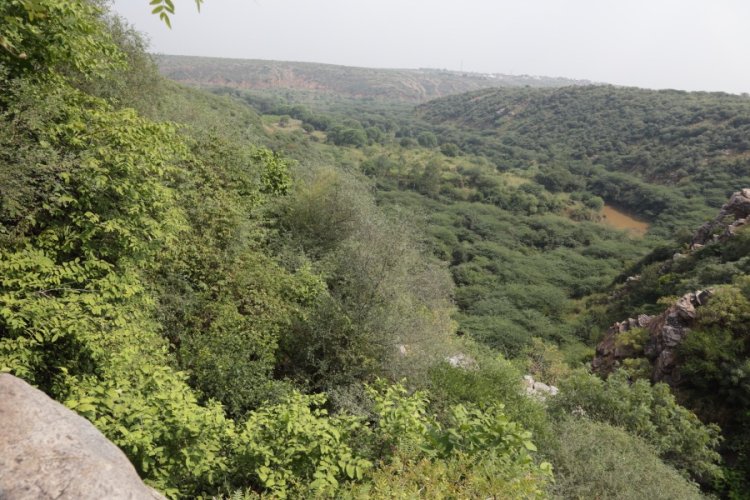
The Aravalli range, among the oldest mountain systems in the world, holds immense ecological importance for north-western India. It functions as a natural barrier against the encroachment of the Thar Desert and contributes significantly to biodiversity conservation and groundwater recharge. Legally, the region is protected under multiple statutory and judicial instruments, including the Environment (Protection) Act, 1986; the Aravali Notification of 1992, which imposes strict limitations on mining and construction activities; and Section 4 of the PLPA, which empowers the state to regulate land use in forested and hilly areas.
Despite these legal protections, the Aravallis continue to face extensive threats from illegal construction, unregulated mining, and unauthorized tree felling often justified under the guise of private ownership or revenue land classification. Nevertheless, judicial pronouncements have consistently affirmed that ecological considerations supersede claims of land title. Accordingly, any activity impacting the Aravalli ecosystem whether undertaken by private individuals or public authorities must strictly adhere to prevailing environmental regulations and obtain all necessary statutory approvals.
Views are personal
What's Your Reaction?