UFZ scientists find nanoplastics on 3,000m+ Alpine glaciers, revealing global plastic pollution's far-reaching environmental impact.
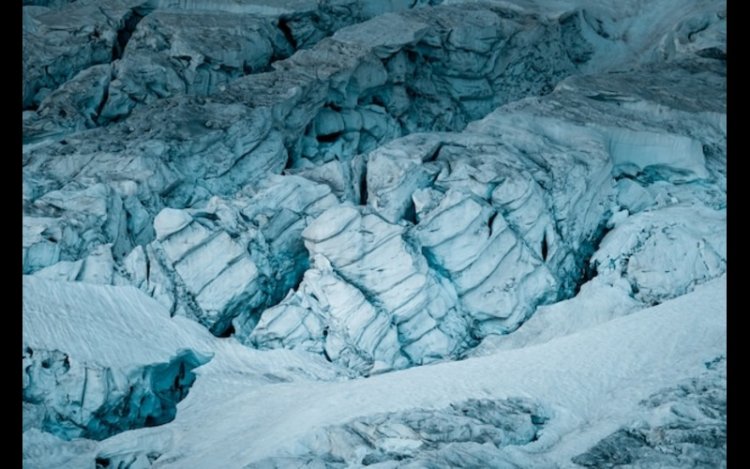
A group of scientists from the Helmholtz Centre for Environmental Research (UFZ) made a worrying discovery—nanoplastics have been discovered on 3,000-meter-plus-high glaciers in the Alps. These tiny plastic particles, less than 1 µm, are highly dispersed throughout the environment because they are light in weight and can cover long distances via the atmosphere. Their occurrence in distant alpine areas indicates that plastic pollution is spreading far beyond the industrial and urban areas, and it now raises new concerns regarding its effects on the environment and public health.
Nanoplastics come mainly from the breakdown of huge plastic objects, including macro- and microplastics. They degrade through a range of processes that include mechanical abrasion, oxidation, hydrolysis, and enzymatic action. Although ecosystem impacts of macro- and microplastics have been extensively researched, there is much less information on nanoplastics. Because they are smaller in size, they are very deadly, since it is possible to inhale them and introduce them into the circulatory system by-passing body filtration mechanisms. As stated by Dr. Dušan Materic, leader of the science team on this study and UFZ chemist, failure to filter nanoplastics poses substantial threats to humans.
Due to their light weight, nanoplastics are easily transported by wind and weather currents over long distances, but not much research has been conducted to monitor their precise movement and origin. In this research, Materic and his colleagues aimed to find out how widespread nanoplastic pollution was in the Alps and where the particles were originating from. Sampling at such high elevations, however, was a major challenge. The glaciers are inaccessible and perilous to visit, involving days of hard trekking in extreme conditions. The scientists thus enlisted the services of seasoned mountaineers to assist in obtaining samples from some of the most inaccessible places in the Alps.
A team of climbers traversed the classic Alpine High-Level Route from Chamonix, France, to Zermatt, Switzerland, collecting snow and ice samples at 14 sites in France, Italy, and Switzerland. Such places were selected after careful consideration so that they are away from tourists' routes in order to protect the samples being gathered from possible contamination by humans. To better avoid contamination, UFZ researchers also held web-based workshops so that the mountaineers are trained on sound sampling practices. The mountaineers employed clean clothes and ropes, and the sampler was always at the fore of the rope team to try and cause little disturbance to the ice being gathered. Sampling was conducted as rapidly as possible to minimize exposure to possible contaminants.
After collection, the samples were analyzed at the UFZ laboratories. Scientists employed a highly sophisticated technique called high-resolution proton transfer reaction mass spectrometry (PTR-MS) in combination with thermal desorption (TD). This method entails combusting the plastic in the samples and analyzing the gases emitted, which yield characteristic chemical "fingerprints" for various plastics. During this process, the team determined that polyethylene (PE) and polystyrene (PS) were the most prevalent plastic types found in the samples, with some tyre abrasion traces. Polyethylene terephthalate (PET), commonly found in plastic bottles, was present in much smaller quantities.
Surprisingly, nanoplastics were found in just five of the 14 sites monitored. This indicates that wind currents have a significant influence on where these tiny particles get deposited. Strong winds in certain locations disperse nanoplastics elsewhere to settle in more protected glacier areas. The nanoplastic concentration in the impacted sites varied from 2 to 80 nanograms per milliliter of melted snow.
To identify where these nanoplastic particles originated from, UFZ researchers worked with scientists from the Norwegian Institute for Air Research (NILU). With a complex atmospheric particle dispersion model known as "Flexpart," they were able to trace the likely sources of the observed nanoplastics. The model took into account different environmental variables, including wind patterns, temperature, cloudiness, and air pressure, to calculate how the particles moved to the glaciers. The analysis revealed that more than 50% of the nanoplastics in the Alps had come from the Atlantic Ocean.
Ocean plastic waste degrades into smaller fragments over time. These nanoplastics are lifted into the air by wave action and bubble bursting, ultimately being transported into the atmosphere and being carried by winds over long distances. Besides oceanic sources, land also made substantial contributions to nanoplastic pollution. The research revealed that over 10% of the particles originated from France, then Spain and Switzerland. These results underscore the widespread and intricate character of plastic pollution, which is no longer limited to urban or industrialized regions.
This study is one component of a broader effort to gain more insight into nanoplastic pollution in remote ecosystems. As a continuation of this work, Materic has taken on the role of scientific director for the Citizen Science project GAPS 2024. This ambitious project aims to expand the study of nanoplastic contamination to glaciers around the world. Mountaineers from various parts of the world, such as Antarctica, New Zealand, and the Himalayas, are gathering ice samples, which will be analyzed in UFZ laboratories to give a better picture of global nanoplastic pollution. Some of the samples have already reached the laboratory and are ready for analysis.
The finding of nanoplastics in the Alps highlights the need to tackle plastic pollution globally. The fact that these tiny particles can travel long distances and settle in some of the most untouched environments on the planet is a cause for concern. As scientists continue to explore the extent of the effects of nanoplastics, there is an increasing awareness that more stringent controls on plastic manufacturing and waste disposal are needed to avoid further polluting ecosystems globally.
What's Your Reaction?