A new study reveals tropical peatland wildfires surged to unprecedented levels during the 20th century, with researchers linking the increase primarily to human-driven land-use changes.
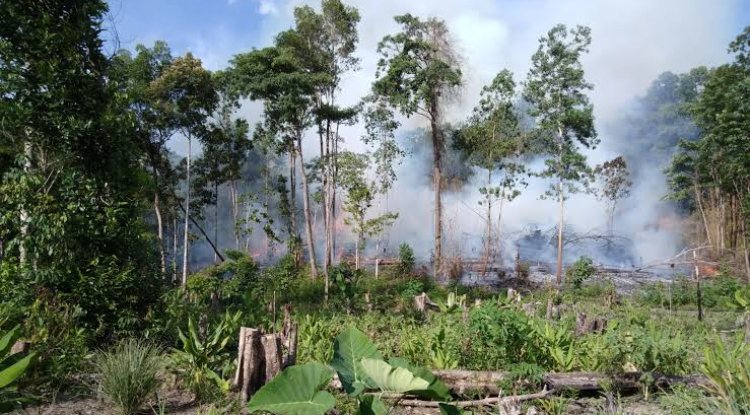
In tropical peatlands, wildfires became unusually common in the 20th century after staying low for about 2,000 years. This has been discovered by a group of researchers who have published the results of their work in Global Change Biology. The experts explain that such changes in wildfire dynamics were not caused by climate variability but by human activities.
Peatlands are one of the biggest carbon pools on Earth, storing more carbon underneath their surface than all of the biomass in global forests put together. Once a peatland is burned, the carbon locked up there is released into the air and contributes to climate change, making it harder to control the temperature on our planet.
In order to learn about the history of wildfires and assess their activity in the past, the researchers examined charcoal traces left in peat soils of Central and South America, Africa, Southeast Asia, and Australasia.
The study showed that wildfires have been slowly decreasing for more than a thousand years as a result of natural shifts in the climate of the Earth. However, the pattern has changed dramatically since the beginning of the 20th century, when fire activity increased greatly in some tropical peatlands of the world.
Most dramatic increases have been observed in Southeast Asia and Australasia. As stated by scientists, extensive draining of peatlands for agricultural purposes and widespread deforestation have made the soils of peatland ecosystems dry enough to be ignited easily. It is believed that such land use changes, instead of the changes in climate, can be responsible for the unprecedented increase in fire activity in the region.
On the other hand, peatlands of South America and Africa have not shown any increase in fire activity. Scientists believe that these peatlands are relatively well-protected because they are not easily accessible and have seen limited agricultural development. Nevertheless, an increase in infrastructure, population, and agricultural activities can lead to future problems with fire activity if there are no proper protections.
According to the scientists, conservation of the tropical peatlands is crucial for controlling carbon emissions and minimizing any future climate effects. It is stated that protection of intact peatlands, restoration of degraded areas, and sustainable land management would minimize the risks of fire occurrence. The protection of these carbon-rich environments is important before more development takes place.
What's Your Reaction?