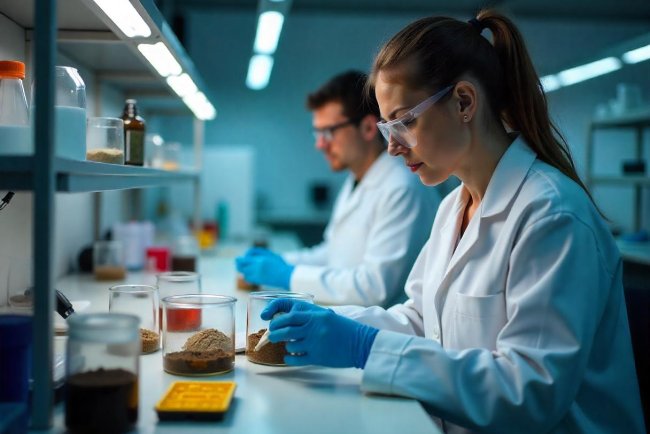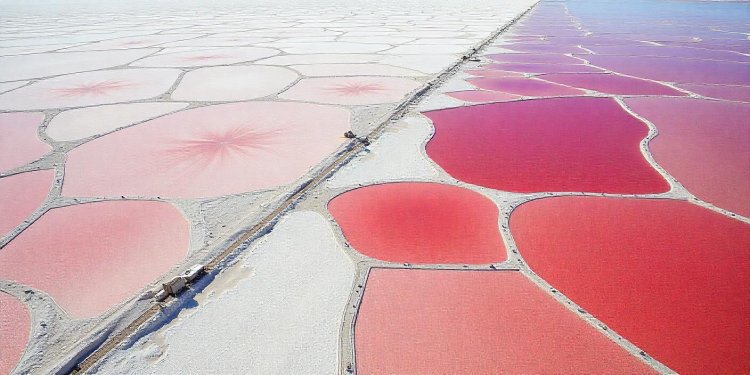
The mining of lithium-brine in Bolivia's Salar de Uyuni has raised serious environmental problems, according to a new study published in Environmental Science & Technology Letters. Under the direction of Avner Vengosh and Gordon Williams, Duke University researchers carried out the area's first thorough chemical examination of wastewater following lithium extraction. Their results draw attention to the possible dangers of groundwater depletion, land subsidence, and arsenic pollution, all of which could have an effect on nearby ecosystems and communities.
The largest lithium deposit in the world, Salar de Uyuni, provides lithium for rechargeable batteries, making it an essential resource for the renewable energy industry. Lithium-rich brine is extracted from underground, concentrated in a sequence of evaporation ponds, and refined into lithium carbonate as part of the mining process. Even while lithium mining at Salar de Uyuni is still in its infancy, comparable activities in Chile's Salar de Atacama have resulted in land sinking and groundwater depletion, raising concerns about potential long-term environmental harm.
Brine samples from the mining site were examined for acidity and harmful trace elements like arsenic. Arsenic levels in natural brine ranged from 1 to 9 parts per million (ppm), but as the brine passed through evaporation ponds, its acidity climbed and its arsenic content sharply increased. The resulting pond had arsenic levels of around 50 parts per million, which is 1,400 times greater than the ecological safety standard set by the US Environmental Protection Agency. Wildlife in the area is at risk from elevated arsenic levels, especially flamingos that depend on brine shrimp, which are extremely vulnerable to arsenic poisoning.
Additionally, rising concentrations of boron, another potentially hazardous element, were discovered by researchers. The lithium processing plant's effluent, on the other hand, has lower levels of boron and arsenic, comparable to those found in natural brines. Potential strategies to stop land sinking, such reintroducing wastewater or spent brine into subterranean reserves, were also evaluated in the study. Both strategies, though, can have drawbacks: wastewater injection might dilute the lithium deposit, decreasing extraction efficiency, and spent brine might mix poorly with natural brine, disturbing the subterranean flow.
Although more research is required to determine its viability, the researchers hypothesised that a controlled blending of leftover brine with wastewater would aid in preserving the ecosystem's chemical equilibrium. Going forward, the team is working with experts to assess the social and environmental effects of lithium mining on Indigenous people and is looking at the geological causes of lithium enrichment in the area.
This research emphasises the significance of sustainable mining procedures to reduce environmental harm as the demand for lithium for renewable energy technologies continues to rise. The results urge more stringent laws and creative ways to strike a balance between the extraction of lithium and the preservation of the environment and local communities.
Source & Credits:
Research conducted by Duke University, published in Environmental Science & Technology Letters. Lead researchers: Avner Vengosh and Gordon Williams.
What's Your Reaction?