Study Reveals Hunga Volcano Eruption Cooled Southern Hemisphere
New research on the 2022 Hunga Tonga eruption reveals its unexpected cooling effect on the Southern Hemisphere, challenging geoengineering assumptions and highlighting complex atmospheric interactions.A UCLA-led study on the Hunga Tonga volcano eruption in 2022 shows that the event caused a cooling effect in the Southern Hemisphere, contradicting initial predictions. This discovery raises questions about the potential risks of geoengineering solutions to climate change.
Hunga Volcano Eruption's Unexpected Cooling Effect in the Southern Hemisphere
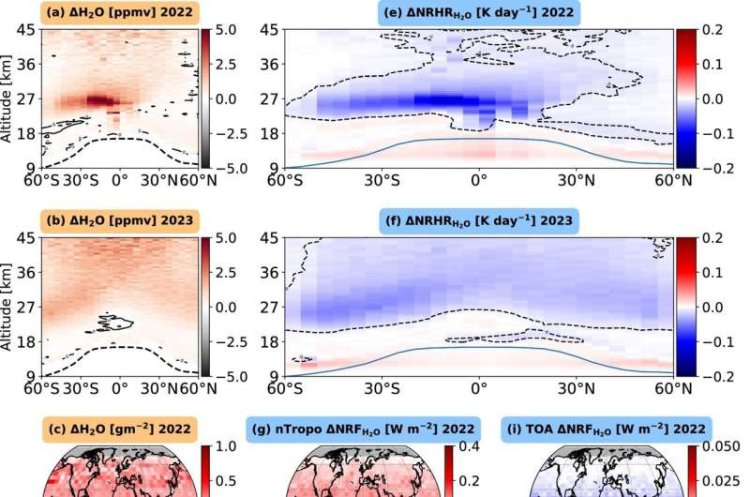
The 2022 eruption of the Hunga Tonga–Hunga Haʻapai volcano in the South Pacific brought with it an unexpected outcome, as a new study reveals the eruption cooled the Southern Hemisphere, contrary to prior predictions. Initially, scientists believed the massive release of water vapor and sulfur dioxide into the stratosphere would significantly warm the planet, pushing global temperatures above the 1.5°C threshold set by the Paris Agreement. However, the study led by UCLA scientists discovered that the eruption's effects were more complex, resulting in a cooling of about 0.1°C in the Southern Hemisphere during 2022 and 2023.
The eruption released a vast amount of water vapor and a moderate quantity of sulfur dioxide into the atmosphere. While water vapor is a greenhouse gas that typically warms the planet, the sulfur dioxide transformed into tiny sulfate aerosols that reflected sunlight back into space. This created a cooling effect, overshadowing the warming potential of the water vapor. This finding challenges previous assumptions about the interaction between volcanic emissions and global climate, particularly regarding the effectiveness of geoengineering efforts.
The study also highlights potential risks in climate intervention strategies that involve releasing sulfate aerosols into the stratosphere to cool the Earth. These interventions are part of geoengineering efforts, which aim to counteract the effects of global warming. The study suggests that such methods may have unintended consequences, as the complex interactions between water vapor, sulfate aerosols, and atmospheric mixing can lead to unpredictable outcomes. Understanding these dynamics is crucial for evaluating the effectiveness and risks of geoengineering.
Despite the cooling observed in the Southern Hemisphere, the study noted a slight warming effect in the Northern Hemisphere due to the lingering presence of water vapor in the stratosphere. However, the overall impact of the Hunga eruption resulted in a slight cooling effect on the planet. This underscores the complexities of climate science and the need for a deeper understanding of atmospheric processes, particularly when considering geoengineering as a solution to climate change.
In conclusion, the unexpected cooling effect of the Hunga Tonga eruption emphasizes the importance of careful consideration in climate intervention strategies. It also serves as a reminder of how volcanic eruptions can trigger complex changes in the atmosphere, with both beneficial and potentially harmful consequences. The study provides critical insights that can inform future climate science research and geoengineering discussions.
Source: Phys.org
What's Your Reaction?