Sundarbans Becomes Second Largest Tiger Reserve
Centre Approves Expansion Of Sundarbans Tiger Reserve, Adding 1,044 Sq Km From South 24 Parganas
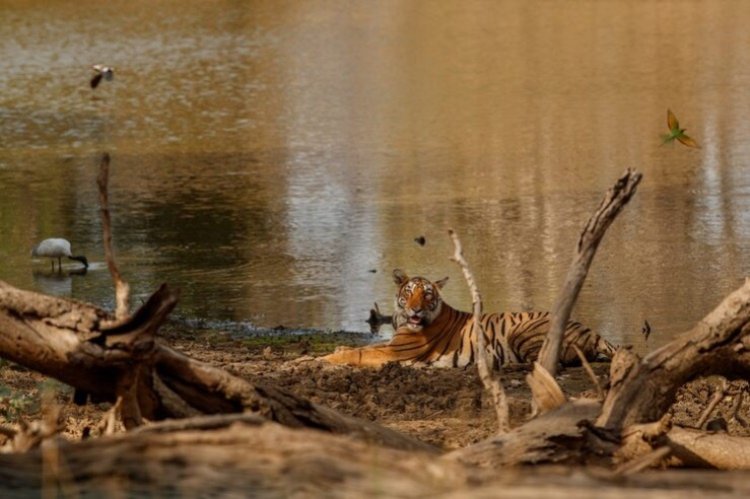
The Centre has approved a significant proposal to expand the Sundarbans Tiger Reserve, a UNESCO World Heritage Site. This expansion will make it the second largest tiger reserve in India, following the Nagarjunasagar-Srisailam Tiger Reserve in Andhra Pradesh. On Tuesday, the National Board for Wildlife, part of the Ministry of Environment and Forests, approved the addition of three ranges from the South 24 Parganas forest division—Raidighi, Matla, and Ramganga—to the tiger reserve. This will add about 1,044 square kilometers of forest land, bringing the total area of the Sundarbans Tiger Reserve to over 3,600 square kilometers.
This expansion is a major development. Previously, the Sundarbans Tiger Reserve covered around 2,585 square kilometers, making it the sixth largest in India. With the new addition, it surpasses several other reserves in size and is now just behind the Nagarjunasagar-Srisailam Tiger Reserve, which covers more than 3,700 square kilometers. Officials and conservationists support this decision, highlighting that a unified management structure will strengthen conservation efforts, improve protection protocols, and attract more central funding for wildlife management in the state.
HS Singh, a member of the National Board for Wildlife, talked to The Times of India. He confirmed the board’s approval of the proposal and explained that the next step is for the state government to issue an official notification. After that, forest officials from Bengal and the National Tiger Conservation Authority (NTCA) will work together to decide how to divide the newly added areas into core and buffer zones. Singh emphasized the importance of effective zoning to balance conservation goals with sustainable use of the forests.
This move has been in the works for a long time. A senior official from the Bengal forest department mentioned that the idea of including parts of the South 24 Parganas forest division in the Sundarbans Tiger Reserve first started nearly a decade ago, in 2012–13. However, it didn’t gain significant attention until a couple of years ago when revised plans were developed and sent back to the Centre. The final version of the proposal reached Delhi only a month ago and received approval surprisingly quickly.
Pradeep Vyas, the former chief wildlife warden of Bengal, recalled that the initial proposal to integrate the South 24 Parganas forests was created during his time. This division, often seen as the buffer zone of the Sundarbans, has long supported the delta's ecology. Vyas pointed out that incorporating these forests into a single administrative structure would allow for better management, quicker decision-making, and create a sense of belonging among staff working in the Sundarbans delta. He added that this unified structure would improve conservation efforts by eliminating administrative overlaps and gaps.
The Sundarbans is one of the world's most unique and ecologically sensitive areas. It is home to the famous Royal Bengal Tiger and many other species that thrive in its fragile mangrove ecosystem. According to the latest nationwide tiger count, the Indian Sundarbans has around 101 tigers. Of these, 80 were found within the tiger reserve, while the rest were recorded in the South 24 Parganas forest division. Including the latter under the Sundarbans Tiger Reserve will bring all of them under the reserve’s conservation framework. This will ensure uniform protection measures across the entire landscape.
Wildlife conservationists and members of the state wildlife advisory board welcome the Centre’s decision. Joydip Kundu, a member of the advisory board, pointed out that expanding the reserve’s boundaries and applying its protocols to the new area will lead to better conservation results. He also mentioned the financial benefits, noting that the central government provides substantial funding for tiger reserves aimed at protection, management, and community development projects. With a larger and unified reserve, Bengal stands to gain from increased funding, which can be used to strengthen protection infrastructure, staff training, and habitat management.
However, the proposal has not yet been widely shared within the state government. Bengal's principal secretary of forests, Debal Roy, told reporters he wasn’t aware of the Centre’s approval at the time of the announcement. Still, officials are hopeful that the notification process at the state level will occur soon, allowing formal implementation.
Experts say that while the expansion is a positive step, the challenge lies in managing the larger reserve effectively. The Sundarbans is not only a tiger habitat; it’s also home to millions of people who rely on the forest's resources. Balancing local community needs with conservation efforts will require careful planning. Forest officials must clearly define core areas strictly for wildlife protection while creating buffer zones where sustainable use can be allowed under regulated frameworks.
This decision also holds broader symbolic significance. By making the Sundarbans the country’s second largest tiger reserve, India demonstrates its commitment to tiger conservation and biodiversity protection. The Sundarbans, already recognized globally as a UNESCO World Heritage Site, is a vital natural asset, not just for Bengal or India, but for the entire world. Its expansion under the tiger reserve structure offers hope that its fragile ecosystems and the endangered species that depend on them will receive the protection they urgently need.
What's Your Reaction?