Tesla and VinFast Launch Showrooms in India’s EV Market
Tesla and VinFast launch showrooms in India’s EV market, signaling fierce competition and highlighting challenges around pricing, localisation, and charging infrastructure.Tesla and VinFast debut in India’s electric vehicle market with new showrooms and SUV pre-bookings starting July 15, 2025. Tesla’s Model Y targets luxury buyers at ₹55 lakh, while VinFast’s VF6 and VF7 offer competitive pricing with local manufacturing plans. As India aims for 30% EV penetration by 2030, success for both hinges on addressing infrastructure gaps, pricing sensitivities, and localisation strategies.
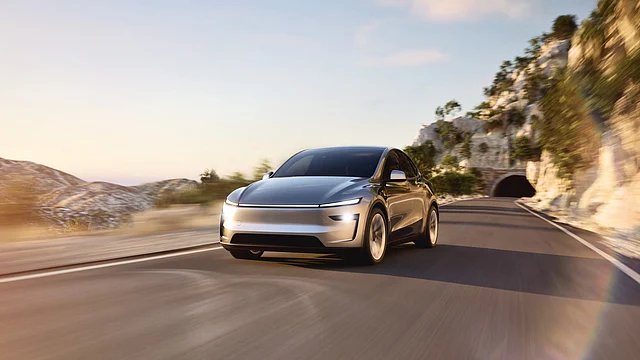
Tesla and VinFast are starting pre-bookings on July 15, 2025, with showroom launches, therefore adding to the already intense competition in a quickly expanding market. Though both seek to get market share, problems like pricing and infrastructure could influence their success.
Tesla launches its first experience center in Mumbais Bandra Kurla Complex, presenting the Model Y at 55 lakh imported from its Shanghai factory. A trade certificate given by the Maharashtra RTO permits road tests and sales. VinFast, a Vietnamese EV producer, is partnering with 13 dealership groups to create 32 stores over 27 cities with 35 targeted by year-end. Starting pre-bookings for its VF6 (25 lakh) and VF7 (50 lakh) SUVs, with a $500 million plant in Tamil Nadu slated to make 50,000 units yearly starting mid-2025, Indias EV market—worth $54.41 billion in 2024—is predicted to reach $111 billion by 2029, with EVs at 2.5% of 4.3 million vehicle sales in 2024, aiming for 30% by 2030.
While VinFasts cheap pricing targets the premium affordable sector, Teslas high pricing with 70% import taxes may limit it to luxury customers; local companies like Tata Motors (60% market share) and JSW MG Motor dominate with inexpensive models. Infrastructure gaps—only 12,000 charging stations countrywide—and India's price-sensitive market present problems. Posts on X emphasize enthusiasm for Teslas brand but notice VinFasts local manufacturing benefit. Incentives from the government, like the PM E-DRIVE plan offering 9.6 lakh per electric truck, support EV growth, but Teslas lack of local manufacturing plans may hamper duty benefits.
For marketing and sales, both firms hope to make use of India's 700 million internet users. Though Tesla is under fire for depending on imported cars amid US tariff issues, India's EV environment might be improved by VinFasts's Middle East and Africa focus. Scaling charging network and local manufacture would be essential for both.
For Indias EV sector, Tesla and VinFast's entry marks a watershed event. Meeting Indias ambitious EV objectives depends on addressing pricing, infrastructure, and localisation issues.
Source: Outlook Business
What's Your Reaction?