Texas Flash Flood Unleashes Massive Destruction
Deadly Texas flash flood rose three storeys in two hours, causing over 100 deaths and widespread destruction, highlighting flash flood dangers and the need for early warning systems.
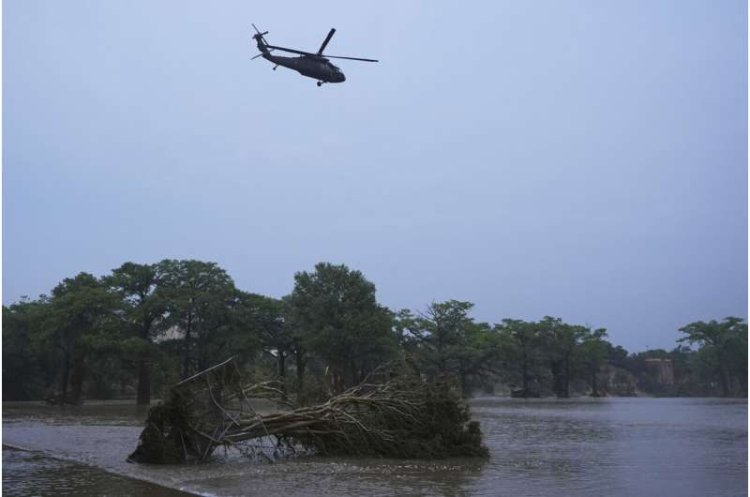
Within the span of just two hours, Comfort's Guadalupe River went from hip-depth to a whopping three-story wall of water, displacing an incredible volume of water downstream — the equivalent weight of the Empire State Building every minute. The July 4, 2025, flood's record intensity made apparent the fatal potential of flash floods in susceptible land. Texas Hill Country.
The increase in river water level at Comfort, below the confluence of numerous rain-filled river tributaries, was one of the highest ever in the region. Flash flooding, James Doss-Gollin, assistant professor of civil and environmental engineering at Rice University, explained, typically happens so rapidly that individuals are unable to comprehend the threat before it is too late. He said that this type of flood has the ability to "warp our brains," so timely and preventative safety measures are required.
The flood brought widespread devastation: buildings destroyed, cars washed away, and massive trees uprooted and scattered around in chaotic heaps. At least 100 were dead, with dozens more missing. Most of the dead died upstream in Kerr County, including at Camp Mystic, a girls' summer camp where the water swept through with little warning.
The water's erosive force relies on its weight and speed. A cubic foot of water weighs around 62 pounds (28 kilograms). At crest in Comfort, the river flowed with 177,000 cubic feet of water per second — or 11 million pounds (5 million kilograms) of water flowing by every second. Its tremendous power can transform quiet streams into torrent rivers strong enough to move huge cars and destroy buildings.
You can't wait for the water to begin rising," Doss-Gollin said. "You have to be proactive and relocate people to safe zones when the lead time is that tight.".
Even quite shallow water is very perilous. Only six inches (15.2 centimeters) of water is enough to knock an adult off his feet, and a two-foot-deep flow of moving water can sweep away a large truck. Venkataramen Lakshmi, a University of Virginia professor of hydrology, likened the impact of flash floodwater to being struck from behind by a semi-trailer in a typical sedan.
When the Guadalupe River reached its peak rise, it didn't take more than 15 minutes for water to build up to a point where it was enough to float massive trucks and threaten buildings. Arizona's Maricopa County Flood Control District flood warning program manager Daniel Henz explained that by the time the water is that strong, it goes beyond threatening vehicles and starts threatening houses and buildings.
Flash flooding is particularly dangerous in that it sweeps up and carries items upward with force — a risk less easily seen than the initial push of flowing water. Upmanu Lall, a water expert who works for Arizona State University and Columbia University, described how buoyant forces can also be more lethal, as they're typically not visible until the point at which the person is already being carried away.
The Texas flood conditions were caused by environmental factors compounded together. The region's landscape is founded on limestone, overlaying a thin layer of soil that cannot soak in the high rainfall. Rather, the water flashes over the surface rapidly, accumulating speed and volume as it hits creeks and rivers.
Flash floods start with a front wave and grow progressively larger as water gathers from all over the landscape. The approaching flood was a wall of water, Comfort witnesses stated. It traveled so powerfully that it warped steel, destroying cars, and uprooted trees like they were grass stalks.
Since the waters of the flood rose rapidly, they fell rapidly also in receding. In a span of five hours after the crest of the river, water dropped 10 feet (3 metres), baring the wreckage that it left behind. Two days later, the river had receded to a point where again a man could walk across it.
"Anything just can happen, very, very fast," Henz emphasized the strong demand for public education and early warning systems in flood-prone regions.
The impact of the flood has also indicated the peculiar vulnerability of Texas Hill Country, which is one of the most perilous places in America to experience flash flooding. Steeply sloping, with high runoff rates from rainfall and growing development in lowlands, the region is a best site for fatal floods.
Experts are demanding enhanced flood preparedness, advanced forecasting capabilities, and greater public awareness to make future disasters less costly. As global warming is predicted to bring increased and erratic weather events, residents of high-risk areas have to move fast to improve their capacity to adapt.
Original Source:
© 2025 The Associated Press. Report by Michael Phillis, edited by Andrew Zinin. All rights reserved.
What's Your Reaction?