GlenAllachie distillery reduces energy use and carbon emissions with new Mechanical Vapour Recompression technology, supporting sustainability and net-zero targets
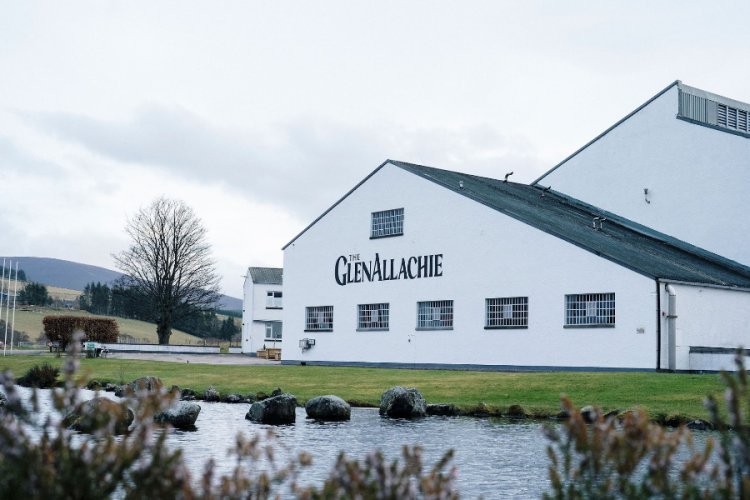
The new distillation system at GlenAllachie distillery in Scotland will cut energy use in whisky production. It uses a distillation technology called Mechanical Vapour Recompression (MVR), which GlenAllachie developed, in collaboration with engineering firm Briggs of Burton, with the support of the Scottish Industrial Energy Transformation Fund (SIETF). The system reduces energy consumption, by recycling waste heat (created during wash for distillation) to allow the stills to be reheated more efficiently. GlenAllachie's distillers estimate that MVR will reduce the energy used in the wash distillation process by over 50%, completing one part in their sustainability pledges.
The considerable emphasis in this project was given to the energy consumption of the pot stills (the spirit stills), these account for around 60 % of the distillery's total energy consumption; therefore, this innovation offers the distillery a substantial opportunity for energy reduction and carbon emissions savings; GlenAllachie distillers estimate that the MVR system will eliminate carbon emissions equivalent to the energy consumption of almost 825 homes annually.
Besides the considerable investment in MVR, GlenAllachie have installed solar panels on site - evidence of more opportunities to reduce their carbon footprint.
Sustainability has become a central element for GlenAllachie, which represents the current movement within the Scotch whisky industry to deliver environmental targets. The sustainability initiatives are complementary to the Scotch Whisky Association's commitment outlining net-zero emissions by 2040. GlenAllachie has committed to environmental initiatives and aims to implement projects related to energy efficiency, cleaner production practices, and encourage biodiversity.
Among the energy efficiency descriptions is the installation of an energy efficient burner with an option to run on hydrogen in place of fossil fuel. And a heat recovery system has been installed, which can capture waste (excess energy from production). And bio-gas processing is capturing waste stream to create a cleaner fuel alternative. Finally, electric puffer trucks are used throughout the facility instead of conventional fuel options.
In addition to the above energy aspects, GlenAllachie's staff is looking at enhancing environmental stewardship notions through environmental initiatives on their estate. We maintain beehives to bother biodiversity, use FSC approved labels and recyclable bottles in hopes of reducing waste by encouraging sustainable packaging options. Our goal is to ensure we integrate environmental commitments into the integrity of our production processes and at the product level.
The design, installation and commissioning of the MVR system was undertaken by Briggs of Burton, an engineering company established in 1732. Having worked with GlenAllachie on distillery equipment and distillery process engineering, they were able to have the new system embedded in the distillery without compromising the quality and traditional nature of GlenAllachie's whisky. This collaboration emphasises how technological advances and centuries of production experience are helping to create a more sustainable whisky industry.
GlenAllachie's owner explained how the project was hugely important to their long-term vision. The investment is not in terms of amount of production capacity increase but in regards to each bottle that will be produced with a more sustainable lower environmental impact and at the same time keeping the high quality. This tends to be the case for GlenAllachie, as a company they approach all developments with an intention of increased innovation and sustainability to ensure that generations to come can still enjoy their whisky with a lower carbon footprint.
The distillery's approach is representative of a growing trend throughout the global spirits industry, where people are incorporating new technological advances to help save energy and lower their impact on the environment. As issues related to climate change and sustainability reach new levels of prominence, companies are further incorporating energy-efficient solutions, renewable energy, and responsible production into their operations. The use of MVR technology at GlenAllachie illustrates how distilleries that have been in operation for many years can embrace modern technology while remaining true to traditional practices and quality levels.
Mechanical Vapour Recompression is a technology that compresses the vapours that are generated from the distillation process, increasing their pressure and temperature; the vapours are then used to reheat the still. This process allows the distillery to recycle energy that would otherwise be wasted, helping the distillery to operate with much less input of external energy. By integrating MVR technology, GlenAllachie can reduce energy costs, and ultimately greenhouse gas emissions, while contributing to broader Scottish environmental goals.
The benefits of a new system extend beyond environmental benefits; by lowering its energy consumption GlenAllachie is also improving the efficiency and reliability of its production processes. With this comes lower energy consumption, which could mean lower operational costs. GlenAllachie could use the money saved to spend in research and development, improve product quality, or fund further sustainability projects. The combination of technological advancement and environmental responsibility has the ability to chart GlenAllachie down a path of leadership in the whisky sectors attempts to embrace greener practices.
The distillery's sustainability programme will dovetail with wider Scotch whisky industry initiatives. The industry is working to hit very ambitious targets for carbon emission reduction, and improvements in energy efficiency, water efficiency and environmentally responsible packaging. By investing in innovative ideas like the MVR, hydrogen powered burners and solar power generation, GlenAllachie is on track to support these targets and acts as an example to other producers in Scotland and elsewhere.
Community engagement and education are a vital component to the distillery's long term environmental strategy as GlenAllachie hopes to inspire other distilleries and local businesses by sharing knowledge around the renewable technological and sustainability initiatives they're taking on. Along with aspect of the biodiversity implications of initiatives like beehives, it also shows how they are actively working to protect and grow with their local ecosystem.
It is fair to say that the introduction of MVR technology is an important advancement for GlenAllachie's sustainability journey. It showed that a process of traditional whisky production can be modernised in a way that dramatically reduces environmental impact (while not compromising the quality and craftsmanship), along with a variety of other energy efficiency measures, renewable energy, and biodiversity initiatives, the distillery is positioning itself as an example of responsible production for the Scotch whisky industry.
As a follow-up, GlenAllachie plans to continue exploring forward-thinking options that improve productivity and provide operational efficiency and better sustainability performance. The efforts of the distillery demonstrate how heritage brands can adapt to a contemporary environmental context in which there is a need to balance new technology, sustainability commitments, and production standards with heritage values. While the Scotch whisky sector is working to achieve net-zero emissions by 2040, projects like GlenAllachie's new MVR system demonstrate how technological development has enabled the companies to achieve better performance with significantly lower energy usage and emissions.
Investments in technology or building capacity or infrastructure that supports a sustainability agenda is building a foundation for the future. Acknowledging the whisky industry's traditional production standards and consumers' expectations of delivering operational efficiency, while considering environmental stewardship indicates how the distilling industry is returning to the long-term vision of constructing a more sustainable Scotch whisky industry that aligns energy efficiency, renewable energy, and environmental stewardship.
What's Your Reaction?