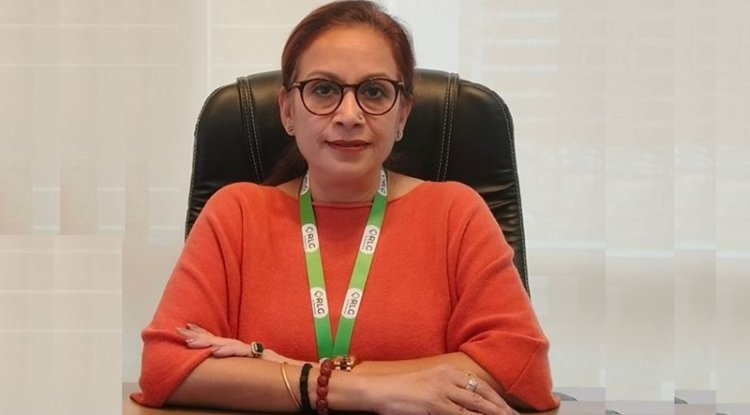
For Badlani, Managing Director of Vihaan Clean & Green Tech and Go Green Mechanisms, sustainability is no longer a choice but the only way industries can secure water, manage costs and keep operations running

In Mehsana’s Mega Food Park, where water use runs high and groundwater is tightly controlled, industries are being pushed to rethink how they operate. For Amit Badlani, Managing Director of Vihaan Clean & Green Tech and Go Green Mechanisms, the answer is not incremental change but a different model altogether. Shared infrastructure, he says, is what makes sustainability workable on the ground.
Badlani’s company runs a common treatment and utility system inside the cluster. Every day, about three million litres of wastewater is treated, with most of it recycled and sent back to the same units. Individual factories do not have to build their own systems or manage the complexity. “Doing this alone is expensive and difficult for most units,” he says. “The idea is to remove that burden and make it viable.”
The model goes beyond water. A centralised steam system replaces individual boilers, and a compressed biogas facility is in the pipeline to handle solid waste. The logic is simple. When infrastructure is shared, costs fall, compliance becomes easier, and resources are used more carefully.
For Badlani, the bigger question is not whether recycling works, but whether industries have a choice. “If you keep extracting groundwater every day, it will run out,” he says. “Without water, production stops. Recycling is not optional anymore.”
This is where he pushes back against the common industry view that sustainability adds to costs. He points to energy choices as an example. A coal-based boiler may look cheaper on paper compared to biomass, which needs higher upfront investment and slightly higher running costs. But that calculation changes when supply chains are disrupted. “If coal supply is hit and your plant shuts down, the losses are far higher than what you saved,” he says. “Continuity matters more than small savings.”
Global uncertainty, in his view, is already forcing this shift. Companies that depended on conventional systems are now reassessing their risks. Those who invested early in alternatives are better placed. He also sees a wider ripple effect, from farmers supplying biomass to logistics players and waste processors, creating a more connected system around sustainability.
Badlani is clear that centralised systems work better, especially in clusters. Technologies for water treatment, emissions and waste are complex. Managing them at one place reduces risk and improves efficiency. It also frees up space and attention for factories to focus on production. “Ideally, this should not be optional,” he says. “Clusters should plan for it from the start.”
The financial case, he adds, is visible even if it varies by site. Shared systems bring scale, which brings down operating costs. “In many cases, you are looking at 15 to 30 percent savings in OPEX,” he says, driven by better utilisation and less duplication.
On the policy side, he sees momentum building around compressed biogas and waste-to-energy. But he flags a gap. As demand for agricultural waste rises, pricing needs some structure. “Farmers are more aware now, which is good,” he says. “But without some regulation, it can become uneven and affect project viability.”
Despite these shifts, he believes the biggest hurdle remains mindset. Many companies still see sustainability as an add-on, not a core part of operations. High upfront costs also slow adoption. Another gap is data. “Without proper monitoring, you don’t know what is working and what is not,” he says. “You cannot fix inefficiencies if you cannot see them.”
What will move things forward, according to him, is a mix of policy, private investment and technology. None can work alone. “Funding will come only if policies support it, and money is not enough without the right technology,” he says.
In India, he adds, change often follows disruption. He draws a parallel with biomedical waste management, which became stricter after public health scares. What was once seen as an extra cost is now built into hospital operations. Sustainability, he argues, needs to reach that stage. “It has to be treated as part of production cost,” he says. “Not something separate.”
For clusters like Mehsana, that shift is already underway. The pressure on water, energy and waste is leaving little room for old ways of working. The question is not whether industries will change, but how quickly they can catch up.
What's Your Reaction?