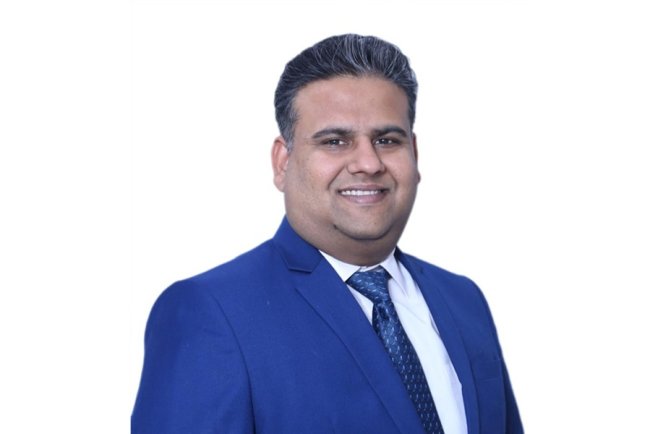
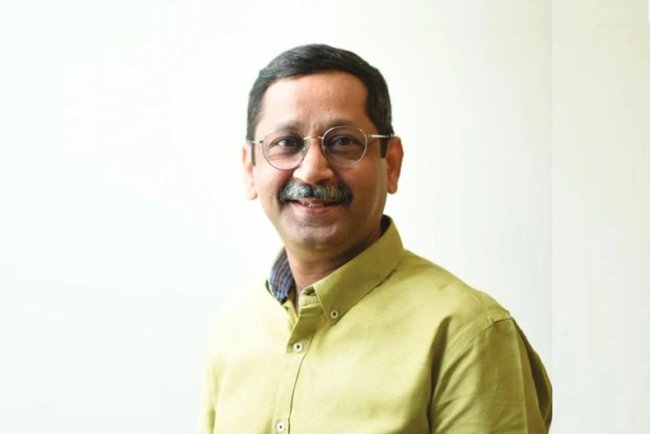
Radhika Kalia, Managing Director of RLG Systems India, speaks about what a functional circular economy looks like in practice, why the informal waste sector is both essential and underserved, and what the next five years will demand from businesses, policymakers, and citizens if India is serious about getting this right

India's waste problem isn't really about awareness anymore. Most people know they should segregate their rubbish. Most companies know they're supposed to have an EPR policy. The harder question — the one that rarely gets a straight answer — is why so little of that awareness translates into what actually happens on the ground.
Radhika Kalia, Managing Director of RLG Systems India, works at the point where the policy language meets the ground reality. She's spent years building waste management and recycling systems, and her view of where India is falling short doesn't start with regulation or consumer behaviour — it starts with infrastructure, traceability, and the gap between what gets collected and what actually gets recycled.
In an email-interview with ResponsibleUs, Kalia spoke about what a functional circular economy looks like in practice, why the informal waste sector is both essential and underserved, and what the next five years will demand from businesses, policymakers, and citizens if India is serious about getting this right.
World Environment Day often focuses on awareness. What practical changes do you think India still needs to make to improve waste management and recycling on the ground?
Awareness has played an important role in bringing sustainability into mainstream discourse, but India's challenge today is no longer awareness alone. The real gap lies in execution, infrastructure, traceability and accountability.
The first and most fundamental requirement is disciplined source segregation. No waste management system can function efficiently if waste is mixed at the point of generation. Segregation must become a routine practice across households, offices, institutions, commercial establishments, airports, industrial facilities and other bulk waste generators.
Encouragingly, India already has working examples that show decentralised waste management can succeed when behaviour is supported by local systems. In Delhi, the Municipal Corporation's Zero Waste Colony initiative reported hundreds of certified zero-waste areas processing approximately 100 tonnes of waste per day through segregation and local treatment. In Bengaluru's HSR Layout, a community-led initiative processed nearly 500 kilograms of wet waste daily through local aerobic composting, demonstrating how citizen participation can significantly reduce landfill dependency when supported by neighbourhood-level infrastructure.
Institutional leadership is also beginning to emerge. Delhi Airport became the first airport in India to receive IGBC Net Zero Waste to Landfill Platinum certification during operations, with nearly 95 percent of its solid waste diverted away from landfills through segregation systems, material recovery facilities, composting infrastructure and real-time waste tracking. Such examples demonstrate that disciplined systems can convert sustainability from a statement of intent into a measurable operational outcome.
From a strategic perspective, however, source segregation alone is not enough. India must also build traceable and authorised waste channelisation systems. The country already has a large informal recovery ecosystem that collects paper, cardboard, metals, plastics and electronic components. That ecosystem plays an essential role, but recovery is often driven by immediate resale value rather than environmental value. As a result, many recoverable materials remain outside formal recycling systems or move through channels that are not sufficiently documented.
The next phase of India's waste management evolution must therefore focus on transforming the traditional collection-centre model into a more structured aggregation-centre model. Aggregation centres can serve as the bridge between informal collection networks and formal recycling infrastructure by improving material quality, traceability, documentation and supply consistency.
At the core of this transformation is what I describe as the 4S Framework – Source, Segregate, Store and Supply.
Source refers to identifying and collecting material streams at the point of generation.
Segregation ensures that materials retain their value through proper classification and contamination-free handling.
Store focuses on safe aggregation, inventory management, quality control and traceability of materials before processing.
Supply ensures that materials move through authorised, documented and compliant channels to recyclers and end-users.
As India moves towards a circular economy, scrap can no longer be viewed merely as waste. It must increasingly be viewed as a secondary raw material capable of being refined into finished products. Aggregation centres built around the 4S Framework can therefore become critical nodes within the circular economy by creating transparency, improving recovery rates, supporting compliance and providing recyclers with reliable feedstock. Such centres can also play an important role in formalising the informal sector while creating economic value from materials that would otherwise be lost to landfill.
India must also continue expanding decentralised processing wherever feasible. Local composting, dry waste collection centres, material recovery facilities and ward-level systems can reduce transport costs, improve recovery and ease pressure on landfills.
The shift from waste management to resource management is already visible in composting, biogas, refuse-derived fuel, construction and demolition waste recovery and recycled materials in infrastructure. A useful example is the increasing use of municipal and plastic waste in road construction. Public reporting around these initiatives has highlighted large-scale waste utilisation in highway projects and a broader policy push to use more municipal waste in roads over the coming years. This demonstrates that with the right policy direction and technology, waste can move from being an environmental liability to a productive input.
Ultimately, effective waste management in India will require behavioural change, infrastructure investment, technology, regulatory enforcement and accountability working together. The objective should not simply be better disposal, but better recovery, better governance and better reintegration of materials into the economy.
The circular economy is becoming a widely used term. What does it actually mean for businesses and consumers in everyday life?
The circular economy is often discussed as a sustainability concept, but fundamentally it is an economic model. It means moving away from the traditional linear pattern of take, make, use and discard, and moving towards a system where materials remain in productive use for as long as possible through reuse, repair, refurbishment, recycling and recovery.
For businesses, this means thinking about the full lifecycle of a product or package—from design and sourcing to use, collection and end-of-life recovery. In practical terms, it could mean designing products that are easier to repair, using packaging that is recyclable, increasing recovered content, reducing waste in manufacturing and distribution, and strengthening compliance and traceability systems.
Forward-looking organisations are already redesigning products to improve repairability, increase recycled content, reduce material intensity and facilitate end-of-life recovery. These changes are driven not only by sustainability goals but also by risk management, resource security and evolving regulatory expectations.
For consumers, circularity begins with everyday behaviour. It means segregating waste, extending product life, repairing rather than replacing wherever possible, returning e-waste, batteries and packaging through authorised channels, and supporting recycled products.
A plastic bottle, cardboard carton, old charger, used battery, mobile phone, tyre or appliance should not be seen only as waste; it is also a material stream with residual value if the right system exists to capture it.
In everyday life, a circular economy succeeds only when collection systems, recycling infrastructure, technology, markets for recovered materials and citizen participation work together. Without that full chain, circularity remains a concept; with it, it becomes an operating model for both business and society.
What are the biggest challenges preventing India from achieving higher recycling and resource recovery rates?
The biggest challenge remains poor segregation at source. When waste is mixed at the point of generation, contamination rises, worker safety declines and recycling efficiency suffers. Even sophisticated downstream systems cannot fully compensate for poor source-level practices.
The second challenge is weak traceability and uneven channelisation. India's collection ecosystem is extensive, but the movement of materials through authorised and documented channels remains inconsistent, especially for regulated streams such as e-waste, batteries, plastics, tyres and used oil where compliance, safety and reporting are increasingly important.
A third challenge is the gap between recoverable value and actual recovery. Many materials have significant value if aggregated and processed at scale, yet materials with low immediate resale value are often ignored even though they may have long-term environmental and economic value within formal systems.
Infrastructure remains another major constraint. Many cities still need more material recovery facilities, decentralised processing systems, composting units, dry waste centres, authorised recycling networks and safer handling systems for regulated waste streams. Examples such as Delhi's zero-waste colonies, Bengaluru's local composting model and Delhi Airport's integrated waste management system demonstrate that when infrastructure exists, recovery outcomes improve significantly. The challenge is scaling such models nationally.
Behavioural inertia also continues to hold the system back. Although sustainability awareness has improved, convenience still too often takes precedence over responsible disposal.
In parallel, workforce formalisation remains critical. India's waste ecosystem depends heavily on informal workers, and integrating them into safer, more transparent and economically sustainable systems will be essential for both better livelihoods and better environmental outcomes.
Finally, recycling cannot scale through collection alone. It also needs stronger demand for recycled materials, clearer quality standards and markets that treat recovered material as a serious industrial input rather than a secondary alternative.
How can producers, consumers and policymakers work together to reduce waste and build a more circular economy?
A circular economy is fundamentally a shared-responsibility model. It cannot be created by one stakeholder alone. Producers, consumers, policymakers, municipal bodies, recyclers, waste management companies and institutions all have distinct but interdependent roles.
Producers must adopt lifecycle thinking. Their responsibility extends beyond manufacturing and sales to include collection systems, Extended Producer Responsibility (EPR) compliance, authorised recycling partnerships, traceability and end-of-life accountability. Increasingly, the market will expect producers not only to sell responsibly but also to recover responsibly.
Consumers play an equally important role through segregation, participation in take-back systems, proper disposal, extending product life and supporting recycled or responsibly produced goods. Circularity begins with everyday behaviour, and no policy framework can compensate if citizens do not participate in disciplined disposal practices.
Policymakers create the enabling framework through regulation, standards, enforcement, incentives and infrastructure support. India has already taken important steps through the Solid Waste Management Rules, Swachh Bharat initiatives, EPR frameworks and policy support for waste-to-energy and recycled-material applications. The use of waste in road construction and the growth of local segregation and composting initiatives show how policy can help move the system from disposal towards recovery.
Implementation, however, requires deeper coordination. Municipal bodies must ensure segregated waste remains segregated during collection and transport. Recyclers must invest in environmentally sound processing and documentation. Waste management companies must act as the operational bridge between households, bulk generators, producers, recyclers and regulators. Resident welfare associations, schools, airports, commercial establishments and institutions can create disciplined local systems that make circularity work on the ground.
A truly circular economy will emerge only when policy direction, business investment and citizen participation reinforce one another in a coordinated way.
Looking ahead, what are the key trends you expect to shape the recycling and sustainability sector over the next five years?
The next five years are likely to be transformational for India's recycling and sustainability ecosystem. The sector will move beyond waste collection and disposal towards traceability, compliance, resource recovery, formalisation and circular value creation.
First, traceability will become central.
Waste management will become significantly more data-driven and auditable. Companies, regulators, investors and customers will increasingly demand visibility into how waste is generated, collected, transported, processed, recycled and recovered. Digital tracking, audit trails, compliance dashboards and real-time reporting will become standard capabilities rather than optional enhancements.
Importantly, traceability will no longer be driven solely by environmental regulations. It will also become critical from a GST, financial governance and risk-management perspective. One of the longstanding challenges within the recycling ecosystem is the movement of materials through fragmented and often informal channels. This can create concerns around invoice matching, Input Tax Credit compliance, valuation disputes, documentation gaps and audit scrutiny.
As the circular economy becomes increasingly formalised, businesses will be expected to demonstrate that recyclable materials move through authorised, documented and compliant channels. Robust traceability systems will help organisations mitigate GST-related risks, strengthen internal controls, improve audit readiness, reduce exposure to undocumented transactions, support EPR reporting and provide assurance that sustainability claims are backed by verifiable material flows.
Increasingly, environmental compliance, financial governance and tax compliance will converge through traceability. From a Board and leadership perspective, traceability should therefore be viewed not merely as a sustainability requirement but as a strategic capability supporting regulatory compliance, tax governance, ESG reporting, risk management and stakeholder confidence.
We are also likely to witness the emergence of organised aggregation-centre networks operating on the principles of the 4S Framework – Source, Segregate, Store and Supply. These centres will increasingly become the operational backbone of India's circular economy by improving traceability, supporting GST compliance, facilitating EPR fulfilment, strengthening material quality and creating reliable supply chains for recyclers and manufacturers. Over time, aggregation centres may evolve into the equivalent of raw-material hubs for the recycling industry, connecting waste generators, informal collectors, recyclers and end-users within a documented and compliant ecosystem.
Second, EPR-led accountability will strengthen.
Industries dealing with plastics, electronics, batteries, tyres, used oil, packaging and end-of-life products will face higher expectations around collection, documentation, recycling and recovery performance.
Third, resource recovery will become a stronger value-creation opportunity.
E-waste, battery waste, plastics, organic waste, wastewater and construction waste will increasingly be treated as resource streams rather than disposal burdens.
Fourth, decentralised and localised solutions will gain momentum.
Ward-level planning, local composting, dry waste collection centres and neighbourhood recovery systems will become more important in cities. The practical success of zero-waste colonies in Delhi and composting initiatives in Bengaluru shows the direction in which urban waste systems can evolve.
Fifth, workforce formalisation will accelerate.
India's recycling ecosystem depends significantly on informal collectors and aggregators, but the coming years will require safer, more transparent and technology-enabled models that improve livelihoods while strengthening compliance and environmental standards.
Sixth, waste-to-value infrastructure will expand further.
Composting, biogas, RDF, co-processing, construction and demolition waste recovery and the use of plastic and municipal waste in infrastructure are likely to attract greater investment. The growing use of waste in road construction is particularly important because it shows how circularity can be linked to national infrastructure development.
Seventh, procurement and investment decisions will increasingly incorporate sustainability metrics.
Businesses and governments will evaluate suppliers, materials and projects not only on upfront cost but also on recycled content, lifecycle impact, carbon footprint, resource efficiency and circularity performance.
Looking Ahead
The defining themes of the next phase will be traceability, compliance, resource recovery, formalisation and circular value creation. Organisations that invest early in these capabilities will be better placed not only to meet evolving regulatory, GST and ESG expectations, but also to unlock economic, operational and reputational value.
The future of sustainability will be defined not merely by how waste is disposed of, but by how effectively resources are recovered, governed, tracked and reintegrated into the economy.
What's Your Reaction?