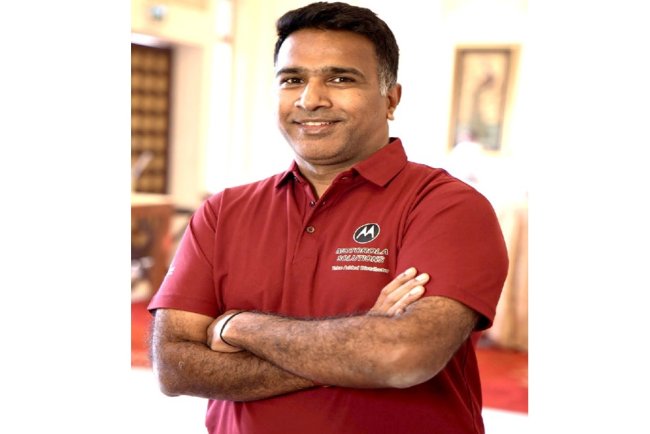
Our System Stores Daytime Energy To Use During Peak Hours: Hiren Pravin Shah, MD & CEO, Replus Engitech
Shah explains how they built the country’s first fully indigenous solution designed to perform in extreme Indian conditions
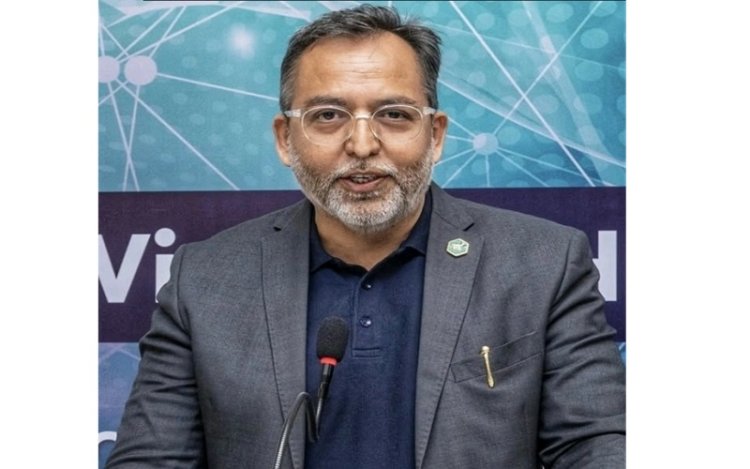
According to the International Renewable Energy Agency (IRENA) data, India has outpaced Japan (96,459 GWh) by producing 108,494 GWh, and it is quite evident that the country is ahead in its target of achieving 500 gigawatts (GW) of non-fossil fuel-based energy capacity by 2030.. The country is getting closer to its goal, with progress now extending beyond power generation to include advanced systems for storing green energy.
Many companies showcased their innovations in the energy space — from advanced solar panels to battery storage systems — during the 18th edition of the Renewable Energy India (REI) Expo. In an interview with ResponsibleUs, Hiren Pravin Shah, MD & CEO, Replus Engitech Private Limited (A Subsidiary of Bhilwara Energy Limited), who unveiled a Make-in-India battery storage system at the expo, explains how they built the country’s first fully indigenous solution designed to perform in extreme Indian conditions while setting new standards for renewable energy storage.
Excerpts:
What motivated the creation of this 5 MWh liquid-cooled energy storage device, and what distinguishes it from others?
This is India's first 5-megawatt-hour, 20-foot container, which is basically a liquid-to-technology system. We designed and fabricated this entire container ourselves in India, with the help of our partners, and handled all engineering and development in-house through local partners. It’s truly a made-in-India product.
Walk us through the system in detail?
Each rack in the container has eight battery modules that were created by our team and produced in our plant. These consist of sensors, a master-slave setup, and a Battery Management System (BMS). The Indian geographical conditions were taken into consideration when designing the entire system. In India, we have very high temperatures in some places. Keeping the highest temperature in mind, we have set the container’s temperature limit to 55°C. For instance, the temperature in Rajasthan ranges between 50 and 52°C, which is manageable under this battery storage technology. As internal temperatures are automatically adjusted, the internal system is maintained between 25 and 45 degrees by its liquid-cooling system. It cleverly controls the temperature within this container, keeping the cells at 25 degrees regardless of the outside temperature. It guarantees 8,000–10,000 cycles, or 12–15 years, of battery life. In the absence of this temperature regulation, the rate of degradation would increase sharply.
Safety and reliability are very important for such large systems. What technologies have you added to ensure protection and monitoring?
The container has a firefighting system. So, one releases a chemical agent to remove oxygen and stop fire propagation, and the second is the sprinkler system, which doused the fire. It also includes a master control panel from where you get all the data of each cell, every single cell, every brand, every module on the HMI. It provides real-time data on every cell, temperature, current, and performance, which can be remotely monitored and controlled. This always ensures complete visibility and safety.
How does this technology support renewable integration and grid stability?
The application can go with a solar and wind firm. Wind and solar power are sporadic energy sources. During the day, the solar curve is parabolic; it peaks during the day and decreases at night. We require energy during peak hours, which are between 6 pm to 10 pm and in the morning before the solar starts generating. Our system stores energy generated during the day and supplies it during peak hours. It helps smooth out the energy curve, ensuring stable power delivery for solar and wind farms.. It’s ideal for applications requiring peak load management and renewable balancing.
What level of investment and local development has gone into building this system?
We have already invested over ₹125 crore in R&D, testing, and validation infrastructure. An additional ₹300 crore is being invested to expand our facility to 5 GWh, bringing the total project value to around ₹450–500 crore. Everything except the cell is made in India — from copper busbars and sensors to embedded systems and software. Even the liquid-cooling system was co-developed with an Indian partner and is ready for mass production.
What is your future for expansion and technological development?
We are executing 1 GWh of energy storage projects and 200 MWh of EV projects, with next year’s ESS pipeline expected to reach 2.5 GWh. Our current cost is at par with Chinese systems — around $70 per kWh — but scaling will lower it further. We’re also developing advanced Energy Management Systems (EMS) and plan to integrate batteries, power electronics, and EMS into plug-and-play solutions. Over the next three to four years, we’ll invest another $50–100 million in new platforms and, eventually, consider setting up our own cell manufacturing unit to strengthen India’s energy ecosystem.
What's Your Reaction?