Being aware of local conditions while engaging with the surrounding community, while letting design adapt to the way spaces are used, can bring social impact beyond the abstract and into the everyday
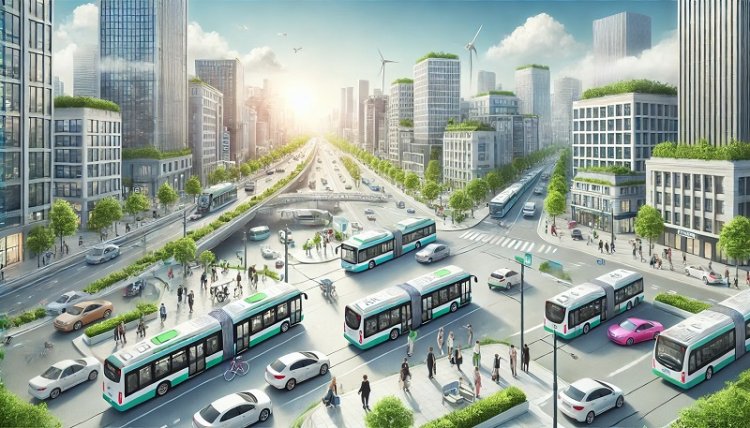
The city's character is revealed not just through its buildings, but by the way the people live there. It is reflective in the ease with which a child walks to school, an elderly resident accesses healthcare, or a worker reaches home safely after a long day. These indicators usually say more about urban progress than certification or rating. Yet in the real estate sector’s growing focus on ESG, these lived realities still receive less attention than energy metrics and compliance frameworks.
By 2030, over 40% of the world's population will live in cities, which will add close to 200 million urban inhabitants within just a decade as per the McKinsey Global Institute. The magnitude of this growth puts huge pressure on the way that cities are designed, built and used. In this way, real estate decisions have implications that go beyond the building, impacting accessibility, mobility, and the quality of life.
Rethinking ESG Priorities in Real Estate
Standards for governance and environmental performance have been advancing faster than the social aspect of ESG. India has witnessed the steady growth of green-certified structures, which is supported by rating systems like IGBC and GRIHA as well as the growing use of energy-efficient products, low-VOC finishes, recycling of water and passive design methods. Green financing has also gained momentum, with banks and institutional lenders increasingly linking capital to sustainability-linked disclosures and performance benchmarks.
India is introducing sustainability standards that govern the design and construction of buildings as well as how they are run. Its Energy Conservation Building Code supports the design of buildings that are energy efficient as well as rating systems like IGBC and GRIHA, which encourage conservation of water and low-impact materials, as well as less waste and improved indoor air quality. These frameworks are extensively used in commercial and residential developments, and in some cities, they are tied to incentives like faster clearances or tax-free benefits. Together, they help to shift environmental performance from intention to measured practices.
Policy and Green Compliance in India's Built Environment
The policy environment has played a key role in the acceleration of this change. Government initiatives to promote efficiency in energy as well as renewable integration and resource optimisation, have made the environmental impact more evident and, in many cases, quantifiable. Frameworks for governance around disclosures and reporting have taken the same pattern. The social pillar, however, has not maintained its position. While it is the most closely viewed by the community and its residents, it's still difficult to define. An even more difficult task is to monitor these, and it is easier to over-prioritise.
In this regard, developers' responsibilities go beyond the construction of structures. Each project has an impact on mobility patterns as well as accessibility to facilities, work opportunities, and social cohesion. If housing clusters are designed with inadequate schools, healthcare accessibility, pedestrian infrastructure, or open spaces for public use, the price is not borne solely by the people living there, but also by urban systems that have been stretched in the course of time.
Social responsibility was traditionally a part of real estate and was considered to be an indirect result. If homes were constructed and basic amenities offered and the impact of that was considered to be a result. This is no longer the case. The modern homeowner and community are looking for developments that promote well-being as well as accessibility and convenience. Social value is not merely intangible anymore. It is apparent in the way spaces are utilised and the way communities function after the acquisition.
From Theory to Everyday Impact
Prioritising the "S" in ESG requires a shift in the way projects are not just designed but even approached. Attention to the social aspect changes the way the project is developed right from the beginning. Concerns about accessibility, as well as safety and affordability, are discussed in the early stages, usually before designs are completed and then not retrofitted until later. In a lot of cases, the distinction is in the smallest of decisions. The distance people must walk every day, whether the shared spaces are a good fit or are merely symbolic, and the amount of time spent in commutes instead of staying home. These decisions also have environmental implications. The use of walkable designs, shared amenities, and a closer connection to workplaces helps reduce energy usage as well as traffic pressure and consumption of resources. If developers can approach sustainability by examining the way people live their lives, it becomes a tangent of the social impact, rather than being a separate goal to be accomplished later.
People Behind the Projects
Workforce welfare is a second important yet unrecognised aspect of the social impact. Construction workers and facility management teams are the core of the industry. Health and safety are of utmost importance. So it is an important part of social responsibility to have safe working conditions, access to decent accommodations and opportunities for skill growth. If these issues are not addressed, ESG narratives ring hollow. When they are properly addressed, they can create a more robust and ethical environment for development.
The measurement process remains the most difficult element on the socio-economic agenda. In contrast to carbon emissions or water use, social outcomes do not permit any one measurement. The complexity of the issue often leads to broad statements and not enough accountability actions. Yet meaningful indicators do exist. Access to essential services, the average reduction in commute time, safety benchmarks, job generation, community involvement and long-term stability of occupancy offer tangible measures of social performance. These social indicators are now being integrated into planning frameworks as well as post-completion evaluations, strengthening the connection between the outcomes of communities and asset performance and trust over the long term.
There is a clear business argument. The developments that promote positive social environments have higher retention rates, more regular maintenance, and a higher demand. People who feel connected to their environment are more likely to invest emotionally in their local communities. However, projects that ignore social factors are often prone to higher levels of turnover, as well as governance issues and reputational risk.
Different Places, Different Needs
The social component of ESG cannot be addressed with regular checklists. What works in an inner-city neighbourhood may not be as effective in a growing township or a mixed-use area located on the urban fringe. Social priorities can change from one place to another. What is important in a dense urban neighbourhood may not translate well to a rural township or a mixed-use zone. These distinctions become more apparent with time, and frequently through daily usage. Being aware of local conditions while engaging with the surrounding community, while letting design adapt to the way spaces are used, can bring social impact beyond the abstract and into the everyday. Like all models, ESG continues to evolve as markets and cities change. Currently, it's about recognising what the most important thing is that keeps cities going for a long time after projects are finished.
Views are personal
What's Your Reaction?