Tornado Activity Spreads Eastward Across US in 2025
The U.S. has seen a dramatic shift in tornado activity in 2025, with over 960 tornadoes reported and Tornado Alley expanding eastward. Unusual patterns, high storm frequency, and increased risk are redefining tornado safety and preparedness across the country.
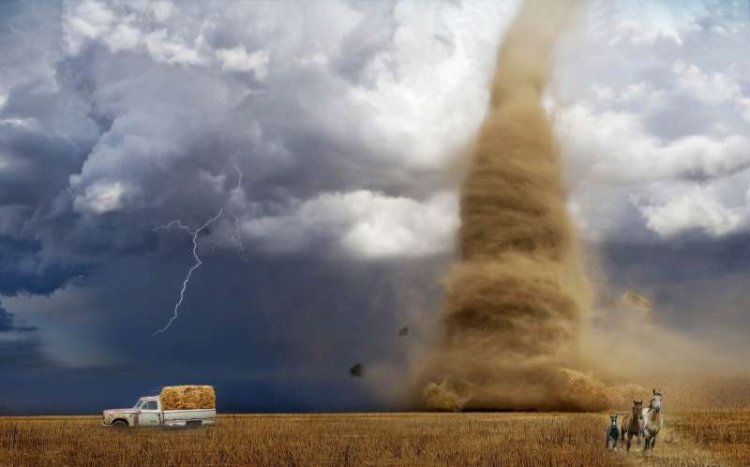
The year 2025 has marked an unusually active and deadly tornado season in the United States, with a significant shift in both geography and frequency of events. As of 22 May, over 960 tornadoes had been reported nationwide, far exceeding the 15-year average of approximately 660 tornadoes by the same time. This places 2025 on track to match or surpass 2024, which was already the second-most active year in recent memory.
One of the most notable developments this year is the expanding geographical range of tornado activity. Tornado Alley, traditionally centred in the Great Plains region spanning Texas to Nebraska, has now shifted dramatically eastward. Nearly every state east of the Rocky Mountains has reported tornadoes, including areas not typically known for severe storm activity such as Delaware, Florida, and Kentucky. The recent tornadoes in St. Louis, Missouri, and London, Kentucky, are stark examples of this broader distribution.
A record-breaking March contributed heavily to 2025's high tornado numbers. During that month alone, 299 tornadoes were reported, more than tripling the historical average of 80 for March over the past 30 years. Two major outbreaks accounted for the bulk of the activity. From 14–16 March, about 115 tornadoes struck states ranging from Arkansas to Pennsylvania. A second outbreak from 31 March to 1 April produced 145 tornadoes affecting areas from Arkansas to Iowa and beyond.
Although April and May did not continue the same explosive trend, tornado activity has remained consistent without the long periods of calm that usually occur when high-pressure systems dominate the central U.S. Instead, the jet stream has remained in a wavy pattern, promoting a steady flow of stormy conditions conducive to tornado formation. This weather pattern resulted in tornadoes reported across a wide range of states in May, including Colorado and Minnesota.
The meteorological setup in early 2025 included a weak La Niña pattern, often associated with a stormier jet stream and more tornado activity in the U.S. Additionally, unusually warm Gulf of Mexico waters in March fuelled moisture-rich air masses that intensified thunderstorm systems. These factors diminished by April, but the persistently active jet stream continued to produce severe weather events.
The geographical shift in tornado occurrences has been particularly evident in the Mississippi Valley region. States from Illinois to Mississippi have seen concentrated tornado activity, moving the seasonal tornado hotspot eastward. Traditionally, this area sits on the eastern fringe of Tornado Alley, but in 2025 it has become the epicentre. This regional realignment also reflects broader long-term trends, with more tornadoes now occurring earlier in the year, further east, and in larger outbreaks.
Data over recent decades suggest that although the total number of tornadoes may have slightly declined—especially those rated EF2 and above—tornado days now often involve multiple tornadoes instead of isolated incidents. The phenomenon of fewer but more intense storm days may be linked to broader climate variability, though definitive causal links remain under investigation.
The shift of tornado activity into the southeastern U.S., often referred to as "Dixie Alley," poses new challenges for disaster preparedness and response. Tornadoes in this region are more likely to strike overnight, reducing the ability of residents to respond quickly. This was tragically evident in London, Kentucky, where a late-night tornado caused multiple fatalities, particularly among older residents.
Increased winter tornado activity has also contributed to a heightened risk profile. People are typically less prepared for tornadoes outside the traditional spring and summer months. This seasonal unpredictability underscores the importance of year-round vigilance and public awareness, especially in areas that previously considered themselves at low risk.
Tornado detection and forecasting have improved significantly over the past 50 years, saving countless lives. However, these advancements are only effective if the warnings are received and acted upon. With tornadoes occurring at unusual times and in unfamiliar locations, there is an urgent need for improved public education on tornado risk and safety protocols.
While some trends in tornado activity—such as the eastward shift and clustering of outbreaks—are consistent with predictions about the effects of a warming climate, scientists remain cautious. The long-term trajectory of tornado frequency and intensity is still uncertain. Ongoing field research and improved modelling are expected to provide more clarity in the years to come.
The concept of Tornado Alley is evolving. In 2025, it encompasses nearly all land east of the Rockies and west of the Appalachians. As the traditional patterns of tornado occurrence become less reliable, the emphasis must shift toward continuous risk assessment and preparedness across a wider region. The experience of 2025 serves as a powerful reminder that even one tornado can result in significant loss and destruction. For residents across the U.S., the message is clear: preparedness should not be limited to spring or confined to the Great Plains.
Source and Credits:
This article is based on reporting by The Conversation, written by Daniel Chavas, edited by Gaby Clark, and reviewed by Robert Egan. Original article © 2025 The Conversation, provided under Creative Commons (CC BY-ND 4.0).
What's Your Reaction?