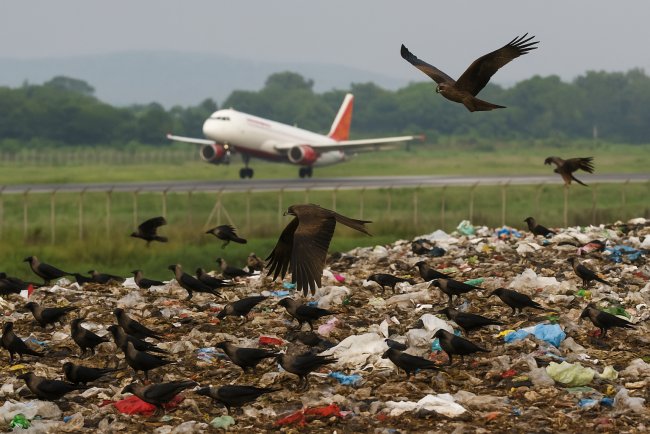
The approval to cut 1,279 trees for Delhi’s Bijwasan Rail Terminal highlights a conflict between infrastructure expansion and the protection of fragile urban ecosystems, even the matter is yet to decide in court.

This approval for cutting 1,279 trees for the Bijwasan Rail Terminal in Delhi has reopened an unfinished and deep debate as to whether expansion of infrastructure can any longer continue with fragile urban ecosystems being sacrificed. While the authorities describe the move as essential to ease congestion and improve connectivity, environmentalists say this decision reflects a pattern of ecological neglect carried out even as courts are hearing the matter.
Why the Project Is Moving Forward
The Bijwasan Rail Terminal is being created in the vicinity of Dwarka Sector 21, in the vicinity of the Indira Gandhi International Airport terminal. Currently, the proposed aim of the development is to de-congest New Delhi Railway Station by handling trains heading to Western India and states like Rajasthan and Gujarat. To facilitate these developments, the Rail Land Development Authority wanted approval to cut down trees that block approach roads, skywalks, metro connections, and other external infrastructure.
The Centre Empowered Committee, a statutory body operating under the supervision of the Supreme Court, has cleared the cutting down of 1,279 trees, slightly short of the initial requirement of 1,293. This has essentially knocked off the final hurdle for work to proceed in defiance of the lack of a judicial decision.
What the Supreme Court’s Position Actually Is
There is a common misinterpretation that the Supreme Court has approved the project completely. That is incorrect. The matter is sub-judice both in the National Green Tribunal and in the Supreme Court. The Court has yet to pronounce a judgement on whether the region is a "deemed forest" or whether the large-scale destruction of trees in such a region is legal.
What has happened in this case is that the Court has allowed expert authorities like the Centre Empowered Committee to examine the matter and send some suggestions in this context. What has been interpreted here by the authorities is sufficient reason to continue the process, even as the basic environmental issues remain unaddressed in its totality by any judicial proceeding at its end stage.
Why the Area Is Being Called Dwarka Forest
This land has been known to environmental groups and local communities as the Dwarka Forest, or a 110-120 acre sprawling area of land where nature has managed to create a greens patch over the decades. Estimates have identified over 25,000 different trees, which thrive to create a self-sustaining ecosystem rich in biodiversity, including but not limited to bird species, Nilgais, small animals, reptiles, and migratory bird samples.
In the Indian environmental laws, a forest need not be notified to be considered a forest, but if the land satisfies the conditions of the ecological system of trees per unit area and diversity of flora and fauna, then such land shall be considered a deemed forest. This issue is one of the major disputes in the case.
The Environmental Cost Beyond Tree Numbers
According to officials, the effects on the environment will be neutralized by measures that include relocating 496 trees inside the site and other plantations in the zones of outer and Delhi railways. However, environmentalists often debunk that matures trees growing in a natural environment cannot be equated to tree seeds planted in another region.
The Dwarka Forest is an “urban lung” in this regard, as it reduces the effect of the airport and traffic zones’ air emissions. It is also helpful in reducing the effect of extreme heat in an area where the temperature regularly crosses 45 degrees. This is an area where the air quality is usually hazardous in extent. The destruction of “green buffers” like this one exposes the population to various health hazards.
Why Environmentalists Are Alarmed
Environmental activists believe that cutting down the forest when the case itself is still undergoing judicial observation goes against the whole concept of having judicial oversight for the environment. This has been referred to as environmental violence by activist Tannuja Chauhan, who sees the deterioration of air quality in Delhi and heat stress as a direct result of infrastructure development decisions.
They also maintain that the environment crisis in Delhi is not due to one project but due to shrinking environmental pockets systematically around the city.
The Development Argument
The government’s perspective would point to the fact that the Bijwasan terminal is a very important infrastructural project. This project has promised modern amenities for passengers and fully automated connectivity to Metro Airport Express, bus terminals across state boundaries, and expressways. This project has also included eco-friendly features of solar energy, rainwater harvesting, and water recycling.
It has been argued, however, that such attributes of sustainability in technologies cannot mitigate the damage being inflicted on a viable natural environment.
The Larger Question Delhi Must Answer
The Bijwasan Railway Station may also lead to enhanced connectivity and reduction of congestion. On the other hand, it shall irreversibly change a rare natural ecosystem, which can never again be achieved. The Supreme Court has not yet adjudged upon this issue regarding its legalness or validity, but its effects can already be witnessed.
The question is not whether Delhi needs development. The question is whether Delhi can continue to sacrifice its last remaining green areas and still intend to breathe, cool off, and live in the years to come.
What's Your Reaction?