The rollback is creating uncertainty for companies that have invested in cutting emissions, especially in high-pollution industries. Even so, investors continue to expect companies to manage climate risks.
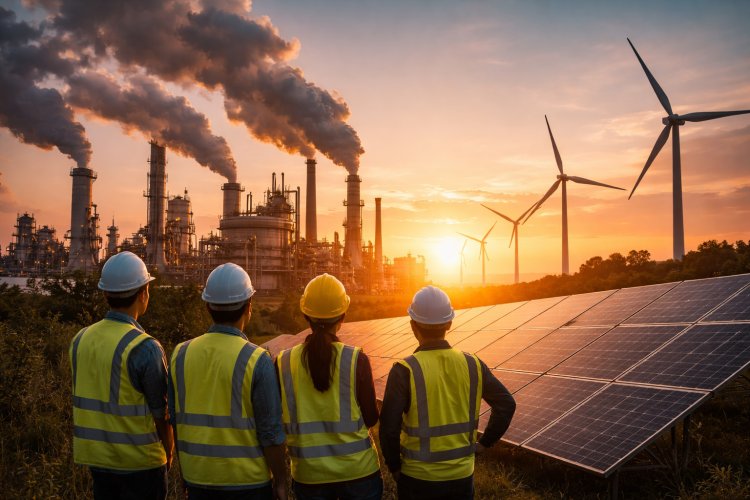
Investors and business groups have said the Trump administration’s plan to overturn the Obama-era legal basis for greenhouse gas rules will create confusion and increase costs for companies and investors, according to Reuters.
U.S. President Donald Trump plans to formally cancel the 2009 scientific finding that linked carbon dioxide to health risks. This finding has guided pollution rules for more than 15 years. The move is the biggest climate policy rollback by the Republican administration so far and follows several steps aimed at easing regulations, supporting fossil fuel development and slowing down clean energy growth.
Asset managers and shareholder activists said the decision will leave companies uncertain about future rules and unsure whether they may need to change direction again under another government. Large multinational companies, however, are expected to continue following strict emissions rules in other parts of the world.
“This rollback creates profound uncertainty for companies that have already invested billions in emissions reduction,” said Marcela Pinilla, director of sustainable investing at Zevin Asset Management. “We're interrupting a trajectory toward a low-carbon economy just as companies have committed substantial capital to that transition ... Those reversing course face stranded asset risk if policies change again.”
Beth Williamson, head of sustainable equity research at Calamos Investments, said the move “adds another layer of regulatory uncertainty for carbon-intensive industries” and could shift risks elsewhere. She said such “stop-start” planning also creates volatility in the supply chain, affecting suppliers in semiconductors, power electronics and industrial equipment.
Andrea Ranger, director of shareholder advocacy at Trillium Asset Management, said the repeal could make it harder for investors to identify companies that will perform well in the transition and creates uncertainty for firms planning major spending. “Because if the next administration comes in and says ‘yep, we're going to do this again,’ it's the whiplash effect,” she said.
Jonathan Pragel, executive director at Calvert Research and Management, said the reversal would add extra operating costs that most company boards would not want to bear. “The cost of eliminating this infrastructure, and then needing to rebuild it if there is kind of another change in the reporting regime, that's a really expensive proposition,” he said.
Data from the non-profit Net Zero Tracker showed that commitments by U.S. companies to reach net-zero emissions by 2050 grew 9% in 2025, with 304 firms in the Forbes Global 2000 making such pledges, up from 279 the previous year.
While automakers may get relief from federal reporting requirements, investors and regulators in other countries, including the European Union, will still demand climate disclosures and emissions controls. “Investors will keep making clear that managing climate risk is essential to protecting both shareholders and the bottom line,” said Giovanna Eichner of Green Century Capital Management. “Losing this finding weakens accountability, but not investor resolve. Climate risk still threatens shareholder value and company profits alike.”
BMW said it will continue to follow EU disclosure and emissions rules regardless of changes in U.S. policy. Other global automakers did not immediately comment.
Rachel Delacour, CEO of Sweep, said companies that are leading in sustainability are building ESG data into how they run their businesses, not just how they report. “That’s the competitive advantage,” she said.
The repeal may also face legal challenges after a federal court ruling in January raised questions about the process used to support the repeal effort.
Mark Wade of Allianz Global Investors said large U.S. companies need international investors and cannot afford to lose them by reducing transparency. Despite the policy rollback, many U.S. companies are still preparing for a low-carbon future, even if they speak less openly about it.
What's Your Reaction?