UFlex partners with UNGCNI for a three-year initiative to support waste workers and sustainable plastic management.
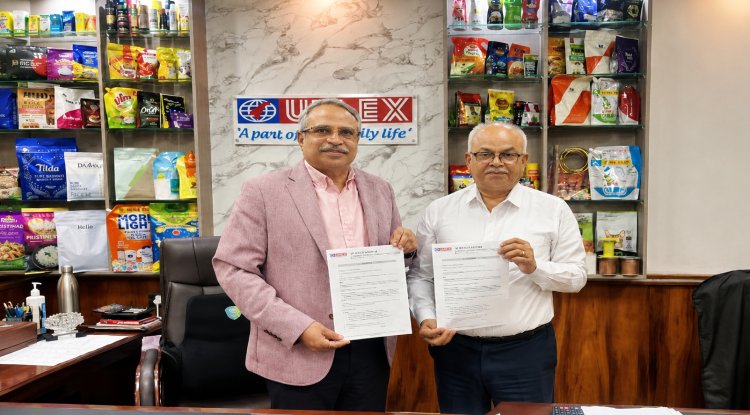
UFlex Limited has signed an agreement with UN Global Compact Network India (UNGCNI) to undertake a three-year project promoting the interests of informal waste workers and improving the plastic waste management economy in Noida and Greater Noida. The programme will aim to bring about livelihood improvements for waste workers, as well as promote the move towards a circular economy through the adoption of improved waste collection, segregation and recycling systems.
The initiative will help support nearly 3500 informal waste pickers and waste workers in selected clusters in the Delhi-NCR region aimed at waste workers, sustainable plastic waste management, practices of circular economy and community based environmental solutions. The programme will focus on the issues of safety in the workplace, skill development, income stability and the access of formal waste management systems.
The Waste Workers are targeted to improve their working conditions by the programme.
The project aims to improve the social and economic situation of informal waste collectors through training, occupational safety and capacity building for the informal waste collectors. It will also emphasize waste workers' recognition and inclusion into the waste management system.
The programme will be implemented in close collaboration with the partnership framework with the goal of improving waste collection and recycling infrastructure and working towards safer working conditions. It will also make over 30,000 households and institutions aware of the initiative and promote responsible use of plastic and source segregation.
Community Based Model to Reinforce already established waste systems
The project will engage with existing waste management networks to avoid the construction of a new large scale infrastructure, while focusing on community needs. It will include working with municipalities, recyclers and community groups and civil society to help strengthen local recycling systems.
Through the programme, waste workers will be structured into groups and cooperatives. They will be trained in the scientific practices of handling waste, their safety practices and better segregation habits. The initiative will also involve supporting decentralised plastic waste aggregation centres and creating a recycling hub with the involvement of ecosystem partners.
Concentrate on improved Waste tracking and Recycling efficiency
It will introduce the digital waste-flow monitoring system to ensure better traceability in the collection and recycling process. These systems are expected to enable stakeholders to monitor waste movement and enhance coordination among waste workers, recyclers and other stakeholders in the recycling value chain.
The scheme will also encompass awareness-raising activities regarding responsible plastic usage and segregation at the source. The project will achieve a 30-40% reduction in unmanaged plastic waste in targeted intervention areas by the end of the programme period through better systems and coordination among stakeholders.
Inclusive Sustainability efforts highlighted in UFlex.Role of Inclusive Sustainability efforts highlighted in UFlex.
Speaking about the partnership, Jeevaraj Pillai Director-Sustainability, UFlex Limited, said the project is a testament to UFlex Limited's commitment to integrating environmental stewardship with social development. The programme is designed to assist waste workers to make their working conditions safer, provide livelihood opportunities and growth opportunities for them, he said.
Pillai further noted that waste workers are critical in ensuring urban cleanliness and the collaboration and capacity-building efforts aim to enhance their role in the waste management system.
UNGCNI Emphasises Collaboration for Sustainable Development
To achieve sustainable economic growth, it is important to create a synergy between industry, communities, government and informal workers, said Ratnesh, Executive Director, UN Global Compact Network India. He said that waste worker-support schemes can tackle environmental issues and promote social inclusion.
The goal of the partnership is to provide an example of the benefits of stakeholders working together to enhance local recycling systems and help achieve sustainable development goals.
There are strong links with the National Sustainability Goals.There are good connections with the National Sustainability Goals.
It is aligned with the National missions such as Swachh Bharat Mission and Objectives of India's circular economy. It also contributes to the United Nations Sustainable Development Goals (SDGs), such as SDG 8 on decent work and economic growth, SDG 11 on sustainable cities and communities, SDG 12 on responsible consumption and production and SDG 13 on climate action.
Under the three year programme, UFlex and UNGCNI will work on enhancing the waste management system and promote the livelihoods and working conditions of thousands of informal waste workers in the Delhi NCR region.
What's Your Reaction?