Urbanization Fuels Heat And Rain Extremes In India
Unplanned urban growth and climate change are intensifying heatwaves and extreme rainfall across Indian cities.
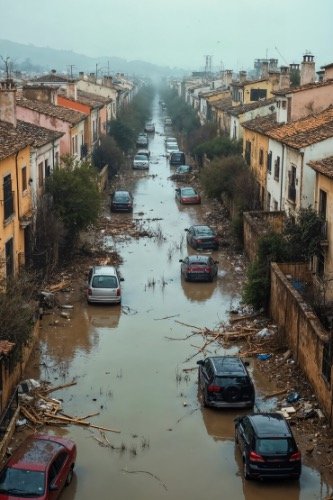
It was in June 2025 that the deadly accident of a construction worker, Sonelal Prasad, in Mumbai served as an omen for the perilous crossroads of climate change and unplanned urbanization. Although the intense rain that led to a soil cave-in on a construction site, it was a harsh reminder of risks hiding in fast-growing Indian cities. Mumbai’s rainfall between May 25 and 27 this year was 67,600% above average for the season, breaking a record that had stood since 1918. Experts warn this is no longer an anomaly but part of a worsening trend caused by both global warming and reckless urban development.
The Asia region is stated by the World Meteorological Organization's (WMO) State of the Climate in Asia 2024 to be warming at a rate nearly double the global mean. This is compounded in India by the urban heat island effect, where cities are significantly warmer than surrounding rural areas. A May 2024 paper in Nature says that Indian cities are warming at 0.53°C per decade, with urbanisation itself contributing 0.2°C of the warming. This is a sign that cities are warming almost 38% more efficiently than surrounding rural areas.
Urbanization and global warming are interacting to enhance India's monsoons in strength and variability. Skyscrapers and densely agglomerated blocks of concrete trap heat and curdle air masses, generating local temperature and precipitation extremes. Data covering 141 Indian cities gathered between 2003-2020 by satellite sensing have discovered urban zones to be heating much more rapidly compared to rural counterparts, with urbanization being the primary culprit.
Urbanization is happening at a very fast rate. Only 18 Indian cities were with a population of over one million in 1991. In 2011, they increased to 52 and are expected to reach about 80 by the end of 2024. India's urban population, which was 31% in 2011, can likely touch 40% by 2036—about 600 million people. Metropolises are estimated to account for 75% of India's GDP at that point. This transition is adding to the country's carbon footprint, with cities drawing greater amounts of electricity, much of which remains produced from coal and gas. India's CO2 output grew 5.3% in 2024 alone, the largest rise among major economies.
Urban heat islands have increased in intensity in India, affecting the rain patterns. Scientists recognize the urban cities to have increased spatial variability of monsoon rain, tending to create flood conditions. Pollutions, especially from particulate matter, slow down rain, creating heavy intensity rain in shorter time periods. Disturbing airflow by buildings and terrain in Mumbai and other cities causes more rainfall on downwind sides, increasing flood possibilities.
The spate of uncontrolled horizontal expansion into forests, floodplains, and wetlands has added to these woes. Environmental law has been watered down to accelerate infrastructure and real estate development. Ecologically sensitive regions are being axed for urbanization in the name of public infrastructure, endangering natural systems that control temperature and prevent flooding, National Secretary of the People's Union for Civil Liberties Lara Jesani asserts.
Solving these issues needs a complete shift in urban planning and environmental management. This involves enhancing environmental laws, curbing unnecessary luxury developments, enhancing public transport, and incorporating indigenous knowledge into conservation processes. While India's existing climate policies are set to cut emissions by four billion metric tons between 2030 and 2020, experts contend that improved urban planning is also important. Heat mitigation by construction, air conditioning, traffic, and industrial processes is crucial in developing climate-resilient cities.
Several cities have begun to do so. Ahmedabad launched India's first Heat Action Plan in 2013 following a deadly heatwave in 2010. Dozen other cities followed since then, such as Nagpur, Bhubaneswar, Hyderabad, Rajkot, and Delhi. They encourage solutions such as cool roofs, greenery, better drainage, urban forest cover, restoration of water bodies, and airflow corridors to mitigate extreme heat and floods.
Experts mention that planning large cities is challenging, but sustainable development is also possible in small cities. While India's urbanization keeps going on, the window of opportunity for creating climate-resilient cities—by planning, green infrastructure, and reducing emissions—should not be let go. Otherwise, Indian cities' rising heat and rains will increasingly threaten human life and structures.
What's Your Reaction?