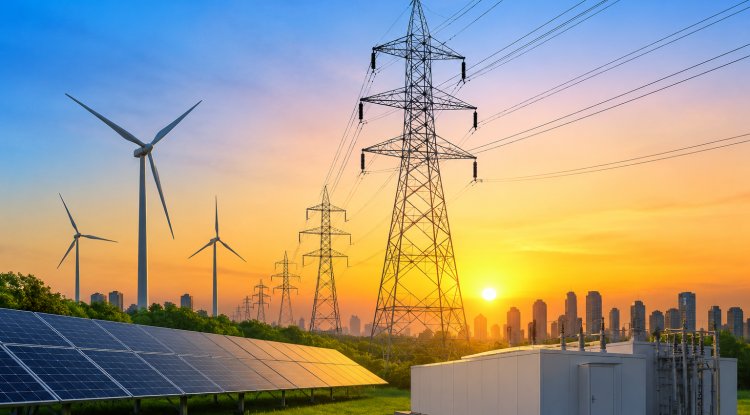
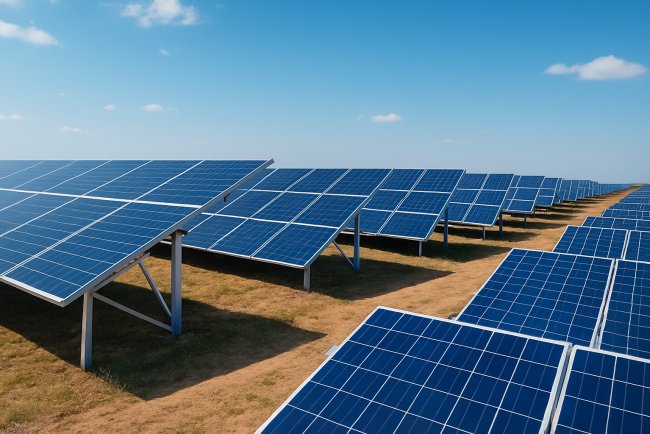
Uttar Pradesh has significantly expanded its solar capacity to over 5000 MW, driven by policies, public participation, and renewable energy initiatives.
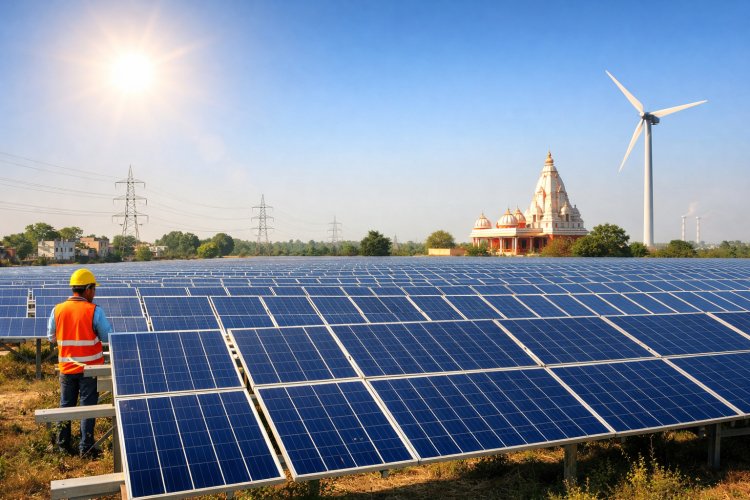
Uttar Pradesh has seen considerable growth in terms of solar energy capacity over the past nine years. Official data revealed that the state’s solar energy capacity has risen from merely 400 MW before 2017 to over 5000 MW presently.
The growth of solar energy capacity has been fuelled by various factors, such as government initiatives, massive solar power plants, and people’s participation. Over 4 lakh rooftop solar systems have been installed in the state, enabling people to utilise cleaner energy.
Schemes like the PM Surya Ghar Muft Bijli Yojana have helped in the increase of access to solar energy by households. The schemes provide subsidies, which in turn have encouraged consumers to opt for solar energy by installing solar plants on rooftops. The plants have helped households save on electricity costs and even earn some extra by means of net-metering.
Until 2017, the development in solar energy in the state had been low, with an installed capacity of 400 MW. Various factors, like investment, policy, and awareness, have impacted the growth of the sector. The sector had just begun with rooftop solar energy.
The implementation of policies on solar energy, such as the Uttar Pradesh Solar Energy Policies introduced in 2017 and 2022, has helped to grow the sector. The state has been able to grow beyond 5000 MW in solar energy. Large solar parks, ground-mounted systems, as well as rooftop solar systems, have been instrumental in growing the sector.
This has been achieved as the state has been able to realize its target of 22,000 MW as per the Solar Energy Policy 2022. The focus has been on scaling up solar parks, developing large systems, as well as using solar energy in government buildings.
New areas have also been taken up in the state. These include green hydrogen. A 0.5 MW green hydrogen project is being developed in Gorakhpur by Torrent Power. The project has a production capacity of 9 kg per hour. Another project is being set up in Rampur by Zero Footprint Industries. The capacity of the project is 22.5 kg per hour.
The growing usage of solar energy has helped in reducing carbon emissions and support cleaner energy production. It has also created employment opportunities in areas such as installation, operation, and maintaining solar systems.
At home, solar energy is now for more than just lights. It is now being used for activities such as cooking, charging electric vehicles, and running daily appliances, which reduces the need for fuels like petrol, diesel, and gas.
Officials say that by focusing more on solar energy and new technologies like green hydrogen, the state is working towards meeting future energy needs.
What's Your Reaction?