VinFast Plans Major EV Production Expansion in India with Export Ambitions
VinFast plans to produce 150,000 electric vehicles annually in Tamil Nadu, India, starting June 2025, with exports to the Middle East and Africa, boosting India’s EV market.VinFast’s $2B Tamil Nadu plant will produce 150,000 EVs annually, targeting India’s market and exports to the Middle East and Africa, supporting sustainability goals.
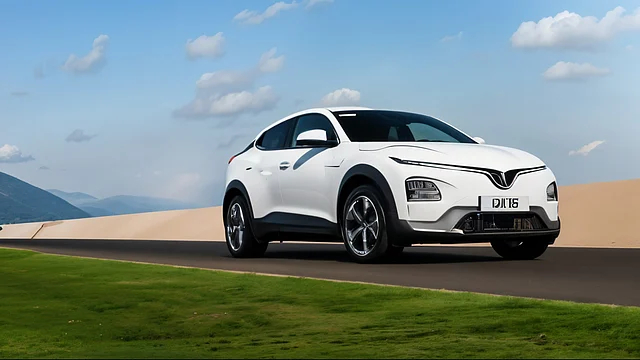
Vietnamese electric vehicle manufacturer VinFast is set to launch a major production facility in Tamil Nadu, India, starting with 50,000 units annually from June 2025 and aiming for 150,000 units per year. The company plans to export EVs to the Middle East and Africa, positioning India as a key manufacturing hub.
VinFast, a Nasdaq-listed automaker, is entering India’s fast-growing electric vehicle market with a $2 billion investment in a manufacturing plant in Thoothukudi, Tamil Nadu. The facility, set to begin operations in June 2025, will initially produce 50,000 EVs annually, with plans to scale up to 150,000 units to meet domestic demand and support exports to markets in the Middle East and Africa. The company will launch its VF6 and VF7 models, developed on a dedicated EV platform, at the Bharat Mobility Expo 2025.
India’s EV market is expanding rapidly, driven by government policies and consumer demand for sustainable transportation. The 2024 EV policy offers incentives like reduced import duties for manufacturers committing to local production, though VinFast’s investment does not qualify for these benefits due to specific eligibility criteria. Instead, the company is focusing on localizing production to reduce costs and compete in India’s price-sensitive market. The Thoothukudi plant is expected to create 3,500 jobs by 2030, contributing to local economic development.
VinFast’s strategy includes establishing a pan-India dealership network to enhance brand presence and compete with domestic players like Tata Motors and global brands like Hyundai. The VF6 and VF7 models target the compact and mid-size SUV segments, appealing to India’s growing middle class. The company’s focus on exports aligns with India’s ambition to become a global EV manufacturing hub, leveraging its strategic location and trade agreements with Middle Eastern and African countries.
Challenges include high production costs due to import duties on components and limited domestic battery manufacturing capacity. India’s charging infrastructure, while growing, remains concentrated in urban areas, posing challenges for rural adoption. VinFast is addressing these by displaying its vehicles at shopping malls and airports to build consumer awareness before bookings begin. The company’s global experience, with operations in Asia, North America, and Europe, provides expertise in scaling production and navigating competitive markets.
The environmental impact of VinFast’s investment is significant, as EVs reduce tailpipe emissions and support India’s net-zero emissions target by 2070. Integrating renewable energy into the production process and charging infrastructure will be critical to maximizing sustainability. The Tamil Nadu plant is expected to incorporate energy-efficient technologies, aligning with global trends toward green manufacturing. VinFast’s export plans could also strengthen India’s position in the global EV supply chain, though success depends on overcoming logistical and regulatory hurdles.
Conclusion
VinFast’s $2 billion investment in Tamil Nadu marks a significant step in India’s EV market, with plans to produce 150,000 units annually and export to the Middle East and Africa. While challenges like costs and infrastructure persist, the initiative supports India’s sustainability and economic goals, positioning it as a key EV hub.
What's Your Reaction?