The campaign, organised by the Khaki Association, was built around a slogan that needed no translation for anyone who lives near the lake — Shehar Ko Na Karo Maila, Haath Mein Le Chalo Thaila
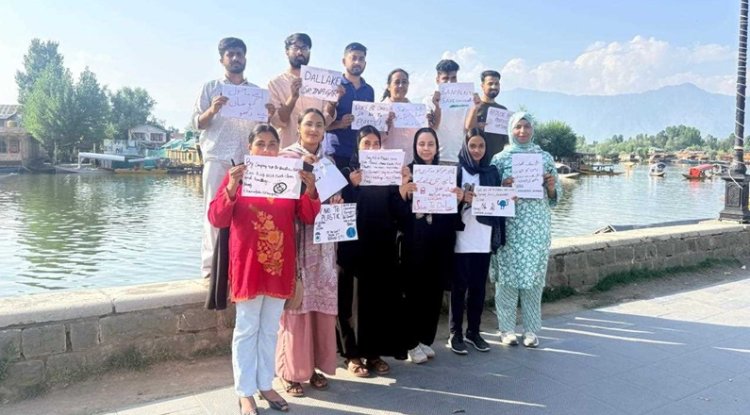
On a busy weekend in Srinagar, more than thirty young volunteers spread out along the boardwalks and shikara boarding points of Dal Lake with a simple but pointed message: stop throwing plastic into the water.
The campaign, organised by the Khaki Association, was built around a slogan that needed no translation for anyone who lives near the lake — Shehar Ko Na Karo Maila, Haath Mein Le Chalo Thaila. Don't dirty the city. Carry a bag instead.
Dal Lake has long been the visual heart of Kashmir — its houseboats, floating vegetable gardens, and shikara-filled waterways backed by the Zabarwan mountains drawing tourists from across the country and beyond. But the lake is under pressure. Polythene bags, snack packets, and plastic bottles are steadily accumulating along its margins, threatening the fish that live in it and the livelihoods of the boatmen and vendors who depend on it.
The volunteers were not there to lecture. They stopped visitors and locals at the water's edge, had direct conversations about what plastic was doing to the lake in the short term — not abstract speeches about microplastics and global climate systems — and handed out reusable cloth bags to hundreds of families. The approach was practical and non-judgmental, focused on making the switch away from single-use plastic feel possible rather than preachy.
The response surprised even the organisers. Domestic tourists visiting from cities across India joined the volunteers along the shoreline, forming a visible human chain of awareness along the lake's edge. Many made public commitments to reduce their use of single-use plastics and carry those habits back home — a reminder, as one volunteer put it, that protecting a place like Dal Lake is not a local municipal problem. It is a national one.
The ecological stakes are real. Kashmir's terrain has no large industrial centres where plastic waste can be processed at scale. What gets thrown in communal spaces — on a mountain road, beside a market stall, along a tourist promenade — tends to find its way into the region's lakes and wetlands. That pressure compounds an already difficult situation: melting glaciers, erratic weather, and a fragile ecosystem that has absorbed decades of rapid tourism growth without the infrastructure to match it.
Environmentalists and civic leaders who welcomed the initiative were careful not to overstate what a single campaign weekend can achieve. The long-term clarity of Dal Lake — the kind that photographs from earlier decades still show — will require a permanent shift in how waste is handled at the source. More collection points, better municipal systems, support for local artisans producing biodegradable alternatives to plastic packaging, and sustained community engagement rather than periodic drives.
For now, the Khaki Association's effort has at least put the conversation back on the shoreline, where it belongs — close to the water, and in the hands of the people who use it every day.
What's Your Reaction?