Urban water resilience depends on measuring water use accurately, upgrading infrastructure, and using data-driven policies to improve efficiency, reduce losses, and encourage responsible consumption
There is a phrase that water planners in Indian cities use: 'beyond the monsoon.' It used to refer to the dry season. Now, it carries a different weight: the recognition that the rains, when they come, can no longer be relied upon to refill what a year of consumption has depleted. The buffers are thinner. The aquifers are lower. The margin between adequate supply and crisis is narrowing.
This is the defining water reality of the next two decades for urban India. Cities that have treated water as a naturally replenishing, administratively free resource are about to confront, if they have not already, what it means to manage a finite one. How they respond will determine not just their water security, but their economic viability, public health outcomes, and social stability.
Bengaluru offers perhaps the most vivid and most instructive window into this transition. A city that was among Asia's fastest-growing has simultaneously become a case study in the consequences of growth without water governance. The lessons emerging from its experience point to where urban water resilience must go, and what it will require.
Cities that have treated water as a naturally replenishing resource are about to confront what it means to manage a finite one.
Measuremenr As The Foundation Of Resilience
The first and most fundamental shift is conceptual: water must be treated as a measurable resource, not an assumed entitlement. This sounds obvious. It is not, in practice, how most Indian cities are governed. Utilities estimate supply, approximate demand, and manage on intuition and political precedent rather than data. The result is a system where nobody, not the utility, not the household, not the regulator, knows with confidence how much water is available, how it is being used, or where the losses are occurring.
Smart metering breaks this epistemic impasse. When water enters a system, flows through distribution networks, and exits at household and commercial connections, with all of that movement measured, time-stamped, and aggregated, the utility has something it previously lacked: ground truth. Non-revenue water losses become locatable rather than merely estimated. Demand patterns become predictable rather than assumed. Infrastructure investments can be prioritised on the basis of evidence rather than intuition or political influence.
Cities that have made this transition, with Bengaluru among them at a varying stage of completion, report consistent improvements in operational efficiency, faster response to supply disruptions, and, critically, the ability to demonstrate impact to regulators and the public. The data creates accountability in both directions: utilities are held accountable by transparent performance metrics, and consumers are held accountable by consumption visibility.
INFRASTRUCTURE GAPS THAT DATA ALONE CANNOT CLOSE
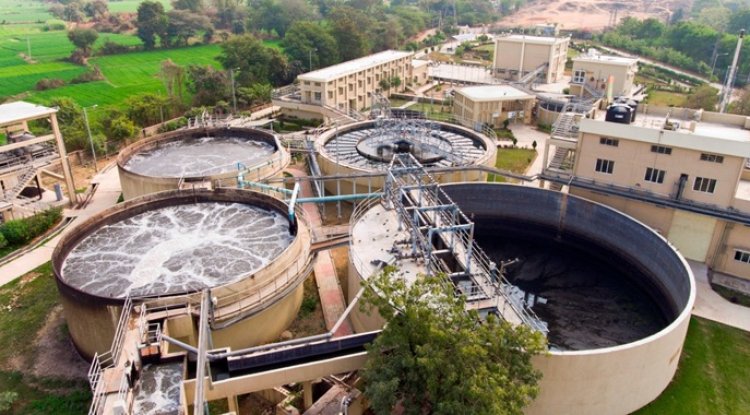
But data operates within an infrastructure constraint that no metering system can resolve on its own. In Bengaluru, as in most large Indian cities, the distribution network is aging, unevenly maintained, and structurally inadequate in rapidly growing peripheral zones. Pipes that were sized for the population of 1995 serve communities four times larger. Pressure is uneven, contamination risks are real, and the physical losses through pipe failures are enormous.
Resilient water infrastructure requires not just better sensing but better pipes, better storage, and better treatment capacity. The data generated by smart metering systems tells utilities exactly where to invest, but the investment itself must follow. Cities that acquire data platforms without corresponding commitments to infrastructure renewal are building a diagnostic system without treatment capacity. They will know, with increasing precision, what is failing. They will not have fixed it.
This is where state and central government financing becomes critical. The Jal Jeevan Mission and AMRUT frameworks have created funding pathways for urban water infrastructure, but the allocation logic does not yet systematically reward cities that have built robust data infrastructure. Linking infrastructure finance to demonstrated measurement capacity for utilities that can show how they will track the impact of every rupee invested would accelerate both data adoption and infrastructure improvement simultaneously.
THE BEHAVIOURAL FRONTIER
The third dimension of water resilience is behavioural, and it is the hardest to engineer. Infrastructure provides the supply-side capacity. Data creates the informational foundation for accountability. But water security at the city level ultimately depends on how millions of individual users, households, businesses, and institutions choose to consume.
The evidence from cities that have deployed consumption feedback systems is consistently encouraging. When users receive timely, specific, personally relevant information about their water use, and when that information is connected to pricing signals that make overconsumption materially costly, usage patterns shift. The shifts are not revolutionary, but they are real, measurable, and cumulative. A 15 per cent reduction in average household consumption across a city of Bengaluru's scale represents hundreds of millions of litres of daily supply freed for distribution to underserved communities.
This is the policy opportunity that remains underutilised in Indian water governance: the use of data not just for operational management but for demand shaping. Progressive tariffs, consumption benchmarks by household type, and neighbourhood comparative data are tools that exist, work elsewhere, and are deployable at scale in Indian cities with existing smart metering infrastructure.
A 15 per cent reduction in household consumption across Bengaluru's scale would free hundreds of millions of litres of water daily for underserved communities.
The Cities That Will Fare Better
Not every Indian city can solve its water crisis in the next decade. Some are simply too far behind, in infrastructure, in governance capacity, in political will, to close the gap before stress intensifies. But the cities that will navigate the coming decades most effectively share a set of characteristics that are worth naming.
They treat water as a managed resource, which means measuring it. They invest in the physical infrastructure needed to reduce losses and expand equitable access. They build regulatory frameworks that connect consumption to cost in ways that are fair but meaningful. They restore the natural water systems, including lakes, wetlands, and recharge zones, that urban development has degraded. And they resist the temptation to substitute awareness for accountability, campaigns for data, and aspiration for evidence.
Bengaluru's water story is not finished. The aquifers are still under stress. The infrastructure gaps are real. The governance challenges are formidable. But the data infrastructure being built there, imperfectly and incrementally, represents something that matters: a city beginning to treat its most critical resource as something worth measuring, managing, and being accountable for.
That is where urban water resilience begins. Not with the next monsoon. Not with the next campaign. With the unglamorous, essential work of knowing, with precision, in real time, across the entire system, exactly how much water there is, where it is going, and what it will take to make it last.
The views expressed are personal
What's Your Reaction?