Explore Xiaomi’s solid-state battery patent for EVs, featuring a layered electrode design for improved safety and range, set to impact the electric vehicle industry.Xiaomi’s patented solid-state battery for EVs, with a layered electrode design, enhances safety and energy density, aiming to transform electric vehicle performance and sustainability.
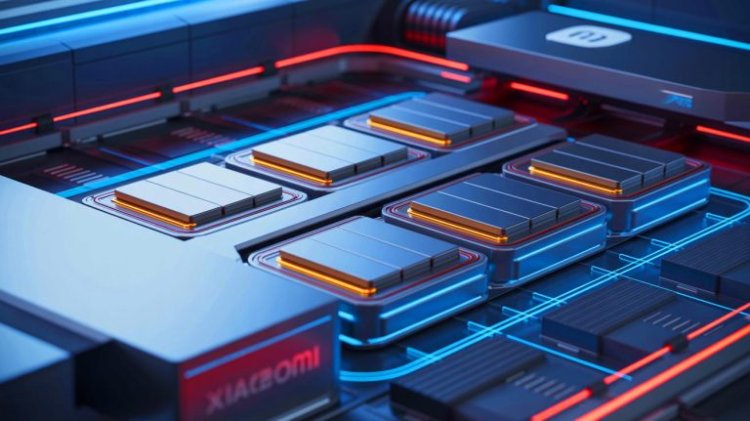
Xiaomi has patented a solid-state battery design for electric vehicles (EVs), featuring a layered electrode structure that enhances safety and energy density, aiming to advance EV performance and sustainability.
Solid-state batteries use solid electrolytes instead of liquid ones, reducing fire risks and improving energy storage compared to traditional lithium-ion batteries. Xiaomi’s patent introduces a layered electrode design that optimizes charge transfer, enabling higher energy density for longer EV ranges—potentially exceeding 600 miles per charge.
The design also supports faster charging, addressing a key barrier to EV adoption. By simplifying manufacturing processes, the technology could lower production costs, making EVs more affordable. Lithium-ion batteries, which dominate the EV market, face issues like degradation after 1000 cycles and reliance on scarce minerals like cobalt.
Solid-state batteries offer a lifespan of up to 2000 cycles and use more abundant materials, enhancing sustainability.
Xiaomi’s innovation aligns with global efforts to decarbonize transportation, which accounts for 25% of global CO2 emissions. The company’s entry into the EV market, leveraging its expertise in consumer electronics, positions it to compete with manufacturers like Tesla and BYD. Challenges include scaling production, as solid-state batteries require precise manufacturing to ensure electrode stability. Durability under real-world conditions, such as extreme temperatures, remains a concern, with ongoing tests aiming to validate performance.
The technology also has potential applications in consumer electronics and grid storage, broadening its impact. Industry trends suggest solid-state batteries could capture 10% of the EV market by 2030, driven by investments from companies like Toyota and Volkswagen. Xiaomi’s patent, filed in 2024, reflects its strategic focus on sustainable mobility, though commercialization may take several years due to regulatory and technical hurdles.
Conclusion
Xiaomi’s solid-state battery patent offers a promising advance for EV technology, improving safety and range. Scaling production and ensuring durability will determine its impact on the electric vehicle market.
Source: Sustainability Times:
What's Your Reaction?