BRICS transport ministers meet in Nagpur to advance sustainable aviation fuel and greener mobility policies.
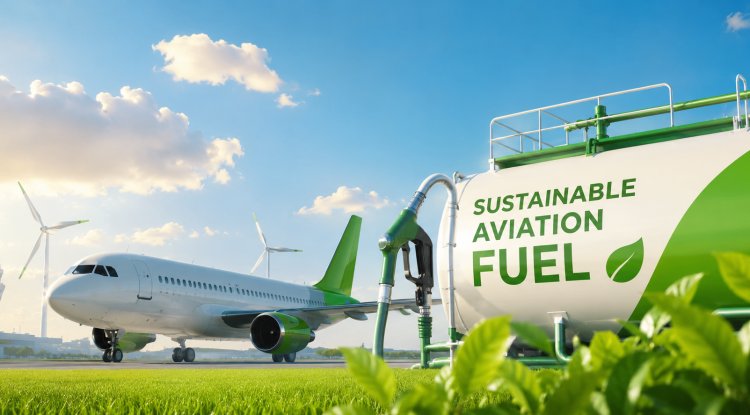
Sustainable Aviation Fuel is the highlight of the BRICS Agenda in Nagpur as a Vision for Greener Skies takes Flight.A Vision for Greener Skies takes Flight with Sustainable Aviation Fuel dominating the BRICS Agenda in Nagpur. The global discussion on environmental sustainability is quickly expanding from local road networks to one of the most persistent and carbon-intensive industries of modern society: commercial aviation. The need for cleaner fuel alternatives has become a huge strategic priority as fast-growing countries strive to enhance their regional connectivity while not compromising their international climate pledges. India is set to host a high-level meeting of global transport leaders in a key diplomatic move that puts this transition at the very top of the international policy agenda. Sustainable aviation fuel will be a key agenda item at the upcoming third BRICS transport ministers' meeting in Nagpur, Maharashtra, as detailed in a comprehensive report by The Times of India, which marks a concerted effort by emerging economies to take a strong stance against decarbonising the skies.
The international summit is a high-profile gathering of a strong group of countries with a combined economic and demographic power. The BRICS group now includes key global players such as Egypt, Ethiopia, Indonesia, Iran, Saudi Arabia, and the United Arab Emirates in addition to its founding members and has nearly half of the world's human population and about forty per cent of the world's gross domestic product. The massive scale of their operations means that any coordinated change in transport infrastructure in this group could have a significant impact on global fuel markets and manufacturing practices. The Nagpur assembly, held under India's all-encompassing chairship theme of 'building for resilience, innovation, cooperation and sustainability,' is the main forum for these countries to take the next step beyond theoretical pledges and work out practical, cross-border logistics solutions.
India's Union Minister for Road Transport and Highways Nitin Gadkari will be the chair of the ministerial sessions, strongly advocating for sustainable aviation fuel to be the mainstay of the global stage. Gadkari has long been a fervent promoter of alternative fuels and has consistently used international platforms to advocate for the adoption of biofuels for aviation turbine fuels. His dream of eco-friendly alternatives to conventional fuels to power commercial aircraft taking off from regional airports such as Nagpur is fast becoming a reality and is now a regulatory blueprint. The focus on biomass fuels is designed to establish a highly profitable circular economy where agricultural waste becomes a valuable source of energy, offering a significant additional income stream for farmers while also reducing greenhouse gas emissions.
The two-day summit will not only focus on the mechanics of cleaner jet fuel, but also on a highly integrated web of modern transport challenges, with senior officials and ministers discussing them. The agenda is comprehensive and will focus on urban mobility, multi-modal transport networks and the development of highly resilient logistical supply chains, which will be able to withstand unpredictable geopolitical and climate shocks. In addition, delegates will learn about the swift integration of AI-driven technologies designed to optimise traffic flow, minimise transit delays, and maximiseenergy efficiency in maritime, rail, and road systems.
This is an extreme emphasis on creating a technologically sophisticated, climate-friendly transportation system that is closely linked to India's long-term sovereign aspirations. The subjects discussed at the BRICS conference are also very relevant to India's vision of a fully developed, disaster-resilient infrastructure by 2047, Indian officials say. The country is pursuing a dual economic objective: significantly reducing the cost of domestic transport and increasingcompetitiveness in manufacturing, through the use ofextensive electric mobility solutions, and at the same time creating a green, multi-modal transport system, which will significantly reduce environmental degradation.
In the end, the upcoming ministerial meeting in Nagpur is more than just a routine diplomatic meeting. It is a key forum where the world's fastest-growing economies are actively working together to create the physical networks of the future. The Indian summit will build on the positive steps taken at the previous chairmanship of the organisation by Russia and Brazil and provide tangible policy outcomes to boost trade and enhance intercontinental connectivity. In the face of this, transport ministers must sit down to build new partnerships, with the shared goal of sustainable aviation fuel, as a powerful reminder that the future of global mobility needs to be innovation-led, economically viable and deeply respectful of the planet.
What's Your Reaction?