The European Union has tightened emergency exemption rules under its Carbon Border Adjustment Mechanism (CBAM), reinforcing its commitment to low-carbon trade and investment certainty.
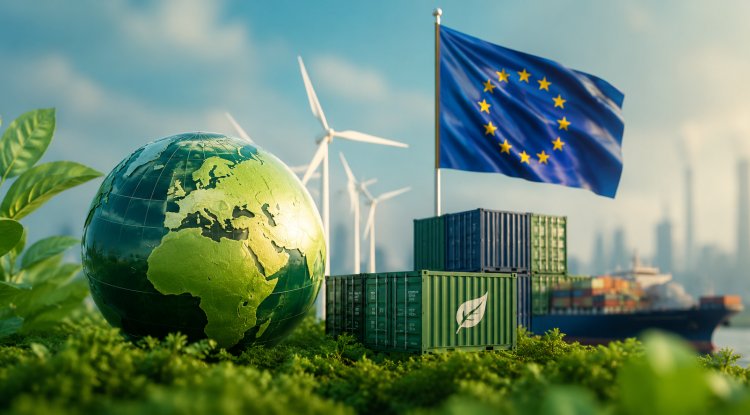
The European Union's pioneering green trade policy has undergone a significant revision, which could have significant implications for global manufacturing supply chains. EU economy ministers agreed in Brussels to sharply clarify the exceptions in the EU's Carbon Border Adjustment Mechanism (CBAM) for emergency situations. This key policy is a world-first carbon import tax that imposes a carbon cost on emissions embedded in certain imported goods to the EU. But to ensure “absolute regulatory certainty” for private-sector investments that would total billions for local industries making low-carbon investments, European policymakers are trying to make it extremely difficult for future governments to eventually stop or suspend this carbon fee.
The crux of the policy adjustment involves a big controversy between climate advocates and industrial lobbyists. The European Commission had a blurry emergency escape clause in the initial form of the carbon import levy. This preliminary proposal indicated that the EU might temporarily exempt certain products from the carbon tax if the price of consumer goods suffered from sudden, volatile increases as a result of "serious and unforeseen circumstances". But a strong alliance of local manufacturers and green energy financial backers resisted the open-ended nature of the clause. They have pointed out that such an unpredictable emergency provision would provide an uncertain environment for decarbonisation in heavy industry and that it would only be economically competitive if dirtier and cheaper foreign imports were subject to similar carbon costs as domestic producers.
To remove that ambiguity, the ministers agreed on an extremely clearly defined quantitative threshold for the definition of market emergency. In the latest draft agreement, the European Commission will be permitted to recommend a temporary halt to the carbon import duty only if the price of a given product has jumped more than 50% over an uninterrupted six-month period compared to its ‘rolling 10-year historical average'. By raising a statistical bar of this magnitude, routine market volatility or short-term geopolitical events would be unlikely to justify suspending the carbon border tax.
The negotiations behind the deal highlight the precarious economic balancing act the EU is attempting to strike. France had been among the strongest advocates to halt the carbon border levy on heavy agricultural fertilisers as the Middle East conflict increased production costs, forcing French farmers to face huge financial losses. The new rules were eventually accepted by France, but only after negotiations in which it obtained specific exemptions for its overseas departments of Guadeloupe and Martinique, which would enable them to avoid paying cement import taxes in certain limited circumstances of "severe natural disaster" or "local emergency. On the other hand, some countries, including Slovakia, Romania and Lithuania, opposed the final text, suggesting that they still have concerns about the dangers that hard green import restrictions would pose to industrial development in eastern Europe and fuel inflation in their own countries.
The soon-to-be-enacted EU carbon border tax will begin to have a greater effect over time, as the EU is also expanding the scope of what the tax applies to. While the completed concept plans are centred on raw materials for the construction industry, such as steel, aluminium, cement and fertilisers, the finished products are now to be extended further down the manufacturing value chain of the consumer market. The carbon fee will be expanded to cover complex assembled products, such as washing machines for household use, and auto parts, by 2028. This expansion aims at closing "carbon leakage" loopholes that allow international manufacturers to simply process raw metals into finished goods in another country to avoid the application of the border tax.
This is a significant trade hurdle for the principal exporting countries such as India, China and Brazil. For a few years, international trading partners have harshly denounced CBAM as a disguised, protectionist trade barrier that punishes developing countries, which have much less capital, and are not able to quickly transform their electric grid and industrial installations. India recently voiced its demand for more flexibility and less rigidity in the regulations governing compliance during an upcoming free trade negotiations with Brussels, but Brussels' position was firm, with all EU officials confirming that the rules of the carbon border mechanism should be applied uniformly to all trading partners and not discriminate.
In the end, the European Union's restriction of the suspension criteria provides evidence of Brussels' belief that the green turn is an unstoppable, non-negotiable economic fact. The practice of enforceable environmental laws that differ by country and by situation within the country, as done by individual member states and international trade groups, is rapidly coming to a close. This will be a new hard truth for global industrial sectors as the final negotiations with EU lawmakers begin, who are working to remove the emergency suspension clause altogether.
What's Your Reaction?