The Global Wind Day 2026 Conference aims to strengthen India's wind energy sector, boost manufacturing, attract investment, and support the country's clean energy transition.
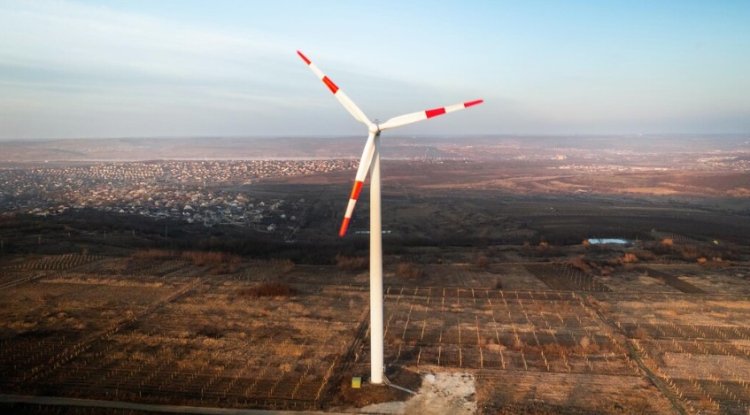
The global push to develop clean and renewable energy is accelerating, moving from corporate discussions to large-scale public policy initiatives. The government has announced that it will host the Global Wind Day 2026 Conference in New Delhi with a major statement of intent. The high-profile summit, organised by the Ministry of New and Renewable Energy (MNRE), is designed to catapult the country's wind energy manufacturing sector to strengthen its position in the global wind energy market. The government hopes to use the symbolic environmental day as a springboard for major industrial development by bringing together industry leaders, the international financial community and technology innovators in a single place.
This is an extremely important time for India's larger-scale climate shift. India aims to install 500 gigawatts of non-fossil-fuel power generation capacity by the end of the decade, a huge green benchmark. Solar installation has experienced rapid growth in sunny northern and western states over the past several years, but experts say a sustainable and resilient electric grid can't run on sunlight. Wind energy is an important, highly complementary clean energy source because wind power production often takes place at night, when the sun is not producing electricity, and fills a crucial niche in maintaining a clean, steady grid during record demand during that time of day when electricity use is especially high.
One of the key themes of the conference is unlocking the vast untapped potential of the offshore wind power along India's vast coastline. Over the years, the majority of the nation's wind power capacity has been installed onshore in windy plains, such as those in Tamil Nadu, Gujarat and Rajasthan. Onshore land is becoming more and more difficult and expensive to acquire, however, as agriculture and local community concerns grow. Because offshore projects are not constrained by land availability, offshore winds are often stronger and more consistent than onshore winds, and there is a fantastic opportunity with offshore wind farms to be directly constructed in the ocean in shallow coastal waters. The government is seeking to attract investment in offshore wind development through competitive bidding and international partnerships, talking up the Gujarat and Tamil Nadu coastlines as perfect spots to use deep-water turbine technology.
In addition to the technical engineering discussions, the conference will address the scaling up green manufacturing while addressing financial and logistical challenges. The construction of modern wind turbines is extremely expensive, and requires significant logistical planning for transporting 80-metre-long blades across the country's roads and the use of special alloys in the turbine. The government will also display its new production-linked incentives (PLI) schemes to promote the local industry at the summit. These financial policies have been put in place to incentivise the global manufacturers of turbines to come in and establish manufacturing facilities right here in India, thus reducing the reliance on outside parts and creating a very resilient domestic supply chain that can help the industry withstand unpredictable international trade conflicts.
The summit will also showcase an emerging, very high-value opportunity—namely, the ability to combine wind, large battery storage and solar arrays into integrated, hybrid power stations. Stand-alone wind projects are becoming more challenging to finance as commercial lenders become more interested in more predictable, round-the-clock power supply, financial analysts say. The decentralised combination of wind and solar on a single site not only reduces the cost of grid connection but brings greater land efficiency and can provide a more stable and predictable renewable power supply to solar and wind state-run distribution companies as well as private factory owners.
In the end, the organisers of the Global Wind Day 2026 Conference demonstrate that the clean energy journey is not just a regulatory challenge, but also a significant economic opportunity for India. The key lesson from this event, as from so many others in the realm of modern climate action: Ambitious environmental goals must be achieved with a seamless mix of proactive government support and substantial private sector investment. The meeting will be an important test of India's capacity to harness wind energy, which has the potential to be a key driver of India's industrial future, as representatives from around the world converge on New Delhi for engineers to meet, global partnerships to be negotiated, and multi-billion-rupee manufacturing deals to be signed.
What's Your Reaction?