Adaptavate has raised £2.7 million in new funding to scale its carbon-negative construction technology, including Breathaboard, aiming to decarbonise the construction industry with a new demonstration facility and European expansion.
British building materials disruptor Adaptavate has raised £2.7 million in a pre-Series A round to speed up the development and rollout of low-carbon building innovations. The investment is part of the company's broader efforts to scale carbon-negative solutions for the construction sector. With the latest round, Adaptavate's overall funding now stands at around £9 million, moving closer towards its vision of turning the built environment into a more environmentally-friendly and climate-focused industry.
Adaptavate specializes in creating Breathaboard, an alternative to plasterboard that has low carbon content. It has the ability to lower carbon emissions by as much as 4 kilograms for every square metre and uses principles from the circular economy. Breathaboard also helps in the creation of healthier interior spaces and hence can be used for a variety of uses in commercial and domestic buildings. By substituting conventional products with lower-emission counterparts, the company hopes to help the construction sector move towards net-zero aspirations.
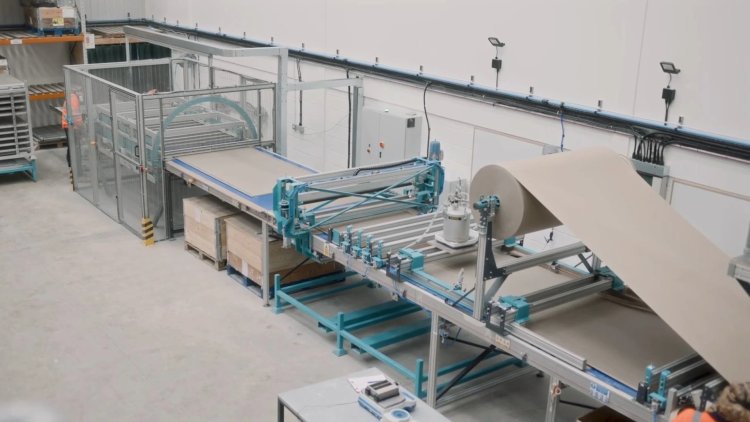
The investment will fund "Project Crystal," a demonstration industrial facility that will demonstrate the viability of low-carbon building technology to be produced and utilized at scale. The project is a centerpiece of Adaptavate's strategy to drive wider adoption of green building materials and demonstrate their feasibility for industrial-scale manufacturing and commercial applications. The facility will be used to show the feasibility of carbon-negative building materials in actual use and establish investor and industry confidence in these technologies.
The funding round involved both existing and new investors, with prominent Asian and European investors. Among the largest contributors was industrial strategic investor SigmaRoc, which is focused on sustainable development. As part of this investment, Adaptavate will be able to augment its supply chain and improve uptake of Breathaboard across Europe. The investment will also support field trials on major UK building sites, fast-tracking the launch of the product into the marketplace and real-world testing and verification.
Adaptavate's business model is a part of the broader shift to decarbonise construction. As the building sector is one of the world's biggest sources of carbon emissions, scalable innovation such as carbon-negative plasterboard can have a substantial impact. The business model also aligns with global intentions to maximise carbon capture and recycling in building products as a means to transition the industry from emitter to net carbon sink.
This successful funding round is indicative of increasing investor interest in climate technology and sustainable infrastructure. The capital, industrial expertise, and market access come together to set Adaptavate up to scale its presence in the low-carbon material sector. With scalable products and reproducible processes in mind, the company is building a blueprint for other construction technology businesses seeking to achieve impact at industrial scale.
Adaptavate's entry is timely as global demand for green building solutions grows with regulatory transformation, sustainability goals, and investor activity. Governments and developers look for solutions that benefit not only the planet but also human health. With more building companies embracing sustainable procurement approaches, businesses like Adaptavate that provide realistic, quantifiable solutions have the potential to be the future shapers of the trajectory of the business.
By relentless collaboration, pilot projects, and roll-out in Europe and beyond, Adaptavate expects to push the boundaries of sustainable construction. The achievements to date testify to the power of climate technology to turn traditional industries such as construction into circularity and emission reduction leaders.
Source/Credits:
Adaptavate through KnowESG
What's Your Reaction?