Misra shares the challenges they faced while setting up the largest storage system in India’s capital and more

On 29 May, Delhi’s Kilokri received a 20 MW Battery Energy Storage System (BESS), touted as the largest in South Asia. The 20 MW / 40 MWh system was delivered on a turnkey basis under a long-term Battery Energy Storage Capacity Agreement (BESPA) with BRPL. Installed and commissioned in just 11 months—ahead of schedule—the system became operational in April 2025. The project primarily benefits 100,000 residents of South Delhi, including high-demand areas such as Defence Colony and Lajpat Nagar. AmpereHour Energy is one of the partners behind this project’s success, commissioning it in collaboration with Indigrid and BRPL.
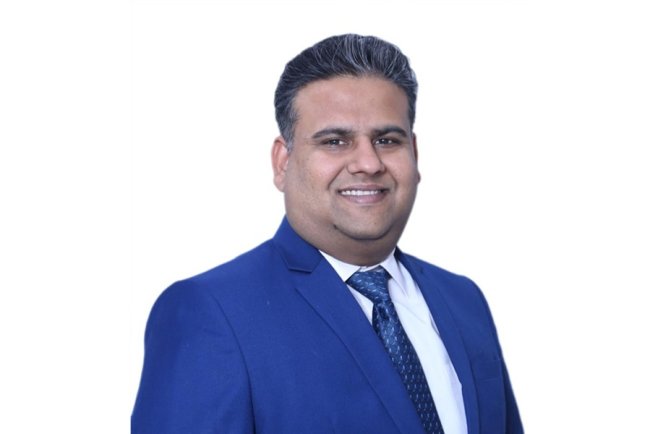
In a candid conversation, Ayush Misra, Co-founder and CEO, AmpereHour Energy—a clean-tech startup pioneering battery energy storage solutions in India—shared the challenges they faced while setting up the largest storage system in India’s capital. The project was a collaboration between Energy Solution, BSES, and PowerGrid.
How did you manage the complex logistics and coordination to install one of the largest distribution-connected energy storage systems in such a congested area of Delhi within a strict six-month timeline?
This system is one of the largest distribution-connected energy storage projects—not just in India, but in all South Asia. It's located in the heart of Delhi in Kalkori.
It’s surrounded by residential buildings, and moving materials here was extremely challenging due to congested streets. We had a strict six-month timeline, so much of the work had to be done at night when there was no traffic. Shipping the batteries—each packed in 20-foot containers weighing almost 40 tonnes—was no easy task. It required extensive coordination from the manufacturing site to shipment by sea, and then internal transportation.
Once the batteries arrived, we had to meet various certification and compliance requirements to ensure the system’s safety. This involved close collaboration with OEMs, certification agencies, and the distribution company.
As a company, we are primarily a technology player—we develop our own software system that integrates all components to make the entire system function in harmony. This is our core IP, and we successfully demonstrated it through this project.
We are very happy to have completed this installation. Given its success, we are now executing a project in Gujarat that will be ten times larger, followed by another in Rajasthan. So yes, we are scaling up rapidly in India.
You mentioned you import these storage batteries—where do they come from?
There are concerns about lithium batteries being environmentally harmful because of the mining process. Since these batteries are installed in residential areas, how safe are they? Do they produce any emissions or have any carbon impact?
Let me address it from the system perspective first. The system is installed in a residential area, and there are zero carbon emissions from it. It’s like an electric vehicle in that regard. There's no smoke, no gas, no emissions. The system operates silently and cleanly.
Of course, there are environmental considerations upstream, like mining lithium, but in terms of operations and safety for the surrounding area—there is no pollution or emissions involved.
If you compare the number of batteries used here, we are talking about roughly 40 megawatt-hours of storage. To put that into perspective, an average electric vehicle has around 40 kilowatt-hours of battery capacity. So, this project is the equivalent of 1,000 EVs in terms of energy storage.
And just like EVs don’t have tailpipe emissions, there are no emissions from this battery energy storage system either. There's absolutely no carbon emission from this plant in the surrounding areas.
What about the environmental impact of producing lithium-ion batteries?
That’s an important point. Initially, there were concerns about cobalt mining, especially in regions like Congo. However, the chemistry used in this project does not include cobalt. We use LFP—Lithium Ferrous Phosphate—which is a cobalt-free chemistry, and it’s both safer and more environmentally friendly.
What's the lifespan of these batteries?
This project is designed to last 12 years, as per the contract. It is expected to undergo two full charge-discharge cycles each day—one in the afternoon and one at night.
What happens after 12 years—can the batteries be recycled?
There are already innovative recycling companies emerging in this space. We believe that by the time these batteries reach end-of-life, commercially viable recycling solutions will be available. These solutions will allow valuable materials to be recovered, enabling a circular economy. We're already engaging with stakeholders on this front.
[email protected]
What's Your Reaction?