Syngenta executive Alexandra Brand says AI is key to advancing regenerative agriculture, offering farmers precise, data-driven tools. The company is embedding sustainability into its R&D pipeline, showing how technology can align with environmental and business goals.
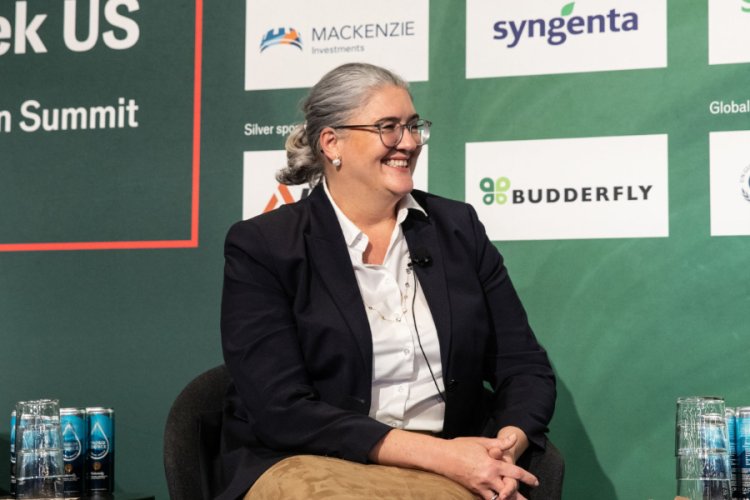
Artificial intelligence will be a driving force in reshaping farming, especially in the uptake of regenerative approaches, Syngenta's executive vice president of sustainability Alexandra Brand said in speech at the fifth annual US Sustainability Summit, organised by The Economist in New York. Brand discussed how AI technology is transforming farming by using targeted and actionable information to drive improved results on the farm.
Brand quoted that with AI embedded in farm management systems, farmers can overlay field data with repeated runs of satellite imagery, weather, and soil data. That gives them highly bespoke advice that informs more efficient and sustainable farming practices. The goal is to enable farmers to shift their practices to be regenerative—such as healthier soils and fewer chemicals—without losing productivity.
The integration effort is already in motion at Syngenta, with the business having infused regenerative ideas into the requirements of its research and development pipeline. The change is a response to a change towards focusing product innovation on final sustainability targets. The business has incorporated AI technology-based tools into its crop management programs to assist in optimizing regenerative agriculture practice adoption.
Asked whether the sustainability activities conflicted with Syngenta's business model, Brand laughed. Innovation is still at the heart of the company's strategy, she said, and the incorporation of regenerative themes into product development is in harmony with both environmental and business goals.
Economist Impact ran the conference, which convened more than 400 sustainability and business leaders. The conference was centered on the articulation of strategies for creating economically sound, resilient, and sustainable business models. The attendees were challenged to embrace data-driven solutions and sidestep greenwashings.
Harry Chapman, sustainability events director at Economist Impact, characterized the event as seeking to bring organizations actionable tools to advance their sustainability journey. Chapman added that the focus is on meaningful, actionable content and not marketing or greenwashing-type storytelling.
The debate is part of a larger pattern across the agricultural industry, where data analytics, machine learning, and AI are increasingly used to maximize the use of resources, maximize yields, and ensure climate-resilient agriculture. While precision and reliability in AI models improve, the use of AI in daily farm decision-making should see a dramatic increase.
Syngenta's emphasis on regenerative agriculture through AI indicates a change in the direction that large agribusinesses are heading on sustainability. Having the capability to offer real-time, location-specific advice is a first enabler of the move towards more sustainable production at scale.
By investing in digital technologies and including sustainability in its innovation pipeline, Syngenta is placing itself at the center of agriculture's future. Its initiatives are also in step with increased global needs for productive and climate-resilient agri-food systems.
Source:
First published by Sustainability Online, July 2025.
What's Your Reaction?