Aramco Launches Saudi’s First Direct Air Capture Unit
Aramco and Siemens Energy launch Saudi’s first Direct Air Capture unit to reduce CO2 emissions and drive sustainability.
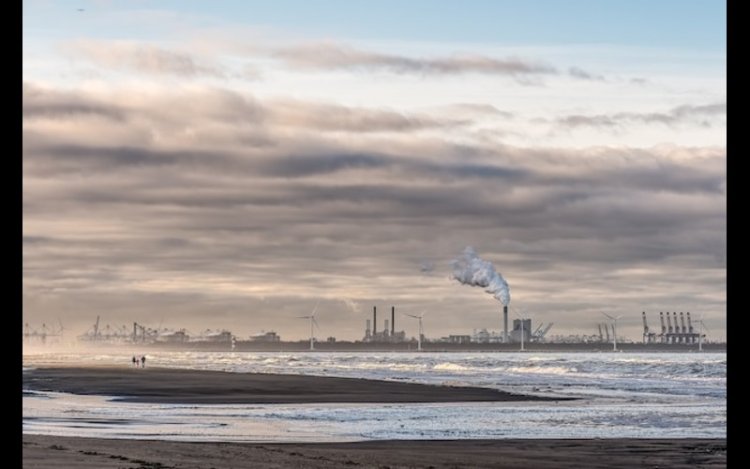
Saudi Aramco, alongside Siemens Energy, has launched the Kingdom's first Direct Air Capture (DAC) test unit as a major leap towards Saudi Arabia's push towards carbon capture innovations. The pilot plant, with the ability to capture 12 tons of carbon dioxide (CO2) per year, is an important step in assessing the viability of large-scale deployment of DAC in the region. The project supports Aramco's overall sustainability plan and its aspiration to reach net-zero Scope 1 and Scope 2 greenhouse gas emissions by 2050.
Ali A. Al-Meshari, Senior Vice President of Technology Oversight and Coordination at Aramco, emphasized the significance of these technologies in addressing climate change. "Technologies that capture carbon dioxide directly from the air are likely to be a key factor in mitigating greenhouse gas emissions in the future, especially in hard-to-abate industries.". The test facility launched by Aramco is a key step in our efforts to scale up viable DAC systems, for deployment in the Kingdom of Saudi Arabia and beyond. In addition to helping address emissions, the CO2 extracted through this process can in turn be used to produce more sustainable chemicals and fuels,” he stated.
The partnership between Aramco and Siemens Energy focuses on advancing the limits of carbon capture technology, streamlining materials and processes to suit Saudi Arabia's unique climatic conditions. The high temperatures and dry environment pose special challenges for DAC technology, which this pilot project targets to overcome. Successful research and development from the project could mean cost savings and accelerated deployment of DAC technology throughout the region, aligning with Saudi Arabia's overall sustainability goals.
Direct Air Capture is a nascent technology aimed at capturing CO2 directly from the air. In contrast to conventional carbon capture technologies that target industrial emissions at the source, DAC has the capability to pull CO2 out of ambient air, providing a possible solution for hard-to-decarbonize sectors like aviation, shipping, and heavy industry. The captured carbon can be stored in the ground or reused for industrial purposes, such as the manufacture of synthetic fuels and chemicals.
Aramco has been aggressively investing in carbon management measures as part of its circular carbon economy strategy, which focuses on reducing, reusing, recycling, and removing carbon emissions. The DAC pilot unit is one of a number of ventures that are designed to reduce the company's carbon footprint. It comes hot on the heels of an agreement announced last year between Aramco, Linde, and SLB to build a massive Carbon Capture and Storage (CCS) hub at Jubail. The proposed CCS plant is anticipated to capture as much as nine million tonnes of CO2 every year from industrial facilities and gas plants, affirming Saudi Arabia's dedication to emissions reduction on a massive scale.
The success of the DAC pilot has far-reaching implications for the global energy industry. With governments and industries around the world being increasingly pressure to reduce emissions, scalable DAC solutions could prove a vital weapon in the fight to reach net-zero. Saudi Arabia, being a significant stakeholder in the global energy market, is positioning itself as a front-runner in carbon capture technology, reiterating its dedication to energy sustainability.
Aramco's partnership with Siemens Energy reflects the significance of inter-industry cooperation in pushing the development of future climate technologies. With expertise and capabilities being shared, both firms have the goal of speeding up the innovation of DAC solutions that are efficient and affordable in harsh environments. The pilot project will become a proving ground for innovative CO2 capture materials and engineering methods, setting the stage for wider application.
The Kingdom's investment in carbon capture supports its Vision 2030 strategy to diversify the economy and decrease reliance on fossil fuels. In the face of international efforts to contain temperature increase under the Paris Agreement, Saudi Arabia's forward-looking initiative on DAC technology represents a commitment to reconciling economic growth with environmental stewardship.
As the globe seeks new means of addressing climate change, initiatives such as Aramco's DAC pilot unit may become instrumental in determining the future of carbon management. If the project succeeds, the initiative may be part of global decarbonization efforts while solidifying Saudi Arabia's position as a leader in sustainable energy solutions.
What's Your Reaction?

















