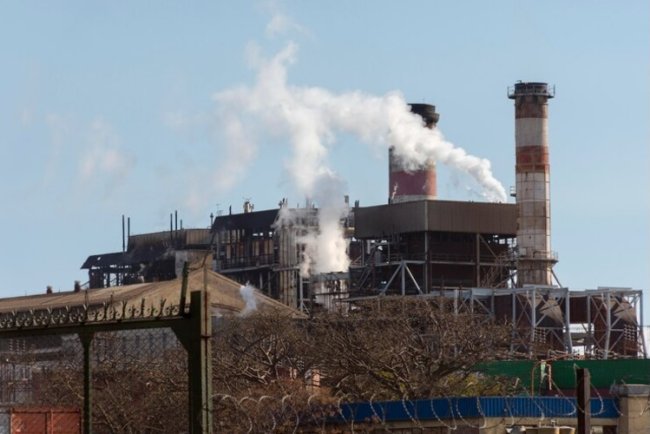
India’s leading private oil producer has reduced emissions, improved energy efficiency, and expanded large-scale land restoration and water conservation initiatives across its operations.
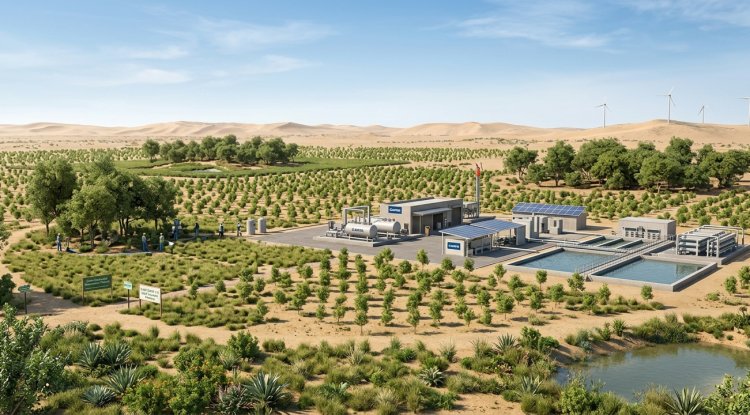
In the Middle East, India’s top private oil producer is investing in restoring large tracts of land while reducing carbon emissions.
A major shift was seen in India’s energy sector on World Environment Day. Cairn, India’s largest independent exploration and production company, achieved an absolute carbon emissions reduction of about 25% over the past five years. The company has reinvented itself while continuing its mission to protect the environment, intensifying its decarbonisation and land restoration initiatives at many of its extensive operational locations. The firm demonstrates that even the fossil fuel industry can make measurable strides toward a net-zero carbon future by bringing together technical improvements and mass planting.
Corporate environmental action is changing how companies approach climate targets. Through process optimisation, energy efficiency improvements, and clean technology adoption, the company has avoided around 410,000 tonnes of greenhouse gas emissions annually. These energy conservation initiatives have saved about 3.14 million gigajoules (GJ) of energy over the past five years. This tracking has earned the company Gold Standard Pathway status for its 2025 reporting under the United Nations Environment Programme (UNEP) OGMP 2.0 global initiative for methane reporting. The company has also committed to reducing its methane emissions by a further 30% over the next five years.
In parallel to these large-scale industrial shifts, there is also a massive ecological restoration project, aimed at transforming dry and coastal areas into greener environments, in the vicinity of the company's oil fields. The organisation has planted 800,000 saplings in its major operating areas of Rajasthan, Andhra Pradesh, Gujarat and the North-East in just 3 years. This is one of many, much larger initiatives to sow two million trees by the year 2030 and offset the carbon-absorbing capacity of over 20 million mature trees. As of 2026, these long-term forestry investments have established approximately 4000 acres of healthy greenbelt to replace industrial buffer zones with living carbon sinks and wildlife habitat.
Another key element of the company's green policy is the management of precious natural resources. The company operates in the most water-stressed areas of India with more than 86% of water used in factories is recycled by the end of the FY 26. This strict water recycling system and advanced conservation measures, which has led to the saving of almost a million kilolitres of water in the last 5 years. Also, the company has adopted and integrated the principles of circular economy on the factory premises, implementing modern technologies for processing oil sludge that allow the company to safely recovering over 155,000 barrels of hydrocarbons that would otherwise become hazardous industrial waste.
These are overlapping environmental programmes that align with the overall theme of World Environment Day 2026 – “Beat plastic pollution”, inspiring global industries to take inspiration from nature to safeguard the planet's future. The focus on corporate leadership has been on the aggressive action on the environment is no longer an option of public relations but an absolute operational requirement for the modern energy business. The firm is working hard to reconcile its heavy industrial footprint with local communities and ecosystems by actively restoring degraded soils, increasing the natural green cover and eliminating operational waste.
In the end, the steady progress outlined in the company's latest report is indicative of the fact that the world's biggest sources of emissions will need a strong resolve to set themselves on a path towards a sustainable future. The global shift towards renewables will take a generation to come to fruition, but reducing the short-term environmental impact of existing oil and gas extraction is an important step towards near-term climate action. This comprehensive approach is just one example of how corporate stewardship driven by data can drive significant environmental change on a national scale and as these thousands of acres of new forests continue to grow and the company develops its engineering to reach its next net-zero goals, it will be fascinating to watch how far it can go.
What's Your Reaction?