Bharat Tex 2026 brought together policymakers, industry leaders, and sustainability experts to discuss circularity, responsible sourcing, clean technologies, and solutions for building a more sustainable textile sector.
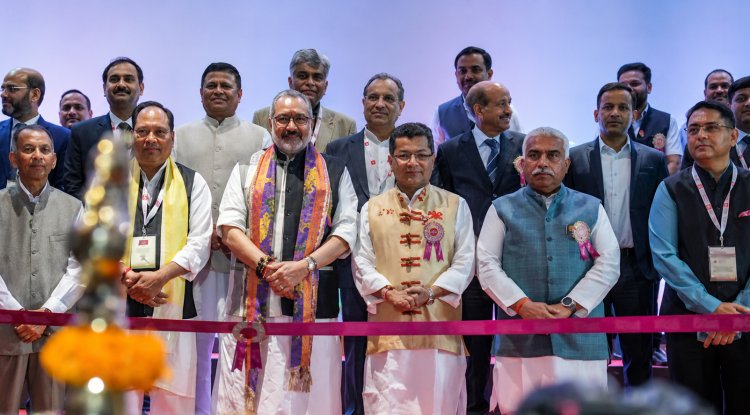
The third day of Bharat Tex 2026 saw a gathering of policymakers, state government representatives, industry, investors, international organisations, and sustainability experts for discussions on circularity, responsible sourcing, textile financing, skills for the future, and the use of technology for growth.
A major highlight was the visit of Madhya Pradesh Chief Minister, Mohan Yadav, to the state pavilion where he interacted with various delegations highlighting the textile heritage, manufacturing potential and investment opportunities of Madhya Pradesh before participating in the Madhya Pradesh State Session
The day's programme continued to focus on sustainability and circularity. The UNDP session was dedicated to the India Sustainable Textile Mark, which aims to establish a credible social and environmental standard for textiles and apparel products from India. The session titled “Wheat Straw to Wardrobes” discussed the development of next-generation textile fibres from agricultural residues. The roundtable “Circular Textile: From Dialogue to Deployment” focused on converting commitments towards circularity into practical and scalable solutions, while the panel “Fair Commodity Pricing: Transparency and Farmer Interests through the Organic Cotton Value Chain” discussed transparent pricing mechanisms and ways to support farmer interests across the organic cotton value chain.
The Better Cotton Initiative roundtable on “Dialogue for Sustainable Sourcing Solutions to Drive Textile Trade” brought together global brands, including Marks & Spencer and IKEA, to discuss responsible sourcing, traceability, and stronger collaboration between brands and manufacturers. The roundtable “Weaving Capital In: Investor Perspectives on India’s Textile Sustainability Journey” focused on investments in clean technologies, circular business models, and inclusive enterprises within the textile industry.
A masterclass on integrating sustainable chemical management frameworks into policy discussed the responsible use of chemicals, improved ESG compliance, and internationally aligned production practices to support textile trade between India and the EU.
The discussions at Bharat Tex 2026 also highlighted the rising significance of sustainability in the textiles sector. The industry faces serious issues associated with the use of resources, generation of textile waste, usage of chemicals, and supply chain management in the industry. It becomes vital to embrace sustainable business practices and adopt circularity.
The day ended with the Sustainability Conclave closing plenary, highlighting key learnings and calling for coordinated efforts across finance, sourcing, technology, skills, and circularity to support a more sustainable and resilient Indian textile industry.
What's Your Reaction?