Brazilian Chief Leads Fight Against Amazon Destruction, Protecting Indigenous Land
Raoni, a Brazilian Indigenous leader, continues his fight to protect the Amazon from illegal mining, deforestation, and the impacts of climate change. His community's efforts to preserve their ancestral land and prevent environmental destruction highlight the ongoing struggle for Indigenous rights in Brazil.Indigenous leader Raoni has spent decades defending his Amazon homeland from illegal miners and loggers. Despite ongoing threats like deforestation and wildfires, he remains committed to protecting his people's land and culture. His efforts are vital in the battle for the Amazon’s preservation.
Indigenous Leader Raoni Fights to Protect the Amazon Amid Growing Threats
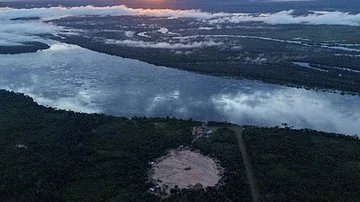
Raoni, the renowned Brazilian Indigenous leader, has dedicated his life to protecting his homeland in the Amazon rainforest from illegal mining and deforestation. The heart of his struggle lies within the Capoto/Jarina Indigenous territory in Mato Grosso state, where vast single-crop farms of soybean and maize give way to lush, untouched rainforest. Raoni, now in his 90s, has led his people in a decades-long battle against those who seek to exploit the world’s largest tropical forest. His efforts have earned him international recognition, with a pivotal moment in the 1980s when he toured the world alongside British musician Sting to raise awareness about Indigenous rights.
Raoni’s homeland, located in the Xingu River basin, has faced persistent threats from illegal miners and loggers, but the community has successfully maintained control over its land. Only a small portion, about 0.15%, of the Capoto/Jarina territory has been affected by deforestation, thanks to the efforts of Indigenous patrols and the designation of the land as Indigenous territory. This status has proven crucial, as it makes deforestation a criminal act, offering some level of protection against exploitation. Raoni and his people have a two-pronged strategy to defend their territory: actively patrolling against intruders and teaching the younger generation to resist the temptation of illegal, destructive activities that promise quick financial rewards.
Despite their successes, the fight is far from over. Indigenous lands across Brazil continue to be under attack, particularly from illegal gold mining. Near the Capoto/Jarina territory, illegal miners have created significant environmental damage, leaving behind vast craters and pools of polluted water. The Kayapo territory has already lost the equivalent of 22,000 football fields of forest to mining, with organized crime syndicates, such as the Comando Vermelho, increasing their presence in the region. Raoni’s community, which numbers around 1,600 people, remains determined to defend its land, but some Indigenous leaders are being tempted by the money that comes from mining activities, exacerbating internal conflicts and even leading to violence.
Another critical challenge facing Raoni and his people is the rise of wildfires, which have become an increasingly destructive force in the Brazilian Amazon. In 2023, the region suffered more than 140,000 fires, many of which were intentionally started to clear land for agriculture and livestock. The fires have had a devastating impact on the land, destroying crops, medicinal plants, and wildlife. Raoni’s community has already seen the effects of this in the form of scorched land and depleted resources. As the climate continues to change, with the sun growing hotter and rivers flooding more frequently, the situation has reached a critical point. The community fears that if these trends continue, it could signal the "end of their world."
Raoni hopes that the upcoming UN climate change conference, hosted by Brazilian President Luiz Inácio Lula da Silva in the Amazon city of Belém later this year, will bring the international attention needed to protect the Amazon and its Indigenous inhabitants. The community is looking to President Lula to take bold action in defending the rainforest, ensuring that future generations of Indigenous people can live in a healthy and sustainable environment.
The fight for the Amazon, as led by Raoni, is a battle not only for Indigenous rights but also for the preservation of a critical ecosystem. The world’s largest rainforest plays a key role in regulating the planet’s climate, making the efforts of Raoni and his people essential for the future of both Brazil and the global community.
Source: AFP (Agence France-Presse)
What's Your Reaction?