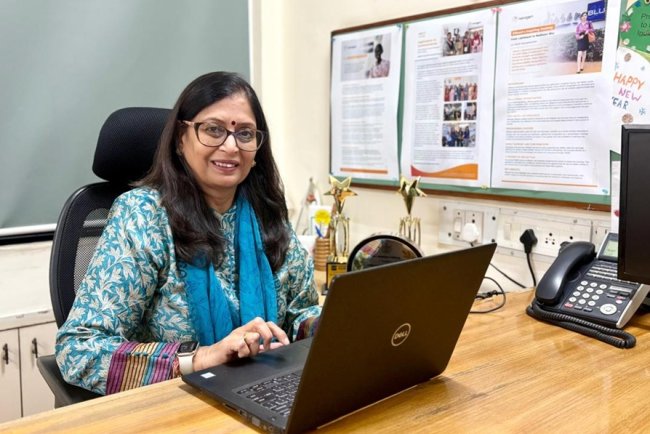
Damini Bisht, Co-founder of Kisani Urjaa, shares how her organisation is connecting sustainable energy with small-scale agriculture

In the heart of India’s farmlands, where paddy stubble often burns brighter than opportunity, Kisani Urjaa is working to rewrite that story. Speaking with Responsible Us, Damini Bisht, Co-founder of Kisani Urjaa, shares how her organisation is connecting sustainable energy with small-scale agriculture — addressing the roots of stubble burning, building women’s leadership in villages, and helping farmers see the climate link in their everyday choices.
“When we started, we were already working in renewable energy — setting up biogas,” Damini says. “But when we visited the grassroots, we realised we identified the plants were facing operational issues largely due to lack of efficiency and biomass availability. The real issue was in the fields — in residue collection and supply chain gaps. That’s when we started Kisani Urjaa, to bridge the gap between clean energy and the farmer.
Damini and her team travelled deep into villages, even the most remote, to understand what drives farmers to burn crop residue. “Farmers earn little and get barely two to three weeks between harvesting paddy and sowing the next crop They can’t afford costly machines for cleaning the land, so burning becomes the easiest way out,” she explains. “We were all told burning improves soil, but that’s a myth. It actually damages the soil. Earlier, we didn’t need so many fertilisers or pesticides, but now farmers rely heavily on chemical fertiliser.”
To tackle the issue, Kisani Urjaa developed a community-based model. The company collects agricultural residue — about 1.2 metric tonnes per acre — from fields in Andhra Pradesh, Chhattisgarh, and Madhya Pradesh. “Farmers’ waste has huge potential in generating renewable energy gas,” Damini says.
But the work is not just about energy — it’s about changing mindsets. “It’s not about convincing farmers with incentives,” she says. “We wanted to set their thinking right. That’s why we chose local women to work with us. We train them, and they go back to teach their own communities.”
This led to the creation of the ‘Kisani Didi’ network — rural women trained to engage with farmers and promote sustainable practices. “In the beginning, it was hard. Women in villages rarely speak publicly, and men don’t take them seriously. But now, these women speak confidently, lead meetings, and guide farmers. They are the real changemakers.”
Currently, Kisani Urjaa operates mainly in southern India. But unseasonal rain and floods have delayed harvests and worsened soil conditions. “Farmers don’t realise how everything — rains, floods, soil — is connected. Climate change isn’t abstract. It’s what’s happening to them,” Damini explains. “We’re trying to help them see that these aren’t coincidences, they’re consequences.”
The company also invests in technology, building an app that gathers data on soil and rainfall while educating farmers about government schemes and buyers. “It’s about giving farmers information that helps them earn more while protecting their land,” Damini says.
As for policy, she believes support should go beyond individual subsidies. “Companies that manage residue collection and build supply chains should also get backing. Stronger enforcement against burning must go hand in hand with better access to sustainable options,” she adds.
The Kisani Urjaa’s co-founders’ long-term vision is clear: “We want farmers to see their land not as a burden, but as an asset. Sustainability shouldn’t mean sacrifice — it should mean growth, dignity, and self-reliance. The real change will come when farmers earn from what was once considered waste.”
What's Your Reaction?