Can Wearable Air Purifiers Protect You? What Really Works in Toxic Air
A clear look at how wearable air purifiers and N95 masks perform in real-world pollution, beyond marketing claims and assumptions.
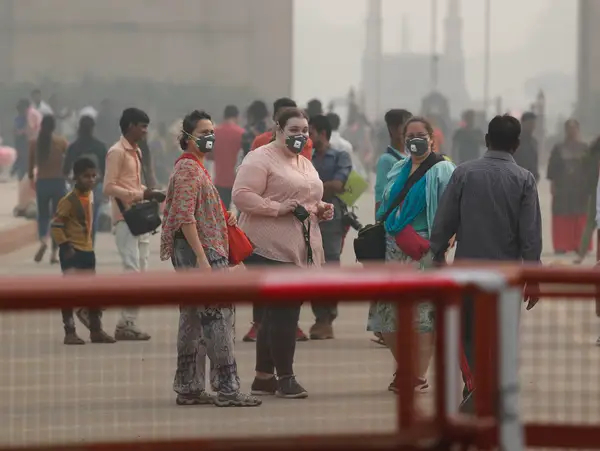
As air pollution becomes a year-round reality in Indian cities, people are searching for protection that fits daily life. Wearable air purifiers often sold as lightweight, mask-free alternatives and have gained attention for their promise of creating a “personal clean air zone.” At the same time, N95 masks remain the most widely recommended defence during severe pollution episodes.
The real question, however, is not which product sounds better, but which one reduces what enters your lungs under real conditions.
Understand What Are Wearable Air Purifiers
Wearable air purifiers are small, battery-powered devices that can be worn around your neck or clip to your clothes. These personal air cleaners help create slightly cleaner air near your face, especially in polluted environments. Unlike room air purifiers or masks, wearable air purifiers do not filter air. Instead, most of them use ionisation technology.
How Do Portable Air Purifiers Work?
Most wearable air purifiers release negative ions into the air close to face. The negative ions will attach themselves to small air pollutants such as PM2.5 and PM10. The negative ions will make these particles heavier so they will fall or move out of your breathed air. The idea is to slightly reduce the number of particles you inhale, right where you breathe. Because they don’t use fans or filters. They are silent, lightweight, low maintenance and can run for long hours on a single charge.
However, they only work in a very small area close to your face, and only when the surrounding air is relatively still.
Wearables or Masks? Two Different Technologies
An N95 mask works on a simple principle, i.e. filtration. It blocks at least 95% of fine particles (PM2.5) when worn correctly, regardless of wind, movement, or pollution intensity. Its effectiveness depends on fit and seal, not on surrounding airflow. On the other hand, wearable air purifiers work on a completely different principle, i.e. ion dispersion. There is no filtering and no containment only displacement.
This difference matters far more than most product marketing admits.
Do You Even Know How We Actually Breathe?
Humans do not inhale air evenly from a fixed point. We breathe faster when walking, talking, or climbing stairs. During exertion, air is pulled from a wider area around the face at higher velocity. Wearable ionisers assume slow, steady breathing in relatively still air. In real life, crossing roads, climbing metro stairs, walking through traffic, this assumption breaks down. The faster you breathe, the less control ionisation has over incoming air. An N95 mask, on the other hand, becomes more important as breathing rate increases, because it maintains filtration regardless of airflow speed.
Outdoor Pollution Is Not Just “More of the Same”
Another overlooked factor is pollution variability. Outdoor air pollution is not the same. In some places like near roads, construction sites, or diesel vehicles, the amount of pollution can increase sharply for seconds at a time. Wearable ionisers cannot respond dynamically to these micro-bursts. Their ion cloud disperses instantly in turbulence.
N95 masks don’t need to respond. They block particles consistently, even during sudden exposure peaks. This is why masks remain the only reliable option when AQI crosses 300 and become non-negotiable beyond 400.
Indoor Use: Where Wearables Actually Make Sense
Where wearable purifiers do deserve credit is indoors. In closed or semi-closed spaces such as offices, aircraft cabins, hotel rooms and conference halls, airflow is more predictable. In such environments, wearables can reduce particulate concentration close to the nose and mouth, especially when ambient AQI is moderate.
Many people remove masks indoors after some time due to discomfort. A wearable purifier, while less powerful, may still offer partial protection in situations where the alternative is no protection at all. This does not make it superior, but it makes it relevant.
Ozone: The Risk People Don’t Ask About
Most discussions focus on particle removal but ignore by-products. Ion-based devices can produce small amount of ozone, even if within safety limits. Ozone can be irritable for the lungs, especially for people with asthma, COPD, or allergies. There is no scientific proof about long term effect of wearing portable air purifiers for longer close to your nose and mouth.
N95 masks produce no chemical by-products. Their risk profile is known and predictable.
Hygiene and Secondary Exposure
Ionisers cause particles to settle on skin, hair, and clothing. Even if a device reduces the amount of pollution you breathe in, it can still enter your body. The pollution stays it doesn’t disappear. Later, when you touch your face, adjust your glasses, or eat without washing your hands, those particles can enter body again. But in case of mask, it catches and hold pollution in the filter, so it does not spread onto your body and stay trapped until you remove the mask or throw away.
What Actually Works at Different AQI Levels
- When AQI is below 200, indoors: Wearable sir purifiers can provide mild comfort; masks are optional
- AQI Between 200–300: Masks are highly recommended; wearables only as secondary support
- When AQI is above 300: Wearables may be ineffective outdoors; N95 essential
- AQI above 400: Wearables give mild protection; N95 or higher-grade masks only
So, Should You Choose One Over the Other? The answer is no. Wearable air purifiers are support devices, not protective shields. They are mainly useful tools for mild indoor pollution or short period of time when wearing mask is uncomfortable. Talking about N95 masks are still the only proven way to protect yourself from harmful particles.
Wearable air purifiers are useful only if you understand their limits. They may not fight heavy outdoor pollution, vehicle emissions, or winter thick winter smog. N95 masks are uncomfortable, but they provide you real protection when the level of pollution in very high.
Clean air is not created by optimism or design elegance. It is created by physics, filtration, and honest use of the right tool for the right condition.
Myths People have about Wearable Air Purifiers
Myth 1: Wearable air purifiers can replace N95 masks
Truth: They cannot. N95 masks physically block particles from entering your lungs. Wearable air purifiers only try to push particles away from your face. For outdoor or high-pollution conditions, masks are far more effective.
Myth 2: They work even when pollution is very high
Truth: When AQI goes beyond 300, and especially above 400, wearable air purifiers can be beneficial but very little. The level of pollution outdoor is too heavy for the small ion cloud from these devices to make real difference.
Myth 3: More ions mean stronger protection
Truth: Ion numbers are measured under controlled conditions. In real life during the wind, walking, traffic and head movement, the ion concentration drops instantly, reducing effectiveness.
Myth 4: They clean the air around you completely
Truth: They do not clean the surrounding air. At best, they affect a tiny zone a few centimeters around the face, and only briefly.
Myth 5: They are completely risk-free
Truth: Negative ions are generally safe, but ion-based devices can also produce small amount of. Most devices stay within safety limits, but long-term daily exposure especially for people with asthma or lung conditions, are still not understood well.
The Big Limitation People Don’t Talk About
Wearable air purifiers depend on still air. The moment you walk, turn your head, face wind, or pass traffic, the protective zone breaks down. Outdoor air is dynamic, unpredictable, and constantly moving during the conditions where ion-based protection struggles.
What's Your Reaction?