The Commission for Air Quality Management (CAQM) in NCR and Adjoining Areas has issued a statutory direction mandating the coordinated and time-bound implementation of State Action Plans to eliminate wheat stubble burning during the 2026 wheat harvesting season. The direction has been issued to the governments of Punjab, Haryana, and Uttar Pradesh, while complementary efforts have been advised for the Government of NCT of Delhi and Rajasthan.
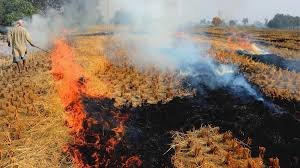
The Commission stated that crop residue burning continues to contribute to the deterioration of air quality across the National Capital Region (NCR) and adjoining areas, particularly during harvesting seasons. According to the standard protocol developed by ISRO and the Indian Agricultural Research Institute (IARI), fire events recorded during the wheat harvesting period from 1 April to 31 May 2025 stood at 10,207 in Punjab, 1,832 in Haryana, and 259 in NCR districts of Uttar Pradesh. Satellite-based monitoring during April and May 2025 indicated the need for targeted measures during the wheat season, in addition to existing interventions for the paddy season.
Earlier, the Commission had provided a framework to the concerned states for the control and elimination of crop residue burning and directed them to prepare detailed, state-specific Action Plans. The issue of wheat stubble burning was discussed in the Commission’s 26th meeting held on 22 December 2025, followed by a meeting with Punjab, Haryana, and Uttar Pradesh on the same day. The states presented their respective Action Plans and were advised to update and refine them.
Through Direction No. 96, the Commission has instructed the states to fully implement their Action Plans to prevent wheat stubble burning and ensure viable alternatives for farmers. States have been directed to map each farm across villages to determine the proposed method of wheat residue management, including crop diversification, in-situ management, ex-situ management, and fodder use. Each district is required to assign nodal officers to groups of farmers, with up to 100 farmers per officer, to ensure monitoring and support.
The direction also mandates the optimal utilisation and timely availability of Crop Residue Management (CRM) machines during the peak harvesting season, including monitoring through a mobile application. The rent-free availability of such machines for small and marginal farmers through Custom Hiring Centres (CHCs) has been made compulsory. States have been asked to provide adequate storage facilities for wheat straw to prevent losses due to fire and to establish a continuous supply chain for ex-situ uses such as fodder. A district-level supply chain management plan is to be prepared in each district to balance demand and supply throughout the year.
The Commission has further directed the constitution of a dedicated Parali Protection Force at the district and block levels. This force will comprise police personnel, agriculture department officials, administrative officers, and nodal officers to monitor and prevent incidents of open burning. Enforcement agencies have been instructed to intensify patrolling, particularly during late evening hours. An environmental compensation mechanism is also to be enforced in cases of violations.
States have been directed to undertake Information, Education, and Communication (IEC) activities to raise awareness among farmers about alternative residue management practices and the environmental impact of stubble burning. Monthly progress reports must be submitted to the Commission to ensure monitoring and necessary action.
The statutory direction seeks to strengthen preparedness ahead of the 2026 wheat harvesting season and reduce the contribution of agricultural residue burning to regional air pollution across the NCR and adjoining states.