The government plans to limit AC temperatures between 20°C and 28°C to reduce load on electricity, with experts urging stronger efficiency standards and public awareness for sustainable cooling in India.
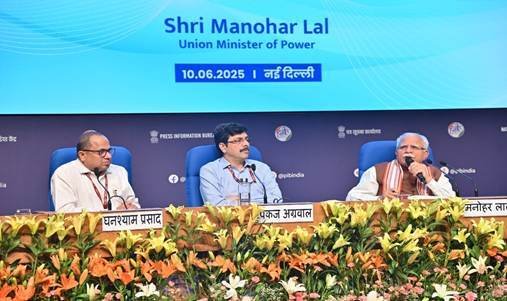
Bhartiya Janta Party (BJP) organised a press meet to call to remembrance 11 years of BJP at the centre. During the meet, Manohar Lal said that a new rule could soon be introduced to limit the temperature range of air conditioners to 20°C and 28°C. At present, people can set air conditioners' temperature to as low as 16°C and 18°C, but this could change to save energy. “The temperature standardisation for ACs will be set between 20°C to 28°C, meaning we won’t be able to cool below 20°C or warm above 28°C,” he said during the press conference. “This is a first-of-its-kind experiment, aiming to standardise temperature settings.”
The new temperature rule is being planned to reduce the heavy load on electricity during the heatwave months. Talking about the years 2019 to 2024, air conditioners have added around 30 to 35 gigawatts to the country’s peak electricity demand, putting extra pressure on the power supply system.
Research by the Bureau of Energy Efficiency (BEE) says that just by increasing 1°C of your AC’s temperature, you can save about 6% energy. For instance, running the AC at 24°C instead of 20°C can save up to 24% of electricity. The demand for air conditioners in India has grown rapidly and has tripled since 2010. According to the International Energy Agency (IEA), by the year 2050, usage of India’s AC power could be more than what the entire continent of Africa uses today. The IEA said in its 2023 report that if we reduce the need for cooling by using better energy-saving rules, we don’t need to spend so much money on things like batteries or backup power. It will also make it easier to use renewable energy like solar and wind.
Researchers say that just limiting the temperature range of ACs will not help. The government also needs to improve energy efficiency standards. Currently, most people buy 3-star ACs, likely because they cost less, but higher star-rated ACs save more electricity.
India Director at CLASP, Neha Dhingra (an NGO that works on energy-efficient appliances), said, “While behavioural nudges like this are instrumental, they must be complemented by stronger policy and market interventions that include stronger efficiency standards, wider adoption of high-efficiency ACs, and integration of demand response in ACs.” A mix of both public awareness and smart technologies is needed to make cooling in India more energy-saving, affordable, and eco-friendly.
What's Your Reaction?