Wildlife authorities reviewed Project Cheetah’s expansion, tiger and elephant conservation efforts, and strategies to reduce growing human–wildlife conflicts across India.
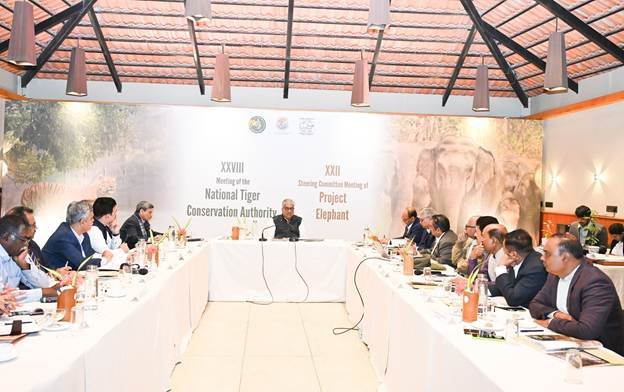
The National Tiger Conservation Authority (NTCA) reviewed plans to expand Project Cheetah and discussed way to reduce human-wildlife conflict. The meeting was held at the Sundarbans Tiger Reserve.
Two important meetings were held, the 28th meeting of the NTCA and the 22nd Steering Committee meeting of Project Elephant. While chairing the NTCA meeting, the minister said that conservation of tigers in India depends on science-based planning, maintaining large forest habitats, engagement with communities, and better coordination with states. The discussion mainly focused only the problems faced by tiger reserves especially conflicts between people and tigers.
The meeting was about issues existing in tiger reserves, especially human-tiger conflicts. The officials discussed a three-point plan to reduce human-tiger conflicts and discussed a special project for handling tigers that tend to migrate from tiger reserves. Other matters discussed included staff shortages, lack of finances, harm to habitats, and harmful plant species, with guidance to investigate each concern.
The NTCA has also approved several major decisions, which include the enhancement of the Cheetah Project, Tiger Translocation schemes, enhanced supply of Prey, and good Landscape Planning and Health Training for Wildlife Officials.
There was an update on the extension of Project Cheetah to the Gandhisagar Wildlife Sanctuary and the Banni grasslands in Gujarat. Conservation activities supported through the CAMPA scheme were also mentioned. Plans towards the Global Big Cat Summit were considered.
Current tasks of NTCA, such as the sixth cycle of the All-India Tiger Estimation, which would commence its ground survey in November 2025, were reviewed by the minister. International cooperation through Project Cheetah was another topic of discussion. This included visits of wildlife specialists from South Africa, Namibia, and Botswana.
During the meeting at Project Elephant, action taken since the previous meeting has been assessed concerning regional plans for conserving elephants in Southern and Northeastern states in India. There are areas that require greater cooperation among states.
The committee also examined progress in:
• The All-India Synchronised Elephant Est
• Nilgiris Elephant Reserve Conservation Plan
• DNA profiling in captive elephants to enhance their welfare and management
It dealt with the human and elephant conflict, and how and why these happen, measures to minimize this conflict, and to pay compensation to people who are affected by them. The officials also discussed studying the elephant corridors and human vs. elephant conflict areas, with special emphasis on the studies in the Bandhavgarh zone where these conflicts happen most so that better solutions can be planned accordingly.
During the occasion, the minister published six documents, such as reports on Project Cheetah, tiger population assessment, tiger conservation strategy in India, biodiversity in tiger reserves, as well as guidelines for managing capture elephants.
Human-Wildlife Conflict Issues
As per the wildlife NGO, Wildlife SOS, the root cause of the human-wildlife conflict that prevails in the Indian landscape today has been the destruction of natural habitats and the breaking up of the entire forest system because of global warming. Many a time, the resultant effect of such environmental changes has forced elephants and tigers to migrate to farmlands and villages in search of food and water sources.
What's Your Reaction?