Europe’s Forests in Trouble: A Climate Wake-Up Call
European forests are losing their ability to absorb carbon dioxide, putting the EU’s net-zero climate goals at serious risk without urgent action.
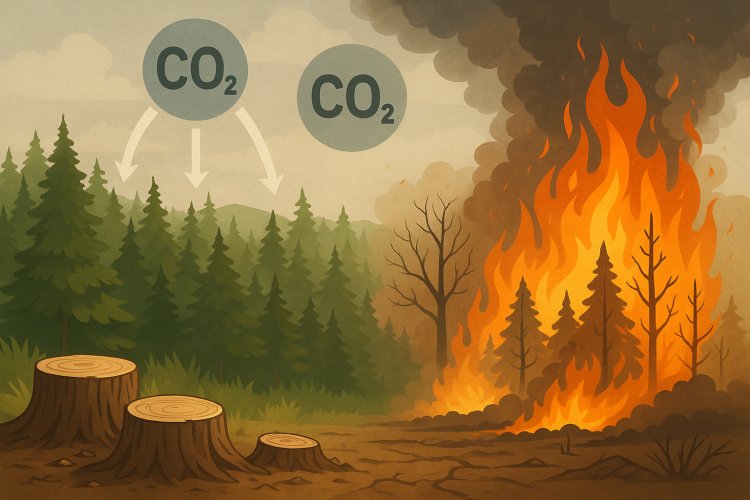
European forests are losing their ability to suck carbon dioxide (CO2) like they used to do, warned by researchers. This is a major concern since the European Union (EU) is counting on forests to assist in reaching its climate targets. The European Union aims to achieve net zero by 2050. Forests are meant to assist by absorbing CO2 from the atmosphere and locking it up in trees and soil. But harm caused to forests through forest fires, dryness, insects, and excessive logging is turning them less efficient at this.
In between the year 2020 to 2022, European forests took up around one-third less CO2 than they did between 2010–2014. In recent years, forests have taken up around 332 million tonnes of CO2 annually in which is below predictions. The fall jeopardizes the EU's climate goals, as these depend on the forests taking up more carbon long term. Now, forests and land in Europe offset around 6% of the EU's greenhouse gas emissions. The EU maintains that it requires a minimum of 8% to achieve its targets, with the difference growing by 2030. Others hold that it is not feasible for forests to offset emissions that come from industries.
European forests are in danger now which was once seen as a key ally in the fight against climate change. They are not absorbing as much carbon dioxide from the air as they used to, and their ability is rapidly declining. While some of the forest damage can be controlled by taking smarter decisions, for example, by cutting down some trees to lower the pressure on the forests and planting different types of trees with multiple species that can survive drought and pest. These steps can help forest to keep healthy and can absorb carbon more. However, other problems like wildfires and droughts, are mostly caused by climate change and they are difficult for government to control or stop.
In short, Europe is fully dependent on forests to fight with climate change, but those forests are already at risk. If they can’t absorb carbon dioxide, then it will be much harder for European to achieve their target of achieving net zero by 2050, unless a strong action is taken, and forest care improves.
What's Your Reaction?